Key facts
- Moderna has initiated the first human trial for an experimental vaccine against the Bundibugyo ebolavirus.
- The vaccine, named mRNA-1469, utilizes mRNA technology.
- The trial involves approximately 80 healthy adults at three sites in Canada.
- The study will assess the vaccine's safety, tolerability, and immune response.
- The Coalition for Epidemic Preparedness Innovations (CEPI) is funding early testing and manufacturing with up to $50 million.
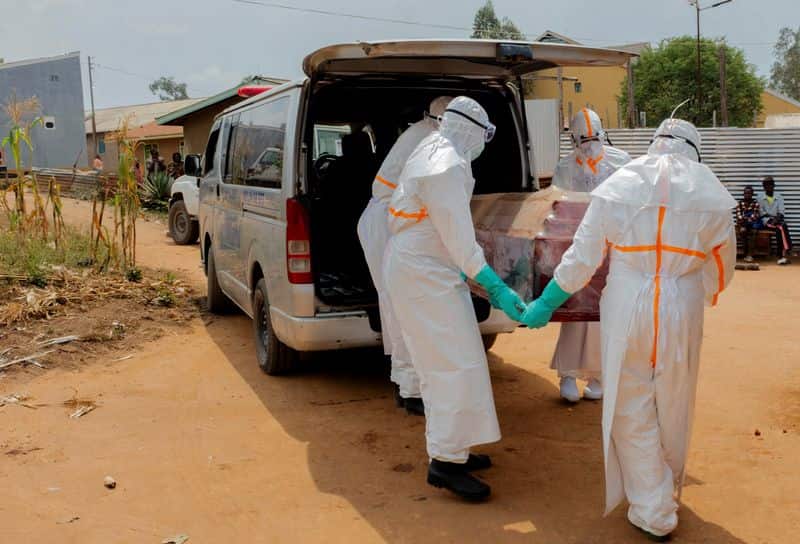
- The Bundibugyo strain is responsible for a significant outbreak in the Democratic Republic of Congo, declared a public health emergency.
Moderna has commenced the first human clinical trial for an experimental vaccine designed to protect against the Bundibugyo ebolavirus, a strain of Ebola for which no approved vaccine currently exists. The trial, designated mRNA-1469, utilizes the same messenger RNA (mRNA) technology that underpins Moderna's successful COVID-19 vaccine.
The early-stage study is being conducted at three sites across Canada and aims to enroll approximately 80 healthy adult volunteers. The primary objectives are to evaluate the safety and tolerability of the vaccine candidate and to assess the immune response it elicits. Health Canada has granted clearance for this Phase 1 study, and the first participants have already received the experimental shot.
This development is part of an expanded collaboration between Moderna and the Coalition for Epidemic Preparedness Innovations (CEPI). CEPI has committed up to $50 million to support the vaccine's preclinical testing, Phase 1 clinical trial, and the scaled manufacture of additional doses for future studies. This funding aims to expedite the development process, increasing the likelihood of rapidly bringing a safe and effective vaccine to those in need.
The Bundibugyo ebolavirus is currently driving a significant outbreak in the Democratic Republic of Congo (DRC), which has been declared a Public Health Emergency of International Concern by the World Health Organization. As of early August, the outbreak had resulted in over 3,700 confirmed cases and more than 1,600 deaths, with cases increasing at a faster rate than during the 2014-2016 West Africa epidemic. This situation highlights a critical gap in preparedness, as effective vaccines exist for other Ebola strains but not for Bundibugyo.
If Moderna's mRNA-1469 vaccine proves successful and receives regulatory approval, the company has committed to making at least 500,000 doses available to low- and middle-income countries at access pricing, as per its agreement with CEPI.