Key facts
- The Global AI and Smart Construction Conference and Exhibition (GASCCE) will take place on June 24-25 at Hong Kong Science Park.
- More than 50 exhibitors will present AI and robotics solutions for the construction industry.
- The event aims to accelerate the adoption of AI and smart technologies in construction.
- Total funding of HK$1.4 billion is available to support the industry's implementation of innovation and technology applications.
- AI agents are expected to assist professionals in exploring complex design questions and analyzing data.
Hong Kong's construction sector is poised for a significant technological upgrade with the introduction of advanced AI systems and robotics. The upcoming Global AI and Smart Construction Conference and Exhibition (GASCCE), organized by the Construction Industry Council (CIC), aims to bridge the gap between discussion and practical implementation of these technologies.
The event, scheduled for June 24-25 at the Hong Kong Science Park, will feature over 50 exhibitors from various regions, showcasing solutions designed to automate tasks, improve worker safety, and enhance efficiency across all phases of a construction project, from initial design to long-term operation. A concurrent conference will host more than 40 speakers discussing AI applications, and the first CIC AI Award will recognize completed projects and research with practical applications, having received over 250 submissions.
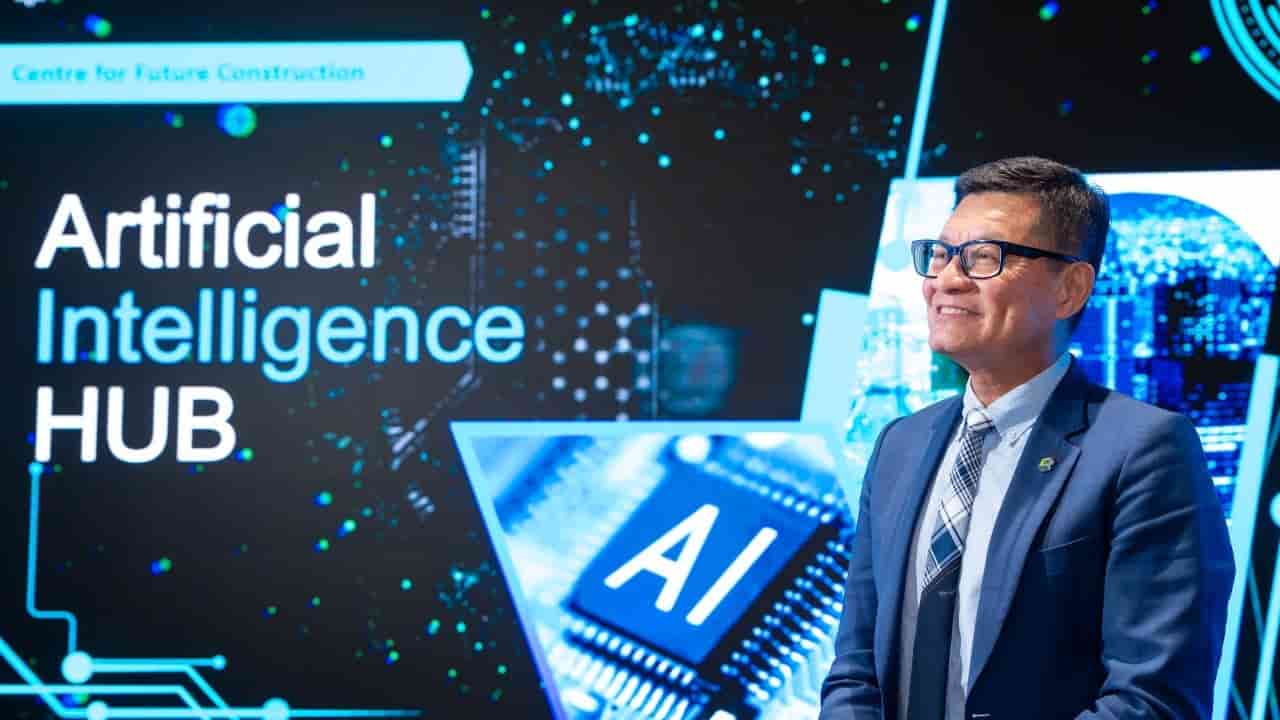
Ir Albert Cheng, Executive Director of CIC, emphasized that the event is designed to demonstrate how AI systems and robotic tools function on real sites and their tangible benefits. The showcased solutions cover eight key areas of the development lifecycle, including planning, design, operation, maintenance, site safety, and robotics. Some systems have already been tested or applied locally, such as a process accepted by the Buildings Department and Housing Authority that halves inspection time and reduces the need for work at height. Another system allows for remote and autonomous operation of tower cranes, with integrated sensors and positioning systems for safe path planning.
A welding robot developed with The Hong Kong Polytechnic University utilizes vision systems for precise adjustments on high-strength steel. Additionally, a digital twin platform, already in use at the Kai Tak Sports Park, integrates live data with building models for performance monitoring. Cheng highlighted that exhibit selection prioritized solutions ready for immediate deployment.
Interest from international entities, including groups from the Middle East, has grown, indicating a global push towards smart construction. To further facilitate this transition, the Hong Kong government has increased funding support, injecting HK$1 billion into the Construction Industry Innovation and Technology Fund, with CIC adding HK$400 million for a total of HK$1.4 billion. Training programs are also available to upskill the workforce, with AI becoming a required subject in some advanced diploma programs.
Cheng anticipates a faster pace of technology adoption due to a tightening labor supply and the preference of younger generations for technology-focused roles over heavy physical labor. He foresees tasks that are repetitive or require working at height shifting to automated systems within the next decade, necessitating changes in project design to accommodate robotic movement and operation. Agentic AI systems, or AI agents, are also expected to play a crucial role by rapidly analyzing vast amounts of research and product data to assist professionals in complex design decisions, such as recommending facade materials based on thermal performance and energy targets.