Key facts
- Heart Aerospace's X1 demonstrator aircraft completed its first test flight on August 12 at Plattsburgh International Airport.
- The flight lasted nearly 30 minutes and consumed approximately $5 worth of electricity.
- The X1 demonstrator is powered by four wing-mounted electric motors and can achieve a maximum takeoff weight over 25,000 pounds.
- The company is developing the 30-seat ES-30 hybrid-electric regional airliner, informed by X1 testing.
- The ES-30 is projected to have 125 miles of all-electric range and 500 miles in hybrid mode.
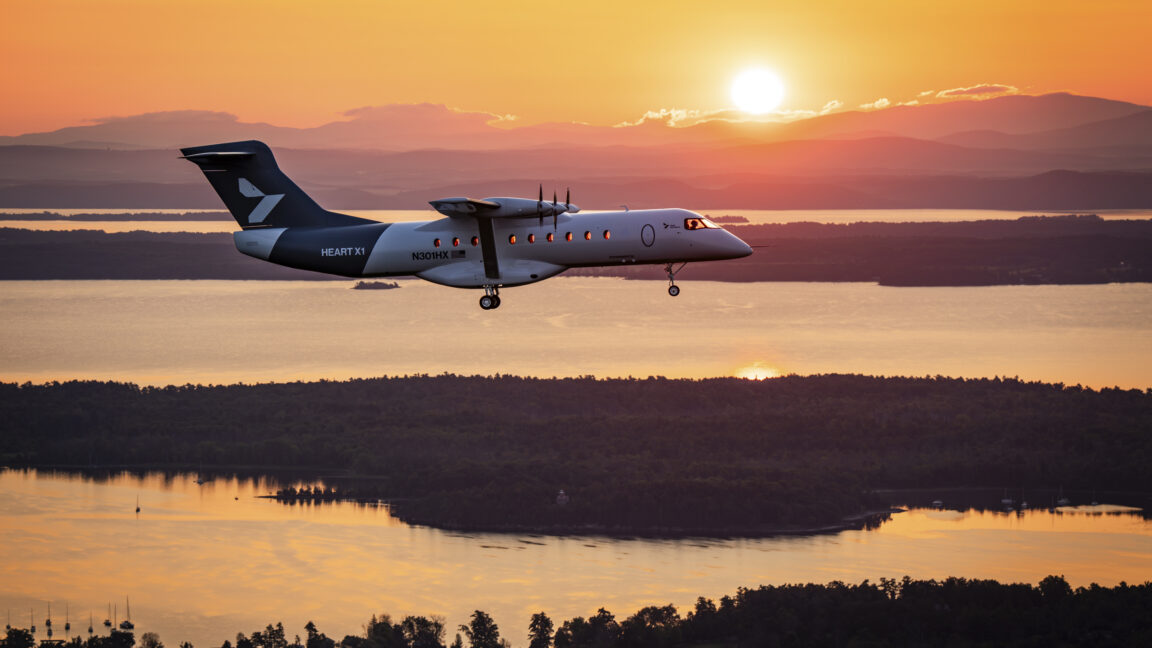
Heart Aerospace successfully conducted the first test flight of its X1 demonstrator, the largest all-electric aircraft to date, at Plattsburgh International Airport on August 12. The flight lasted nearly half an hour and consumed approximately $5 worth of electricity, a stark contrast to the rising costs associated with jet fuel.
The X1 demonstrator, comparable in size to a small regional airliner, is equipped with four wing-mounted electric motors and its propulsion system delivered over one megawatt of power during the flight. All-electric aircraft offer the potential for quieter, cleaner, and more cost-effective travel compared to conventional planes, which are susceptible to geopolitical disruptions affecting jet fuel prices.
While the X1's success is a significant step, Heart Aerospace is not currently planning to commercialize a fully electric aircraft due to the limited range of current battery technology, typically between 100 to 200 miles, which is suitable for air taxi operations by companies like Joby and Archer.
Instead, the data gathered from the X1 and a planned X2 aircraft will inform the development of Heart Aerospace's primary offering: the ES-30. This 30-seat hybrid-electric regional airliner is designed to combine electric motors with turboprop engines running on jet fuel. It aims to achieve 125 miles of all-electric flight and a total range of 500 miles in hybrid mode, making it suitable for short-haul routes connecting major cities.
United Airlines has expressed interest in the ES-30, signing a letter of intent to purchase 100 aircraft, with other major airlines also indicating their intent to purchase, according to Flying magazine. This development comes as the aviation industry seeks innovative solutions to rising fuel costs and environmental concerns.