Key facts
- DoorDash is paying gig workers to load its Dot delivery robots with restaurant orders.
- The robots can navigate to delivery destinations but require human intervention for the loading process.
DoorDash is employing gig workers to load its Dot delivery robots, a task that robots cannot yet perform. This practice, observed in Arizona, involves workers driving to restaurants, placing orders into the robots, and being paid a small fee for the service, underscoring current limitations in autonomous delivery technology.
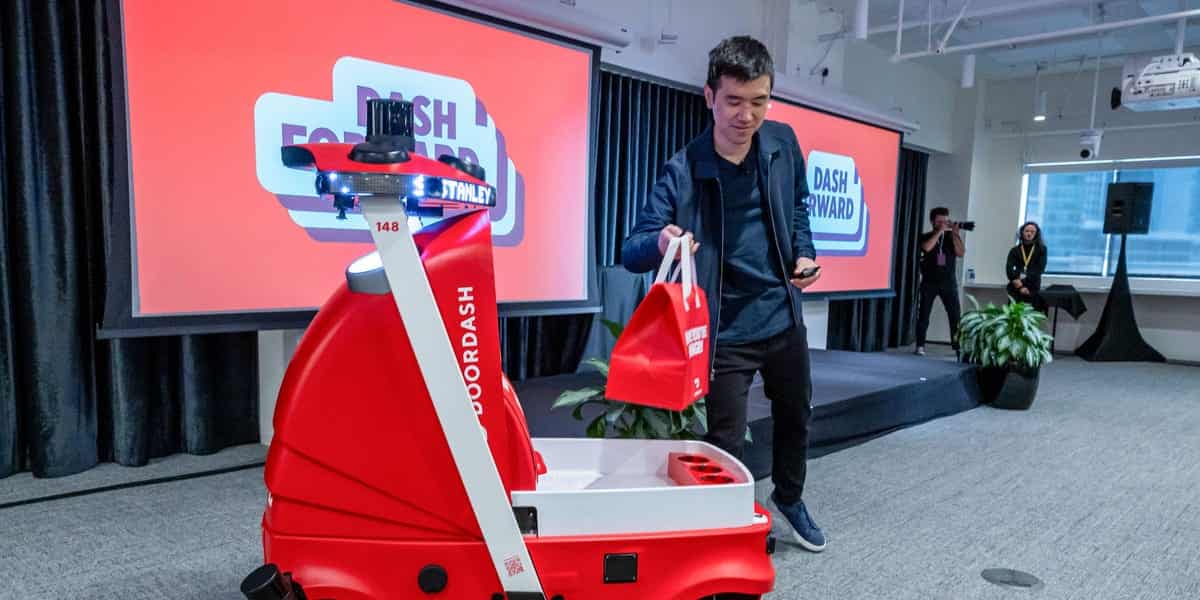
The practice highlights the current limitations of autonomous delivery technology, demonstrating that even with advanced navigation, robots still require human intervention for certain crucial steps, potentially impacting the efficiency and cost-effectiveness of fully automated delivery services.
DoorDash is currently paying gig workers to load its autonomous Dot delivery robots, a task that the robots themselves cannot yet complete. Workers in areas where the robots are being piloted, such as Mesa, Arizona, have received offers through the DoorDash app to perform this service. These workers drive to restaurants, pick up orders, and place them into the waiting robots.
One DoorDash worker, Devena Bybee, described receiving about $5 for a five-minute task that involved loading an order into a robot. She expressed surprise that DoorDash would ask a gig worker to perform this duty instead of a restaurant employee who is already on-site, questioning the efficiency of the process. Similar offers have been posted on social media groups for DoorDash workers.
A DoorDash spokesperson stated that "Dashers are essential to our platform and will continue completing the majority of deliveries even as our autonomous technology scales." The spokesperson added that "This limited pilot is designed to support merchants during busy periods, while creating more earning opportunities for Dashers outside of traditional deliveries."
This practice underscores a significant challenge in the rollout of autonomous deliveries: the gap between the robot's ability to navigate to a destination and its capacity to handle the initial pickup and loading phase. DoorDash CEO Tony Xu previously acknowledged that handing off orders from restaurants to robots is a hurdle for autonomous delivery deployment. Professor Robert Bruno noted that restaurants might find it cost-effective to outsource this loading task to DoorDash's independent contractors, who do not receive the same benefits or hourly pay as restaurant employees, potentially leading to savings over time.
Bybee indicated that the experience reinforced her belief in the continued necessity of human workers for delivery tasks, stating, "There's only so much right now that the robots can do."