Key facts
- China has launched the world's first commercially operated underwater data center, located 10 kilometers off Shanghai's coast.
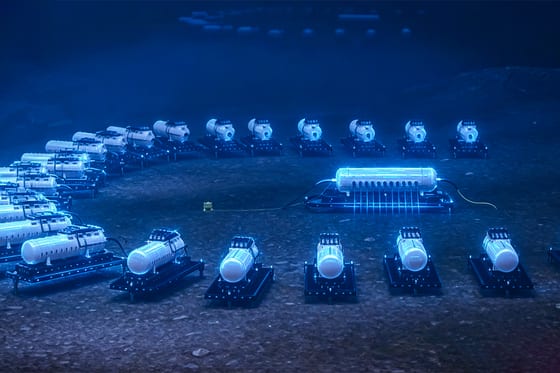
- The facility is powered by offshore wind, cooled by the ocean, and utilizes a submerged cylindrical cabin for its high-density computing hub.
- This project is part of China's 'computing-power synergy' strategy, which aims to develop AI clusters in tandem with power infrastructure.
- Shanghai's Lingang Special Area has experienced significant power consumption growth due to data centers, with plans to double intelligent computing capacity.
- China Telecom successfully tested remote dispatching of AI computing tasks to a facility in Xinjiang, reducing local power load by 75%.
- SenseTime Group integrated an AI-driven energy storage system to reduce electricity costs at its Lingang data center.
Ten kilometers off Shanghai's coast, a novel underwater data center has been launched by Shenzhen HiCloud Data Center Technology Co. This 32-meter steel platform houses a submerged cylindrical cabin containing a high-density computing hub, designed to be cooled by the ocean and powered by offshore wind, achieving an ultra-efficient PUE rating of 1.15. The facility, commercially operational since February, represents a significant step in China's 'computing-power synergy' strategy.
This strategy, recently enshrined in China's annual government work report, mandates the synchronized development of ultra-large AI clusters and their associated power infrastructure. The Lingang Special Area in Shanghai exemplifies this, with data centers driving a nearly 30% surge in power consumption in the first five months of 2026. Local authorities have responded by doubling high-voltage substations and providing millions in subsidies to support the expected doubling of intelligent computing capacity by year-end.
The underwater design addresses challenges of land scarcity and energy efficiency. Unlike a 2020 pilot, the current design separates power equipment onto a surface platform and servers into a 1,950-ton submerged cabin, significantly reducing maintenance costs. Power is drawn from an offshore wind farm, the onshore grid, and backup diesel generators. Although connected to the wind farm, HiCloud currently purchases green electricity at commercial rates through the state grid, which is more than double the direct cost of the wind farm's supply. Industry insiders suggest that direct-purchase policies could reduce costs for the project's second phase.
In line with the national 'East Data, West Computing' initiative, China Telecom conducted a test in May dispatching computing tasks from Lingang to a green data center in Karamay, Xinjiang, over 4,000 km away. This test successfully shifted demand westward, reducing the Shanghai facility's local power load by 75% and demonstrating seamless task transfer across heterogeneous hardware. China Telecom plans similar tests to Hubei and Fujian in 2025, but routine cross-country dispatches require a market-driven pricing mechanism, currently hindered by a shortage of high-end computing chips and varying AI model energy demands.
On land, companies like SenseTime Group are also optimizing data center energy use. SenseTime has integrated an 18-megawatt energy storage station into its Lingang hub, utilizing a proprietary AI energy model to predict loads and strategically release stored electricity to avoid peak-capacity surcharges. This hardware-software synergy has reportedly shaved annualized electricity costs by 7%, below the regional industry average. As Shanghai moves towards a continuous spot electricity market, SenseTime anticipates such AI-driven energy management will become essential, with the ultimate goal of precisely calculating energy consumed per AI-generated token.