Key facts
- China's Qianfan satellite network has launched 201 satellites into orbit.
- The network is a competitor to SpaceX's Starlink.
- Concerns exist about Qianfan's deployment speed, cost, and satellite reliability.
- The project faces a shortage of rockets and bureaucratic hurdles.
- Qianfan aims to deploy 648 satellites by the end of 2025 and over 15,000 by 2030.
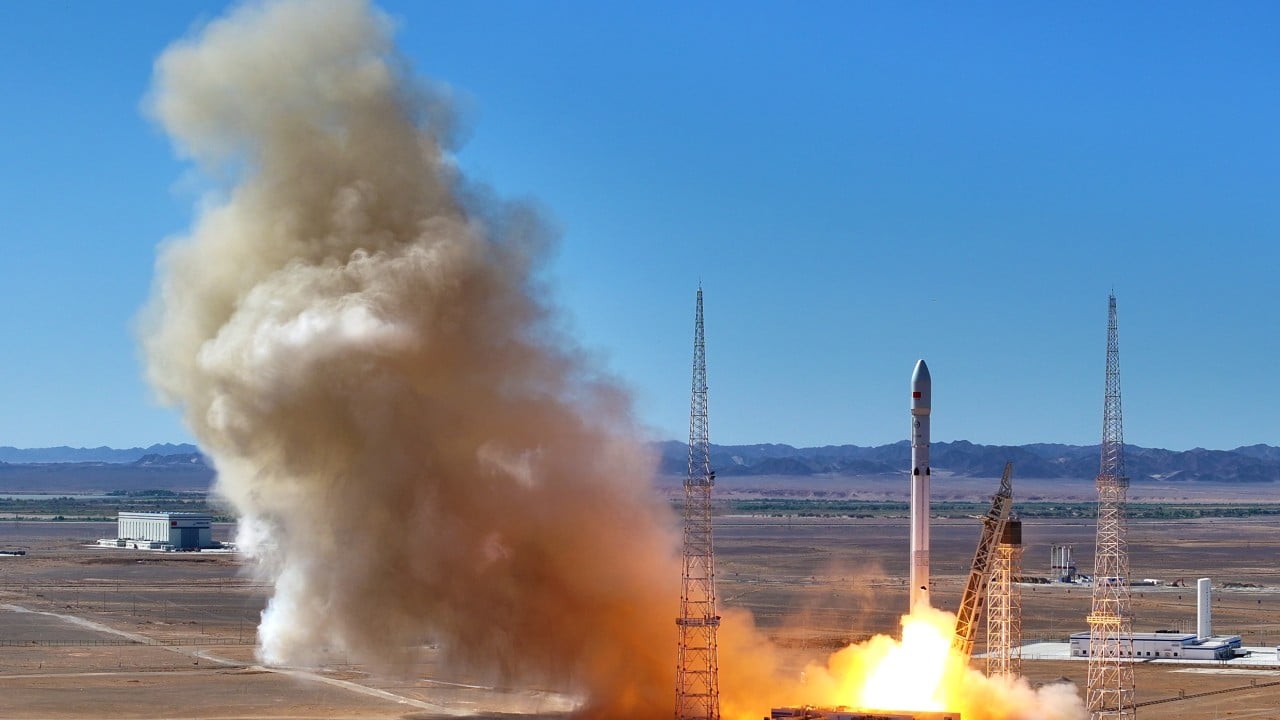
China's Qianfan satellite network has achieved a national milestone by placing over 200 broadband satellites into orbit, with a recent launch on a Zhuque-2E rocket carrying a direct-to-cell test satellite and a China Mobile satellite. Despite this progress, the network, also known as the Thousand Sails Constellation or G60 Starlink, faces significant challenges including deployment delays, high costs, and a concerning rate of potentially faulty satellites.
The project, led by Shanghai Yuanxin Satellite Technology, aims to compete with SpaceX's Starlink but is far behind its ambitious schedule. International regulations require operators to deploy a certain proportion of their constellation within set times to avoid spectrum hoarding. Qianfan's goal is 648 satellites by the end of 2025 for regional coverage and over 15,000 by 2030 for global direct-to-phone services.
Experts point to a severe shortage of rockets in China as a primary obstacle, hindering the manufacturing and launch capacity needed to meet demand. While Qianfan has signed deals with countries like Brazil, Malaysia, and Thailand, its progress is significantly slower than Starlink, which operates over 7,000 satellites. Researchers have noted that a notable percentage of Qianfan's launched satellites have exhibited irregular behavior, failing to reach their target orbits, raising questions about their reliability compared to competitors.