Key facts
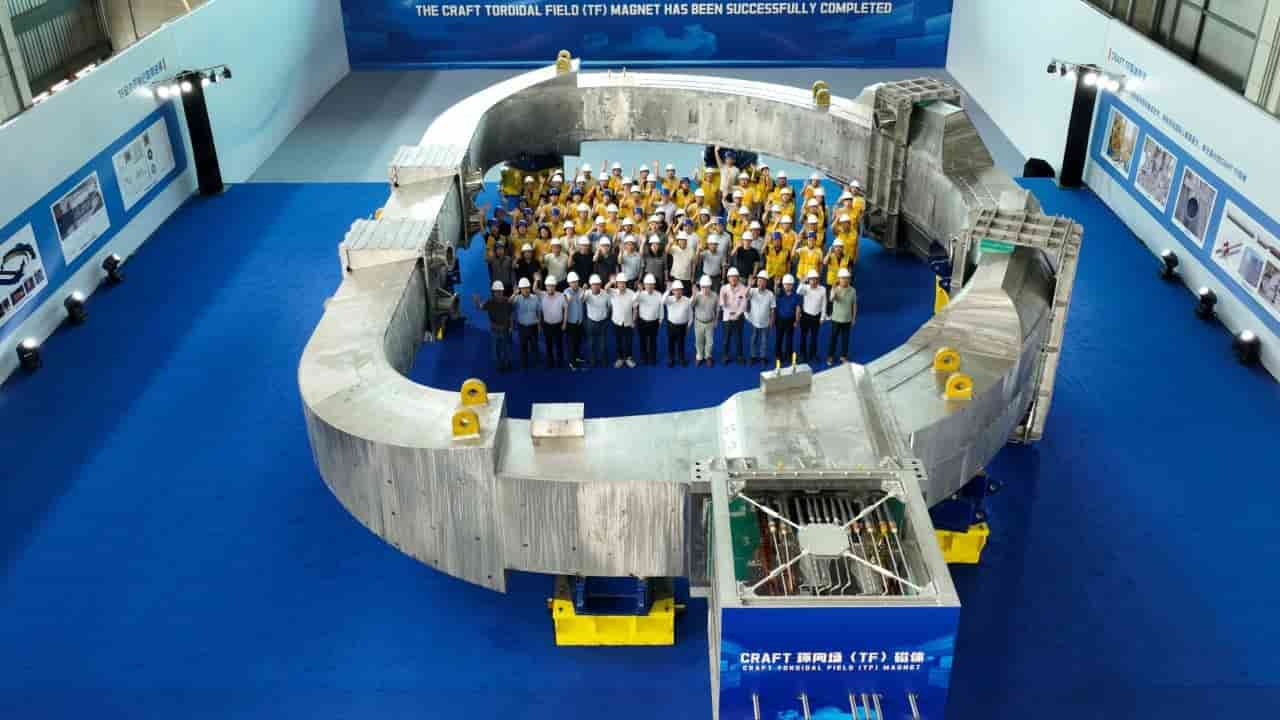
- China has activated the world's largest superconducting magnet.
- The magnet is a crucial component for the EAST nuclear fusion project.
- The EAST project aims to achieve stable plasma confinement for extended periods.
- This advancement is significant for the pursuit of sustainable fusion energy.
China has successfully activated the world's largest superconducting magnet, a significant step forward for its experimental advanced superconducting tokamak (EAST) nuclear fusion project. This powerful magnet is designed to generate and sustain a stable plasma for extended durations, a critical challenge in the pursuit of controlled nuclear fusion.
The EAST project, often referred to as China's "artificial sun," aims to replicate the energy-generating process of the sun through magnetic confinement fusion. The successful activation of this large-scale superconducting magnet is expected to enable researchers to conduct more advanced experiments and gather crucial data for developing a viable fusion energy source.
Fusion energy holds the promise of providing a clean, virtually limitless, and sustainable power supply. Achieving stable plasma confinement for long periods is a key hurdle that scientists worldwide are working to overcome. China's progress with the EAST project and its advanced superconducting magnet technology marks a notable contribution to global fusion research efforts.