Key facts
- Google, Meta, and Snap are investing in AI-enabled smart glasses.
- Advancements in AI allow glasses to process images, video, and speech for conversational responses.
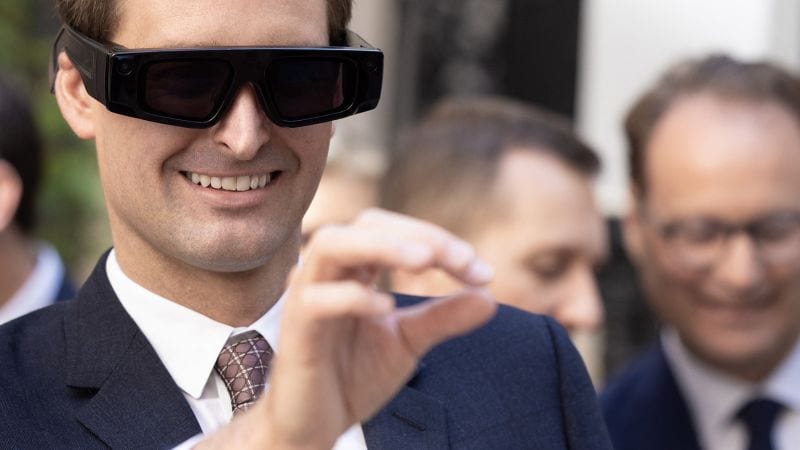
- Snap announced new AI-equipped eyewear for release in 2026.
- Meta's Ray-Ban AI glasses have sold two million pairs since late 2023.
- Market projections indicate substantial growth in the smart glasses sector.
- Privacy and social acceptance are key challenges for widespread consumer adoption.
Silicon Valley is betting that AI-powered smart glasses will be the next major technological advancement, aiming to overcome the limitations of earlier attempts. Companies like Google, Meta, and Snap are investing heavily in this area, driven by the realization that smartphones are no longer exciting enough to drive frequent upgrades and the desire to capitalize on the burgeoning AI market.
Advancements in artificial intelligence are making these devices significantly more capable. Emerging AI models can process images, video, and speech simultaneously, enabling them to answer complex questions and engage in conversational interactions. This enhanced functionality could make smart glasses a more compelling and useful gadget for consumers.
While Google Glass failed to gain traction over a decade ago due to issues like a small screen, short battery life, and unfashionable design, newer iterations are far more sophisticated. For instance, Google's prototype glasses, powered by Gemini, can identify objects and provide context-based information. Meta's Ray-Ban AI glasses allow users to ask about food spiciness or translate languages in real-time. Since their 2023 debut, two million pairs of Meta's glasses have been sold, with the company aiming for 10 million units annually by the end of 2026.
Market research indicates growing interest, with projections suggesting the smart glasses market could expand from 3.3 million units shipped in 2024 to nearly 13 million by 2026. The global market was valued at an estimated $1.9 billion in 2024 and is projected to reach $8.2 billion by 2030.
Despite the technological advancements and market potential, significant challenges remain. Consumer appetite for AI-enabled glasses is still uncertain, and privacy concerns, such as surreptitious filming, pose social acceptance hurdles. The convenience of hands-free AI interaction is seen as a key driver, with some experts noting that glasses are a natural form factor for many users.