Key facts
- Australian agriculture is quickly adopting AI and other digital technologies.
- AI enables precise targeting of weeds, potentially saving up to 96% on chemical use.
- AI-powered sensors in livestock industries monitor animals 24/7 for health and welfare.
- Autonomous farm equipment, like tractors, is becoming more prevalent.
- AI acts as a 'smart assistant' for farmers, aiding in decision-making.
Australian agriculture is rapidly integrating advanced technologies, including artificial intelligence, drones, and autonomous systems, to enhance farm management and sustainability. This shift is driven by the need for greater efficiency, improved animal welfare, and reduced environmental impact.
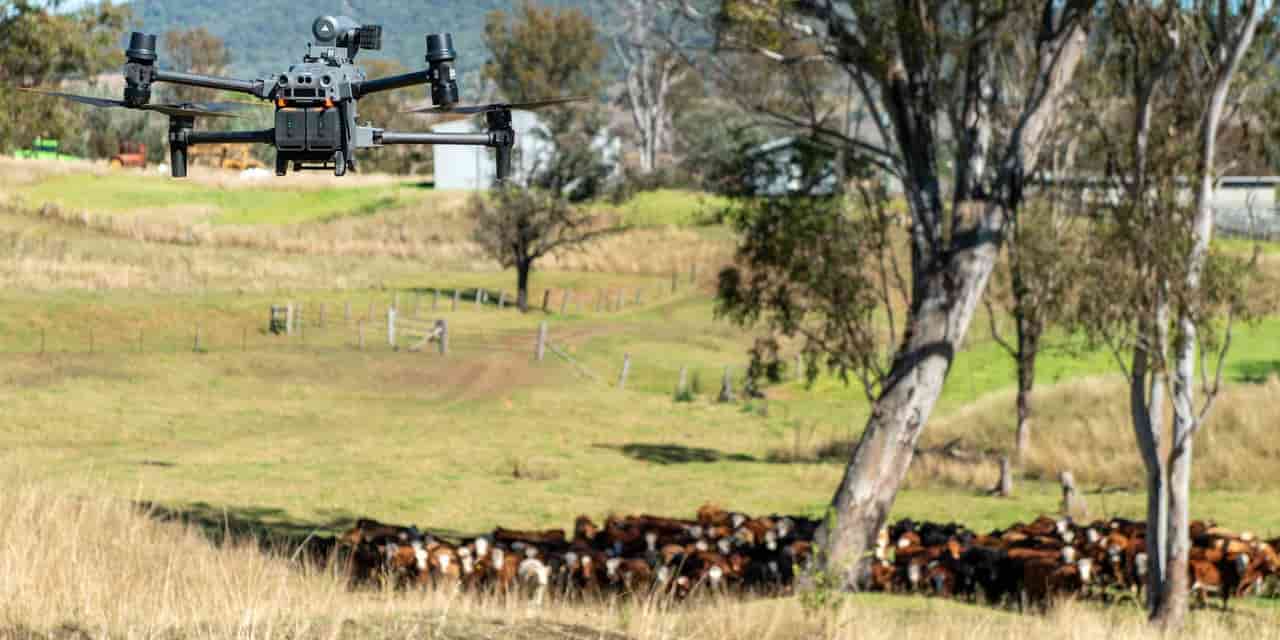
Farmers like Tom Coggan are already leveraging apps and smart collars to manage livestock remotely, demonstrating the practical application of these technologies. Melbourne University's Associate Professor Sigfredo Fuentes highlights that Australian agriculture is a fast adopter of AI, viewing it as a discipline that uses digital technologies to acquire and analyze data, providing actionable responses.
AI's role extends to various aspects of farming. In livestock industries, sensors and cameras integrated with AI can monitor animals around the clock, detecting illnesses or signs of calving earlier than human observation. Robotic milking machines, such as Lely's Zeta model, are being enhanced with AI to continuously track cow behavior and optimize milking schedules, leading to improved animal health and welfare.
Precision agriculture is another key area where AI is making a significant impact. Farm managers are using AI-powered spray booms that analyze images from cameras to selectively target weeds, drastically reducing chemical usage. This technology has shown potential for up to 96% chemical savings in certain crops, benefiting both the environment and the farmer's bottom line.
Overall, AI is being positioned as a 'smart assistant' for farmers, empowering them to make more informed and pioneering decisions, ultimately transforming the production of food and fibers.