Key facts
- SK Hynix and TSMC have achieved trillion-dollar valuations, driven by AI chip demand.
- South Korea's Kospi index hit an all-time high of 8,880, a 220% increase in 12 months.
- Nvidia sources 90% of its production costs from Asian suppliers, up from 65% a year ago.
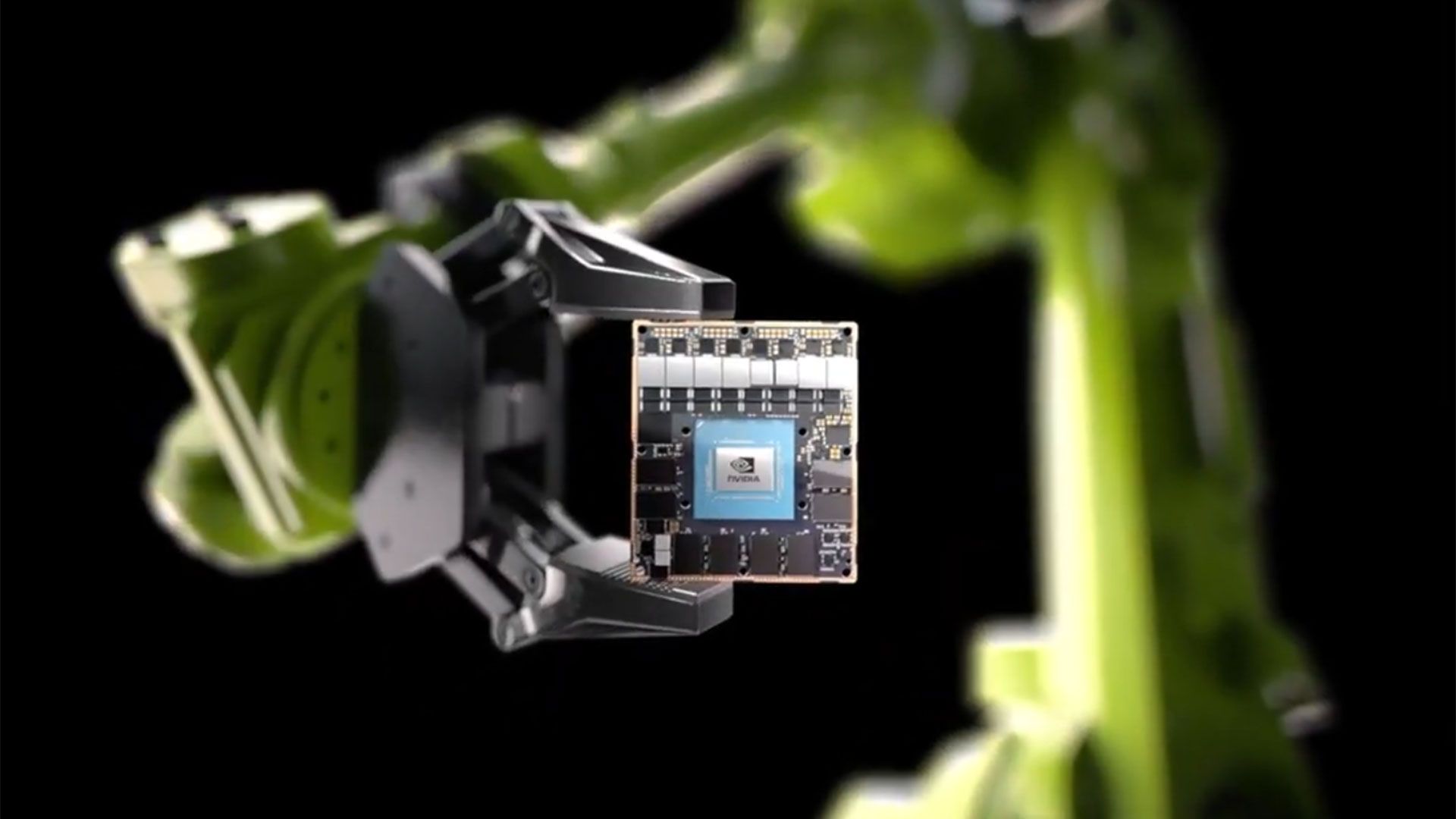
- Nvidia's new physical AI products, like the Jetson Thor robotics platform, utilize Asian-sourced components.
- Memory shortages are affecting Nvidia's older product lines due to redirected capacity.
The artificial intelligence revolution is not only elevating companies like Nvidia but also significantly boosting the valuations of Asian chip manufacturers. South Korea's stock market, particularly the Kospi index, has seen remarkable growth, surpassing European markets and reaching all-time highs. This surge is largely attributed to the explosive demand for AI-related semiconductors, propelling companies such as SK Hynix and Samsung Electronics into the trillion-dollar valuation club, alongside Taiwan's TSMC.
Nvidia, a central player in the AI ecosystem, relies heavily on these Asian suppliers. Its production costs from Asian supply chains have climbed to approximately 90%, a substantial increase from 65% a year prior. This includes fabrication by TSMC and High Bandwidth Memory (HBM) from SK Hynix and Samsung. Nvidia's CEO, Jensen Huang, has emphasized Taiwan's critical role as the 'epicenter' of the AI revolution and has announced plans for significant investment in the region. He has also engaged with top South Korean tech executives.
However, the rapid ascent of these tech stocks has sparked concerns about a potential AI bubble. While some analysts, like Russ Mould of AJ Bell, draw parallels to the dot-com bubble of 2000, others, such as Peter Kim of KB Securities, argue that the demand from AI hyperscalers like Meta, Amazon, Alphabet, and Microsoft provides a solid foundation. The demand for memory chips, distinct from Nvidia's advanced GPUs, is crucial, with Samsung, SK Hynix, and Micron meeting this need. The intense demand for AI components is also leading to memory shortages, forcing Nvidia to accelerate end-of-life timelines for older modules and redirecting production capacity towards higher-margin AI products.