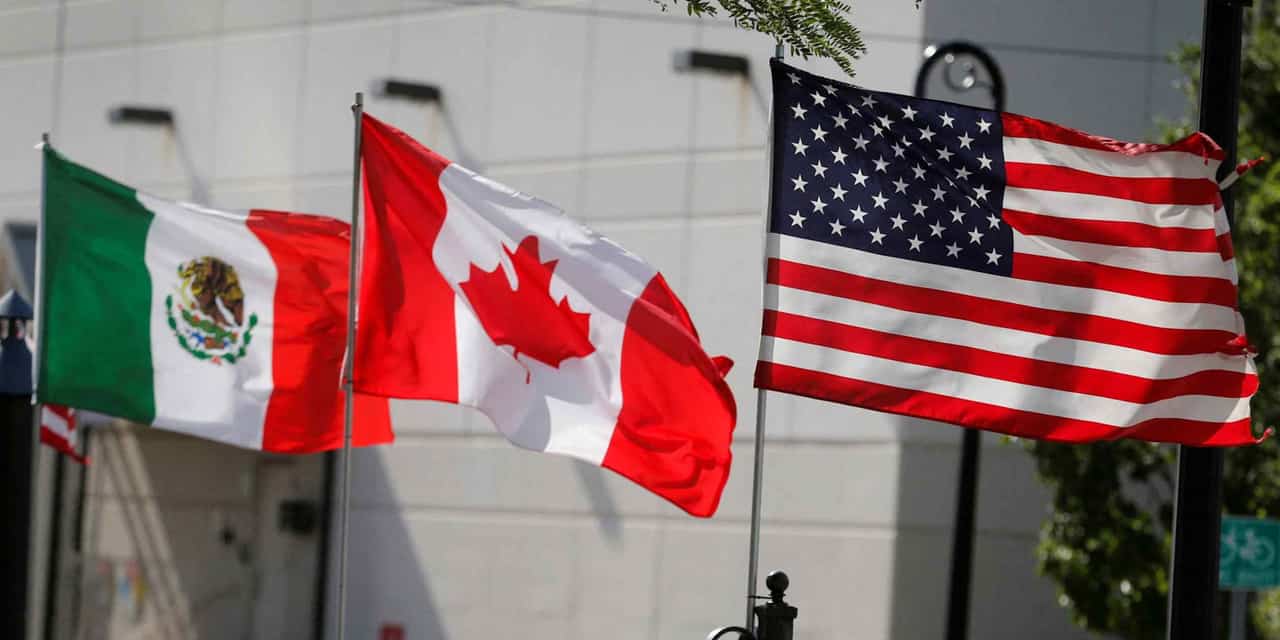
US declines to renew North American trade pact, starting 10-year termination clock
window 24h
IN SHORT
The United States has declined to renew the USMCA trade deal, initiating a 10-year countdown to potential termination in 2036. President Donald Trump's administration is opting for annual reviews instead of a full renewal, signaling a desire for changes to reduce trade deficits and potentially leading to separate agreements with Mexico and Canada. This decision creates economic uncertainty across North America and could impact established supply chains, particularly concerning automotive production and rules of origin.
✉Newsletter
PiQ Daily
Pick your topics. Get only what matters, on your cadence.
Key Numbers
10-yearcountdown to potential termination
2036potential treaty expiration year
Who's Involved
United States
nation declining to renew USMCA trade pact
USMCA
North American trade pact undergoing review
Donald Trump
U.S. President leading administration's trade policy
Mexico
nation involved in USMCA trade negotiations
Canada
nation involved in USMCA trade negotiations
1 / 2
Key facts
The United States has declined to renew the USMCA trade deal.
This decision initiates a 10-year countdown to potential termination.
The potential termination date for the treaty is 2036.
President Donald Trump's administration is opting for annual reviews instead of renewal.
The administration may pursue separate agreements with Mexico and Canada.
The move signals a desire to reduce trade deficits.
The USMCA review process began on Wednesday.
Negotiations to renew the pact are expected to be difficult.
Potential changes concern automotive production and rules of origin.
The decision creates economic uncertainty across North America.
The United States has declined to renew the North American trade pact, the USMCA, initiating a 10-year countdown to its potential termination. President Donald Trump's administration will not renew the agreement in its current form, opting instead for annual reviews and potentially pursuing separate agreements with Mexico and Canada. This decision signals a desire for changes aimed at reducing trade deficits and introduces economic uncertainty across North America. The review process, which began Wednesday, could lead to significant alterations, especially regarding automotive production and rules of origin, potentially disrupting established supply chains. The treaty could expire in 2036 if not renewed, impacting investment decisions throughout the region. Negotiations to renew the pact are expected to be difficult as the three nations enter this critical review period.
Frequently asked questions
The USMCA, or United States-Mexico-Canada Agreement, is a trade pact that replaced the North American Free Trade Agreement (NAFTA).
The 10-year period signifies the time frame within which the USMCA could potentially be terminated if no agreement on changes is reached.
The US is seeking changes to reduce trade deficits and potentially address other trade-related issues, including Canada's economic ties with China.
What Happens Next
01The 10-year clock to potential termination of the USMCA has begun.
02Further negotiations or policy changes regarding the USMCA are anticipated.
Get the newsletter.
Pick the topics you actually care about. We'll email when there's news worth your time, on the cadence you choose. Cancel any time from your account.