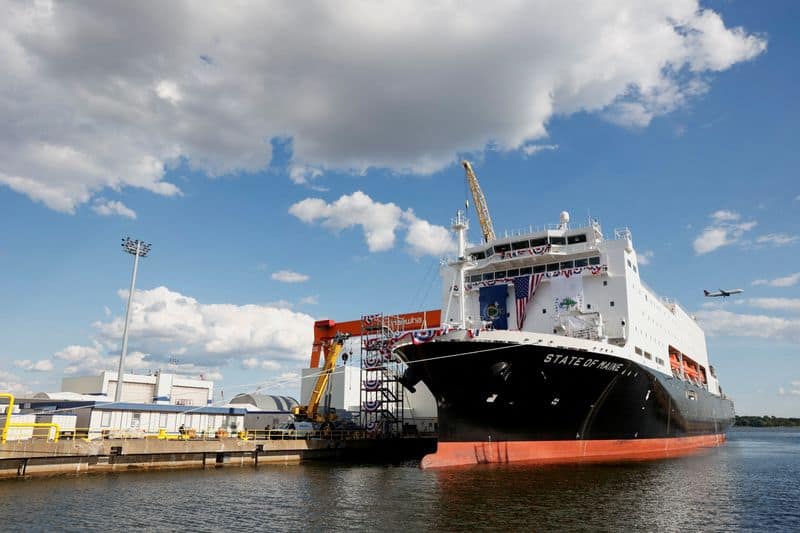
Hanwha, Fincantieri shares rise after Trump opens Navy shipbuilding to foreign yards
window 24h
IN SHORT
President Donald Trump has signed a national security memorandum permitting foreign shipbuilders with significant U.S. investments to construct up to two vessels domestically on a temporary basis. This move has led to a rise in shares for South Korea's Hanwha Ocean Co and Italy's Fincantieri. In a separate development, South Korea's chief trade negotiator, Yeo Han-koo, has been dismissed amidst escalating U.S. tariff pressure and demands for accelerated investment commitments.
✉Newsletter
PiQ Daily
Pick your topics. Get only what matters, on your cadence.
Key Numbers
twoships foreign shipbuilders can build domestically
Who's Involved
Donald Trump
President who signed a national security memorandum
Hanwha Ocean Co
South Korean company whose shares rose
Fincantieri
Italian company whose shares rose
Yeo Han-koo
South Korea's chief trade negotiator who was dismissed
Coupang
e-commerce giant involved in a dispute over fines
1 / 2
Key facts
President Donald Trump signed a national security memorandum.
The memorandum allows foreign shipbuilders with substantial U.S. investments to build up to two ships domestically.
This provision is temporary.
Shares of Hanwha Ocean Co rose on the news.
Shares of Fincantieri rose on the news.
South Korea's chief trade negotiator, Yeo Han-koo, has been dismissed.
The dismissal occurred amid escalating U.S. tariff pressure.
Seoul faces demands to accelerate investment commitments.
A dispute over fines against e-commerce giant Coupang is a factor.
President Donald Trump has signed a national security memorandum that allows foreign shipbuilders with substantial investments in the United States to build up to two ships domestically on a temporary basis. This directive aims to bolster the U.S. shipbuilding capacity by leveraging foreign expertise and investment. The announcement has had a positive impact on the stock market, with shares of South Korea's Hanwha Ocean Co and Italy's Fincantieri experiencing a rise following the news.
In parallel, South Korea's chief trade negotiator, Yeo Han-koo, has been dismissed from his position. This dismissal occurs against a backdrop of increasing tariff pressures exerted by the United States on South Korean goods and services. The decision to remove Yeo Han-koo comes as Seoul faces heightened demands from the U.S. to expedite investment commitments. Additionally, a dispute involving fines levied against the e-commerce giant Coupang is reportedly contributing to the trade tensions.
The U.S. shipbuilding sector has long been a focus of national security discussions, with regulations historically favoring domestic construction. This memorandum represents a potential shift, allowing for temporary foreign participation under specific investment conditions. The rise in shares for Hanwha Ocean and Fincantieri suggests that these companies are seen as potential beneficiaries of this policy change, possibly through partnerships or direct contracts within the U.S. market.
Yeo Han-koo's dismissal highlights the ongoing complexities in U.S.-South Korea trade relations. The pressure for accelerated investment commitments and the ongoing dispute over Coupang's fines indicate a challenging period for bilateral trade negotiations. The U.S. administration's tariff policies continue to shape economic interactions with key trading partners, prompting significant diplomatic and economic adjustments.
↳ Why This Matters
President Donald Trump has signed a national security memorandum that allows foreign shipbuilders with substantial investments in the United States to build up to two ships domestically on a temporary basis. This directive aims to bolster the U.S. shipbuilding capacity by leveraging foreign expertise and investment. The announcement has had a positive impact on the stock market, with shares of South Korea's Hanwha Ocean Co and Italy's Fincantieri experiencing a rise following the news.
Frequently asked questions
Shares of South Korea's Hanwha Ocean Co and Italy's Fincantieri rose on Friday following the announcement.
Foreign shipbuilders that make substantial investments in U.S. shipyards and train an American workforce will be temporarily permitted to build up to two ships in their parent shipyards for quick delivery.
The directive allows foreign builders to construct surface combatants, consolidated cargo replenishment tankers, and roll-on/roll-off vessels abroad.
Bryan Clark of the Hudson Institute identified Hanwha as the clear frontrunner due to its broad financial commitments to U.S. shipbuilding.
What Happens Next
01Hanwha is reviewing the details of President Trump's memorandum.
02Fincantieri did not immediately comment on the announcement.
03Austal did not immediately respond to a request for comment.
Get the newsletter.
Pick the topics you actually care about. We'll email when there's news worth your time, on the cadence you choose. Cancel any time from your account.