Key facts
- President Donald Trump signed a national security memorandum allowing foreign shipbuilders to build up to two ships in the U.S.
- Foreign shipbuilders must make substantial investments in U.S. shipyards and train an American workforce to qualify.
- The directive permits the construction of surface combatants, replenishment tankers, and roll-on/roll-off vessels abroad.
- Hanwha Ocean Co and Fincantieri SpA shares rose following the announcement.
- The Shipbuilders Council of America expressed concern that the policy shift could harm the U.S. industry.
Shares of South Korea's Hanwha Ocean Co and Italy's Fincantieri saw gains on Friday following President Donald Trump's directive to open U.S. Navy shipbuilding to foreign yards. Trump signed a national security memorandum on Thursday that allows foreign shipbuilders making substantial investments in U.S. shipyards and training American workers to temporarily build up to two ships in their parent yards for rapid delivery.
The directive permits the construction of three vessel types abroad: surface combatants, consolidated cargo replenishment tankers, and roll-on/roll-off vessels. Hanwha Ocean Co's stock climbed 5.6%, while Fincantieri SpA gained 3.2%. Austal also rose 5.6% on Friday.
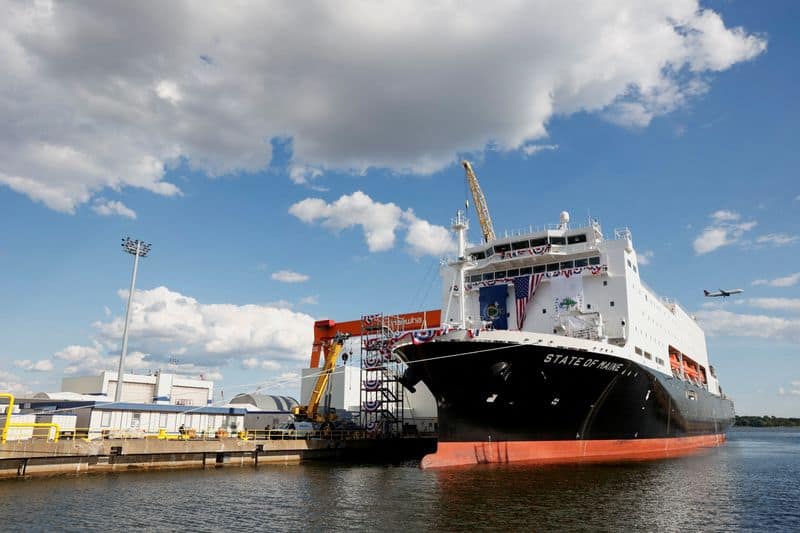
Bryan Clark, a senior fellow at the Hudson Institute, identified Hanwha as a clear frontrunner due to its significant financial commitments to U.S. shipbuilding, including a $5 billion pledge to expand Philly Shipyard, which it acquired in 2024. This investment is part of broader South Korean government commitments under a trade deal with Washington. Clark noted that such investment is crucial for enabling shipyards to produce the required vessels.
Fincantieri, Europe's largest shipbuilder, has invested over $800 million in its U.S. shipyards, including Fincantieri Marinette Marine in Wisconsin and Fincantieri Bay Shipbuilding, over the past decade. The company recently secured a $30 million Navy contract for initial work on Medium Landing Ship vessels.
Clark anticipates that the policy shift will initially focus on tankers and roll-on/roll-off vessels due to the complexity and cost of redesigning warships for the U.S. supply chain. The new policy also complicates Hanwha's non-binding bid for Austal's U.S. operations, as a sale could prevent Austal's Australian parent from building two ships domestically under the new rules. Clark suggested Australia is unlikely to qualify for the investment requirements due to its commitments under the AUKUS submarine pact.
The Shipbuilders Council of America, representing U.S. companies, voiced concerns that directing shipbuilding overseas would undermine the domestic industry.