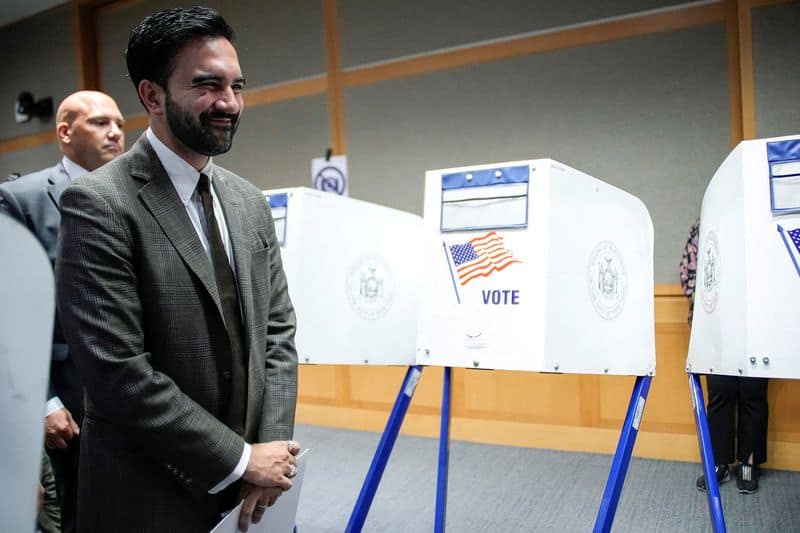
Political action committees are spending millions in key US primary elections, with crypto PACs contributing significantly to candidates in New York, Maryland, and Utah. The American Israel Public Affairs Committee (AIPAC) is also facing scrutiny and backlash for its record spending in Democratic primaries, particularly in Maryland and New York. New York City Mayor Zohran Mamdani is endorsing far-left candidates, some of whom have aligned with his critical remarks about AIPAC, while others have distanced themselves. The push for the CLARITY Act, aimed at regulating digital assets, is also underway, with a July 4 deadline for advancement before Congress's recess.

Crypto-backed political action committees have disclosed spending over $8 million on media to support candidates in primary elections held in New York, Maryland, and Utah. This surge in spending is testing the influence of groups like the American Israel Public Affairs Committee (AIPAC), which is facing significant backlash and scrutiny in Democratic primaries due to its record-high expenditures. The group's influence is being particularly tested in key races in Maryland and New York, sparking debate over its role in elections and its stance on Israel.
New York City Mayor Zohran Mamdani is actively backing three far-left candidates in primary elections, challenging mainstream Democratic incumbents. Mamdani's endorsements and his recent controversial remarks, where he referred to AIPAC as 'monsters,' have drawn mixed reactions. He defended his comment by referencing Antonio Gramsci and criticizing AIPAC's stance on the Gaza conflict. While many of the candidates he endorsed aligned with his sentiments, others declined to comment or distanced themselves from the strong language.
Simultaneously, lawmakers and industry advocates are working to advance the CLARITY Act through Congress before the July 4 recess. This legislative effort aims to establish a regulatory foundation for digital assets. The increased campaign contributions from crypto PACs are seen as a move to influence the legislative landscape surrounding digital assets, with a deadline looming for the CLARITY Act's progress.
Some Maryland Democrats have voiced opposition to the outside spending from crypto billionaires, calling for candidates to reject such funds. The outcomes of these primaries are expected to test Mamdani's influence and the broader strength of the democratic socialist movement within the Democratic Party, as well as the impact of significant financial backing from the crypto industry.
Crypto-backed political action committees have disclosed spending over $8 million on media to support candidates in primary elections held in New York, Maryland, and Utah. This surge in spending is testing the influence of groups like the American Israel Public Affairs Committee (AIPAC), which is facing significant backlash and scrutiny in Democratic primaries due to its record-high expenditures. The group's influence is being particularly tested in key races in Maryland and New York, sparking debate over its role in elections and its stance on Israel.