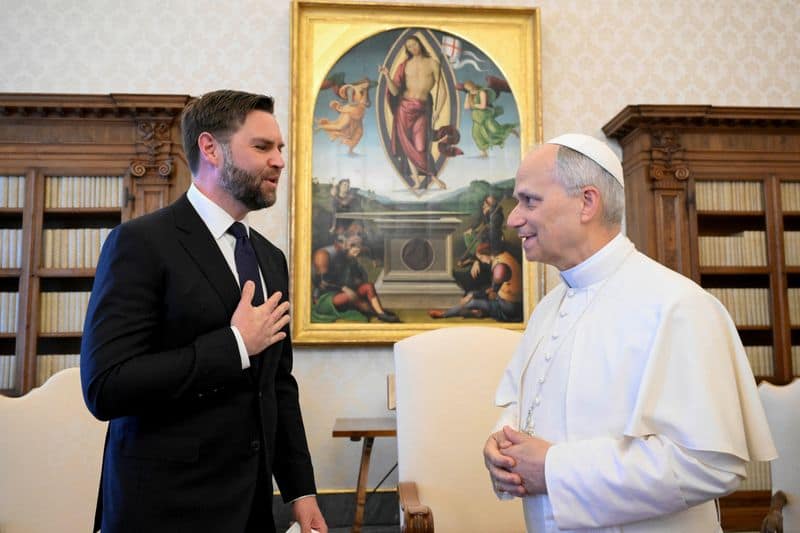
Key facts
- Vice President JD Vance described the Vatican's views on immigration as 'troubling'.
- Vance stated his disagreement with the Vatican's immigration stance.
- Pope Leo has repeatedly criticized President Donald Trump's immigration policies.
- Trump's administration has implemented a hardline immigration crackdown.
- Vance invited Catholic leadership to discuss immigration policies, reminding them of migration's victims.
U.S. Vice President JD Vance stated on Tuesday that he found the Vatican's views on immigration to be "troubling" and expressed his disagreement with them. These remarks come after Pope Leo has repeatedly voiced disapproval of President Donald Trump's immigration policies.
Pope Leo, described as the first U.S. pope, has called for a "deep reflection" in the U.S. regarding the treatment of migrants under Trump's administration. He has characterized the Trump administration as "extremely disrespectful" to immigrants and criticized their "inhuman" treatment.
Vance, who is Catholic, shared his perspective during an interview on Fox News' "The Ingraham Angle" show. He indicated that while he is not hostile towards Catholic leadership who disagree with U.S. immigration policies, he encourages them to remember that "mass migration has victims."
President Trump has implemented a stringent immigration crackdown and deportation drive. Rights groups have raised concerns that these policies violate free speech and due process rights, creating an unsafe environment, particularly for ethnic minorities who have reported concerns about racial profiling.
Trump has been critical of Pope Leo and maintains that his policies aim to enhance domestic security and reduce illegal immigration. Pope Leo has also expressed criticism of other policies enacted by Trump, including the Vatican's decision not to join Trump's "Board of Peace" initiative for Gaza. Additionally, the Pope has criticized the Iran war and recently commended an interim deal between Washington and Tehran, expressing hope for its role in ending the conflict.