HomeAll NewsEducationTV
Equities & FundsCrypto & Digital AssetsAI & TechnologyBusiness & CorporateUS Politics & PolicyGeopolitics & Global RiskMacro, Rates & FXCommodities & EnergyEuropean Politics & MarketsAsia-PacificReal Estate & Property
Story archiveAll categories
← All Stories

US tests GMO flies to combat livestock pest

Created at 23 Jul · 10:46 AM1 source↑ Market-relevant
IN SHORT

Scientists are preparing for the first outdoor tests of genetically modified screwworm flies, known as NovoFly, in Panama. This development aims to create a more effective tool against the flesh-eating parasite that has spread across Central America and into the United States, potentially causing over $1 billion in losses to the livestock industry.

✉Newsletter

PiQ Daily

Pick your topics. Get only what matters, on your cadence.

Key Numbers

$1 billionestimated losses to Texas livestock industry
100 millionsterile flies produced weekly at Panama facility
500 millionsterile flies needed weekly to push back pest
2006year Panama facility opened
1957year USDA began using sterile male technique
1966year screwworm was eradicated from the U.S.
9 to 12 weekstimeframe for larger field trials
50,000insects to be released in field trials
6 to 8 weekstypical duration of field tests

Who's Involved

Scott Hutchins
USDA's chief scientist and an undersecretary
Alex Arp
USDA research geneticist working in Panama
Maxwell Scott
Entomologist at North Carolina State University who helped develop NovoFly
Edwin Burgess
Assistant professor of veterinary entomology at the University of Florida
Gabriel Ayala
Head of animal health for Mexico's National Service for Agri-Food Health, Safety and Quality
Kim Lohmeyer
Kerrville lab director
Rear Admiral Michael Schmoyer
Leading USDA's efforts against screwworm
US tests GMO flies to combat livestock pest

↳ Why This Matters

The development and potential deployment of NovoFly represent a critical advancement in combating a devastating livestock pest that threatens agricultural economies. If successful, this technology could significantly accelerate the eradication of screwworms, preventing billions of dollars in losses and protecting animal health across North America.

Key facts

  • Scientists are conducting the first outdoor tests of genetically modified screwworm flies, NovoFly, in Panama.
  • NovoFly is engineered to produce only male flies, which can be sterilized and released to reduce the wild population.
  • The spread of screwworm infestations poses an estimated $1 billion threat to the Texas livestock industry.
  • Current sterile fly production is insufficient to combat the widespread infestation across Mexico and into Texas.
  • The U.S. EPA has proposed registering NovoFly, which would be the first genetically modified insect to receive full clearance.

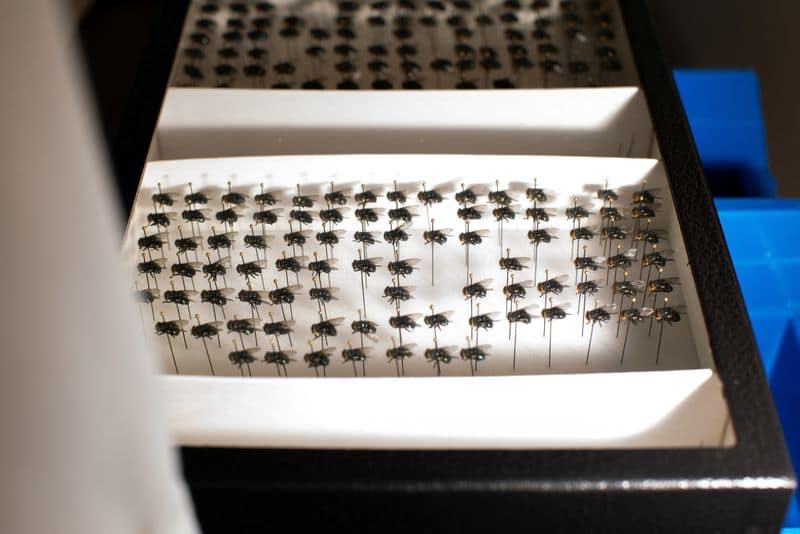
Scientists are preparing to launch the first outdoor tests of genetically modified screwworm flies, known as NovoFly, at a U.S.-funded facility in Panama. This marks a significant step in developing a more effective method to combat the flesh-eating parasite that has spread through Central America and into the United States, posing a substantial threat to the livestock industry.

The New World screwworm fly lays eggs in open wounds of warm-blooded animals, and its larvae burrow through living flesh, potentially killing the host. For decades, the primary method of control has been the widespread dispersal of sterile screwworm flies, produced at a joint U.S.-Panamanian facility in Panama. However, recent infestations across Mexico and into Texas have overwhelmed the current production capacity, which stands at about 100 million sterile flies per week, far short of the estimated 500 million needed to establish a barrier.

NovoFly is engineered to produce only male offspring. These males can then be sterilized and released to mate with wild females, leading to unfertilized eggs and a progressive decline in the screwworm population. This approach aims to significantly increase the number of sterile males available for eradication efforts. Officials believe this could nearly double the number of sterile flies available for the fight against the pest.

Researchers will initially test NovoFly's survival and virility in mesh cages in Panama's climate before proceeding to larger field trials. These trials, expected to begin in nine to 12 weeks at a nearby ranch, will involve releasing marked insects and tracking their survival and mating competitiveness. Success is not guaranteed, as the flies' ability to fly far enough to find mates and their overall competitiveness against wild males remain key questions.

If successful, scaling up NovoFly production could occur at a new facility planned for Texas, rather than immediately at the Panama plant, to avoid disrupting current operations. The U.S. Environmental Protection Agency has proposed registering NovoFly, which would make it the first genetically modified insect to receive full EPA clearance. Mexico also supports the technology and may begin producing the flies by year-end.

Frequently asked questions

The New World screwworm is a parasitic fly whose females lay eggs in open wounds on animals. The larvae burrow into living flesh, potentially killing their host if untreated.

Current methods of producing sterile flies are insufficient to combat the widespread infestation of screwworms. Genetically modified flies, NovoFly, are engineered to produce only males, which could significantly increase the effectiveness of eradication efforts.

Widespread infestations could cause estimated losses of more than $1 billion to the U.S. livestock industry, particularly in Texas, and could spread to other U.S. states.

For decades, the most effective tool has been the widespread dispersal of sterile screwworm flies, produced at a facility in Panama. However, recent outbreaks have exceeded the facility's production capacity.

What Happens Next

01Scientists await approval from Panama's biosecurity agency to begin outdoor NovoFly tests.
02Larger field trials are expected to commence in nine to 12 weeks at a nearby ranch.
03Mexico may begin producing male-only flies by the end of the year.
04A new sterile-fly production facility is expected to open in Texas late next year.

Get the newsletter.

Pick the topics you actually care about. We'll email when there's news worth your time, on the cadence you choose. Cancel any time from your account.

Cadence

How It Developed

Scientists are preparing for the first outdoor tests of genetically modified screwworm flies in Panama.
The genetically modified flies, called NovoFly, are engineered to produce only males.
The Trump administration has supported the development of NovoFly as a potential game-changer.
Infestations of New World screwworm could cause estimated losses of over $1 billion to Texas' livestock industry.
Screwworm larvae burrow through living flesh, eventually killing their host if untreated.
The U.S. Department of Agriculture and Panama's Ministry of Agricultural Development jointly manage a facility producing sterile flies.
Wild screwworm flies have spread throughout Mexico and infested livestock in Texas for the first time in decades.
The current facility operates at maximum capacity, producing about 100 million sterile flies per week, but 500 million are needed.
Sponsored

London Quick Take - 22 July - UK inflation softens, oil rises and chips rally ahead of Alphabet, Tesla earnings

SAXO

Sources

T1
US tests GMO flies in rush to fight flesh-eating livestock pestReuters

Related Stories

Trump administration explores offshore nuclear power plants
22 Jul · 7:56 PM
US quarantines citizens returning from Congo at NY military base
22 Jul · 2:21 PM
US judge to weigh New York Times subpoenas over Trump plane reporting
23 Jul · 10:10 AM
Trump to Expand Pledge on Data Center Power Costs
22 Jul · 4:12 PM
FDA panel to review popular peptides amid persistent consumer appetite
22 Jul · 4:02 PM