Key facts
- The U.S. military in South Korea has "important" military interests in the Gwangju military airport.
- The Gwangju airport is designated for relocation to make way for a semiconductor production cluster.
- South Korean chipmakers Samsung Electronics and SK hynix plan to invest a combined 800 trillion won in the region.
- The airport is one of five collocated operating bases (COBs) jointly used by the U.S. and South Korean militaries.
- U.S. air assets can be deployed to the airport during contingencies, and some areas are reserved for U.S. use under the Status of Forces Agreement (SOFA).
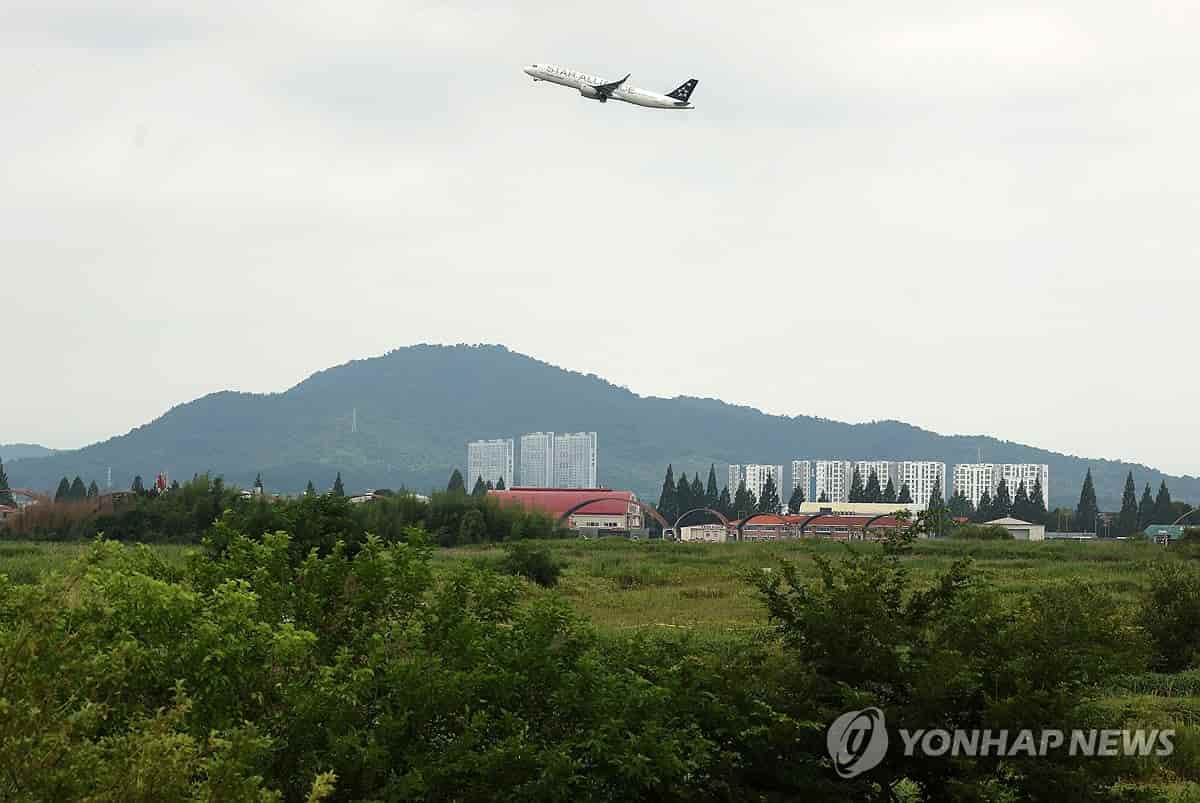
The U.S. military stationed in South Korea has indicated "important" military interests in the Gwangju military airport, a site designated for relocation to accommodate a planned semiconductor production cluster. This development arises from Seoul's recently unveiled mega investment projects.
Maj. Laura Hayden, spokesperson for the Seventh Air Force, stated, "Seventh Air Force does have important military interests at Gwangju Air Base, and we will continue our close coordination with the ROKAF to ensure all requirements are met and our strong combined readiness posture is maintained." The airport's relocation is part of a larger plan where South Korean chipmakers Samsung Electronics and SK hynix intend to invest a combined 800 trillion won (US$522 billion) in the southwestern Honam area, including Gwangju.
The government has identified Muan County as a preliminary candidate site for the relocated military airport. Military officials noted that consultations with the U.S. would be necessary, as the Gwangju airport is one of five collocated operating bases (COBs) jointly used by the allies. Although no U.S. forces are permanently stationed there in peacetime, U.S. air assets can be deployed during contingencies, and certain areas are reserved for U.S. military use under the Status of Forces Agreement (SOFA).
A defense ministry official stated that specific details regarding the relocation plan have not yet been finalized, emphasizing efforts to maintain military readiness and coordinate closely with the Air Force and the U.S. side. U.S. Forces Korea (USFK) indicated it does not comment on the host nation's pre-decisional policy matters but reaffirmed its commitment to maintaining a ready force on the Korean Peninsula.