Key facts
- U.S.-backed negotiations between Venezuela's interim government and an opposition faction are set to begin Saturday.
- Maria Corina Machado, a key opposition figure, will not participate in the talks.
- Dinorah Figuera will lead the opposition delegation, backed by the U.S.
- The talks aim to remake Venezuela's political system ahead of elections.
- The interim government seeks the lifting of remaining U.S. sanctions.
U.S.-backed negotiations between Venezuela's interim government and a faction of the opposition are scheduled to commence on Saturday, with a notable absence of the country's most prominent opposition leader, Maria Corina Machado. The talks are intended to reform the nation's political framework in anticipation of future elections.
The negotiations are being facilitated by the United States, which has exerted significant influence over Venezuelan politics. The government's delegation will be led by Jorge Rodriguez, brother of acting President Delcy Rodriguez and a seasoned negotiator. The opposition's side will be headed by Dinorah Figuera, who leads a segment of the 2015 national assembly cohort still recognized by the U.S. as the last democratically elected legislature.
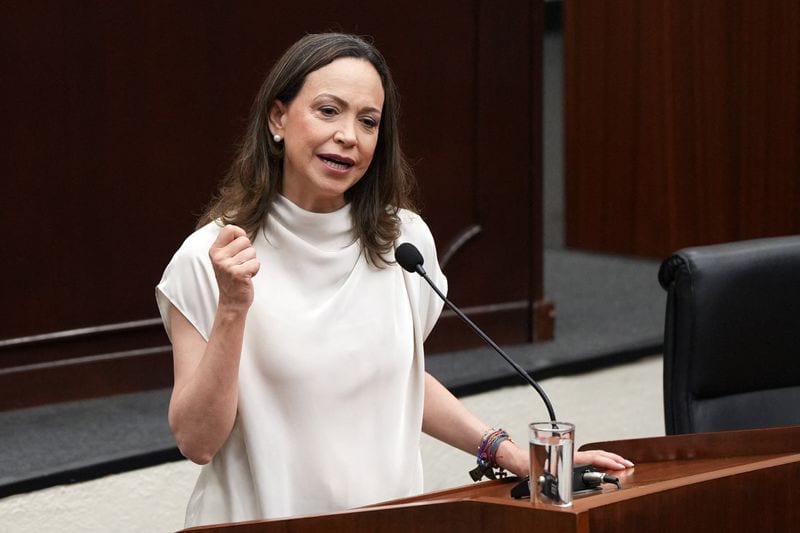
Machado, a Nobel Peace Prize winner and the country's most popular opposition figure, will not be participating, a decision that has drawn criticism from some observers. Machado, who has been living in relative hiding since a contested 2024 presidential election, had vowed to return to Venezuela following recent devastating earthquakes, a move that reportedly frustrated U.S. officials. Reports of the U.S. administration advising Machado against returning have been denied.
Sources indicate Machado was not aware of the talks until shortly before they were scheduled, and she was not invited to join the delegation as she is not a member of the 2015 assembly. A person familiar with the negotiations suggested Machado is right to distance herself, as her future presidency hinges on the success of these talks. Machado herself stated that while she will not participate, she will evaluate the talks' success based on the restoration of democratic institutions, the release of political prisoners, and the scheduling of elections.
The interim government intends to use the talks to advocate for the lifting of remaining U.S. sanctions. The U.S. has previously eased sanctions on Venezuela's oil, gas, and gold sectors following agreements for fair elections. U.S. Secretary of State Marco Rubio emphasized the need for all elements of Venezuelan society to be represented, acknowledging Machado's significant role.
An opposition source close to Figuera's group described the U.S. as a "central player" in the talks, providing security for opposition members who have faced politically motivated detentions and prosecutions. Ricardo Rios, head of the Poder y Estrategia political risk consultancy, noted that Machado's exclusion effectively sidelines an important segment of the country but is unlikely to cause new fractures within the already divided opposition.