HomeEverythingEducation
Equities & FundsCrypto & Digital AssetsAI & TechnologyBusiness & CorporateUS Politics & PolicyGeopolitics & Global RiskMacro, Rates & FXCommodities & EnergyEuropean Politics & MarketsAsia-PacificReal Estate & Property
← All Stories

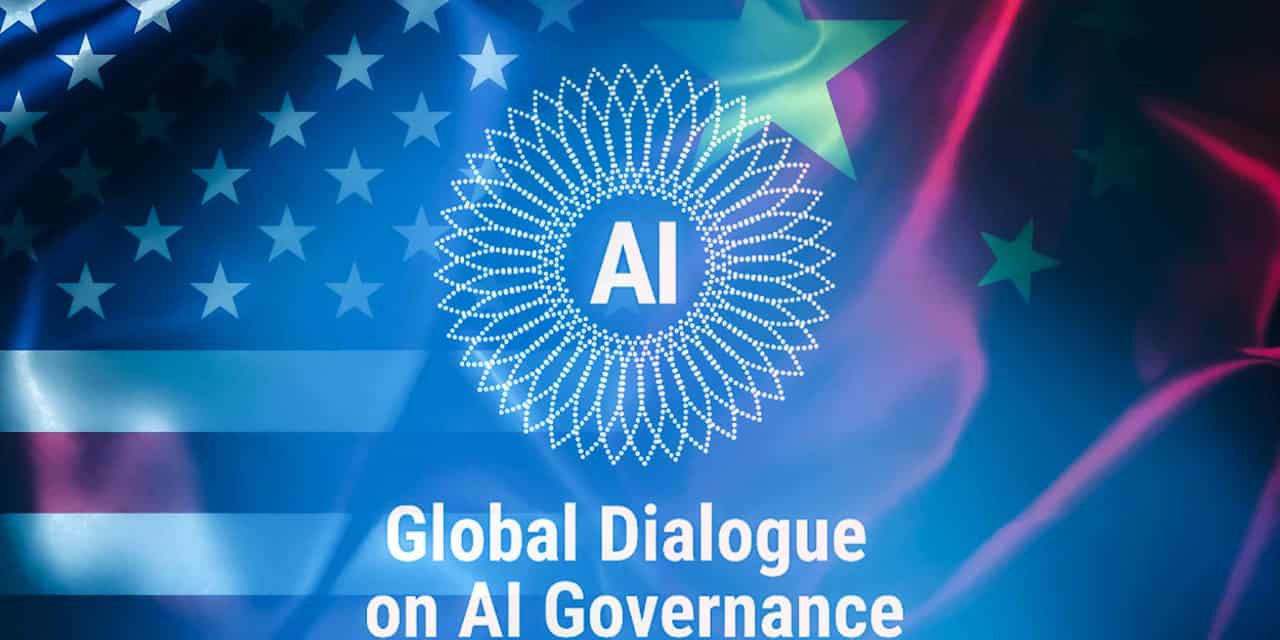
US and China meet in Geneva to discuss AI governance

Created at 7 Jul · 2:50 AM1 source↑ Market-relevant
IN SHORT

Delegations from the United States and China are meeting in Geneva to find common ground on artificial intelligence governance, despite differing domestic regulatory approaches. The discussions aim to reduce risks of unintended conflict arising from AI's impact on national security.

✉Newsletter

PiQ Daily

Pick your topics. Get only what matters, on your cadence.

Key Numbers

7 yearsduration of Track II dialogue on AI and national security
1,500+written submissions for the Global Dialogue on AI Governance
40members of the Independent International Scientific Panel on Artificial Intellig
2,600+candidates for the Independent International Scientific Panel on Artificial Inte

Who's Involved

Ryan Hass
Co-host of The Beijing Brief podcast, speaking on AI governance
R. David Edelman
Participant in AI and national security dialogues, speaking at UN conference
Xiao Qian
Chinese counterpart in Track II dialogue on AI and national security
Yoshua Bengio
Co-chair of the Independent International Scientific Panel on Artificial Intelligence
Maria Ressa
Co-chair of the Independent International Scientific Panel on Artificial Intelligence
Egriselda López
Co-chair of the Global Dialogue on Artificial Intelligence Governance
Rein Tammsaar
Co-chair of the Global Dialogue on Artificial Intelligence Governance
US and China meet in Geneva to discuss AI governance

↳ Why This Matters

Finding common ground on AI governance between the U.S. and China is crucial for mitigating global security risks and preventing potential conflicts arising from the rapid advancement of artificial intelligence.

Key facts

  • U.S. and Chinese delegations are meeting in Geneva to discuss artificial intelligence governance.
  • The meetings occur despite differing approaches to domestic AI regulation.
  • A key focus is reducing the risk of unintended conflict stemming from AI's impact on national security.
  • The discussions are taking place at the UN Global Conference on AI, Security, and Ethics.
  • An ongoing Track II dialogue between Brookings and Tsinghua has explored U.S.-China AI national security for seven years.

Delegations from China and the United States are convening in Geneva for discussions on artificial intelligence governance, seeking common ground despite significant differences in their domestic regulatory approaches to the technology. The meetings are part of the UN Global Conference on AI, Security, and Ethics.

Experts highlight that a primary driver for dialogue between the two nations is a shared anxiety over AI's potential impact on national security and the risk of unintended conflict. This concern has underpinned a Track II dialogue on AI and national security, facilitated by Brookings and Tsinghua University, which has been ongoing for seven years.

The Global Dialogue on Artificial Intelligence Governance, established as an outcome of the Pact for the Future, aims to provide a platform for governments and stakeholders to discuss international cooperation, share best practices, and promote transparent discussions on AI governance. The process has involved extensive consultations and submissions from diverse global perspectives.

During the conference, the Independent International Scientific Panel on Artificial Intelligence is set to present its preliminary report. The dialogue also addresses AI's opportunities and implications, bridging AI divides, ensuring safe and trustworthy AI, and promoting human rights in the context of AI development.

Frequently asked questions

Delegations from China and the U.S. are meeting to find common ground on artificial intelligence governance and discuss AI's impact on national security.

It is a United Nations platform where governments and stakeholders convene to discuss international cooperation, share best practices, and advance discussions on AI governance.

It is a seven-year-old dialogue between Brookings and Tsinghua University aimed at exploring the role of AI in national security, particularly between the U.S. and China.

Key concerns include AI's impact on collective national security and the potential for unintended conflict, as well as bridging AI divides and promoting human rights.

What Happens Next

01The Independent International Scientific Panel on Artificial Intelligence will present its preliminary report.
02The next Global Dialogue on AI Governance will take place in New York in May 2027.

Get the newsletter.

Pick the topics you actually care about. We'll email when there's news worth your time, on the cadence you choose. Cancel any time from your account.

Cadence

How It Developed

Delegations from China and the U.S. are meeting in Geneva to discuss AI governance.
The meetings follow a U.S. executive order aimed at outcompeting China in AI technology.
Discussions focus on shared anxieties about AI's impact on national security and the risk of conflict.
A Track II dialogue on AI and national security, led by Brookings and Tsinghua, has been ongoing for seven years.
The UN Global Conference on AI, Security, and Ethics is being held in Geneva.
The conference aims to foster international cooperation and share best practices on AI governance.
The Independent International Scientific Panel on Artificial Intelligence will present its preliminary report.

Sources

T1
Can China and US find common ground on AI governance in Geneva?Nikkei Asia
T2
From Geneva: AI, security, and US-China dialogue - Brookingsbrookings.edu
T2
Inaugural Global Dialogue on AI Governance convenes in Genevaun.org

Related Stories

Asian-majority city passes US' first permanent data center ban
6 Jul · 7:35 AM
African nations reject US aid deals over data, economic conditions
7 Jul · 1:06 AM
Trump posts 'restraining order' meme of Meloni before NATO summit
6 Jul · 8:10 AM
Raul Castro's grandson open to US negotiations, including with Trump
6 Jul · 9:57 AM
Democratic AGs challenge Trump tariffs on forced labor goods
6 Jul · 9:46 PM