Key facts
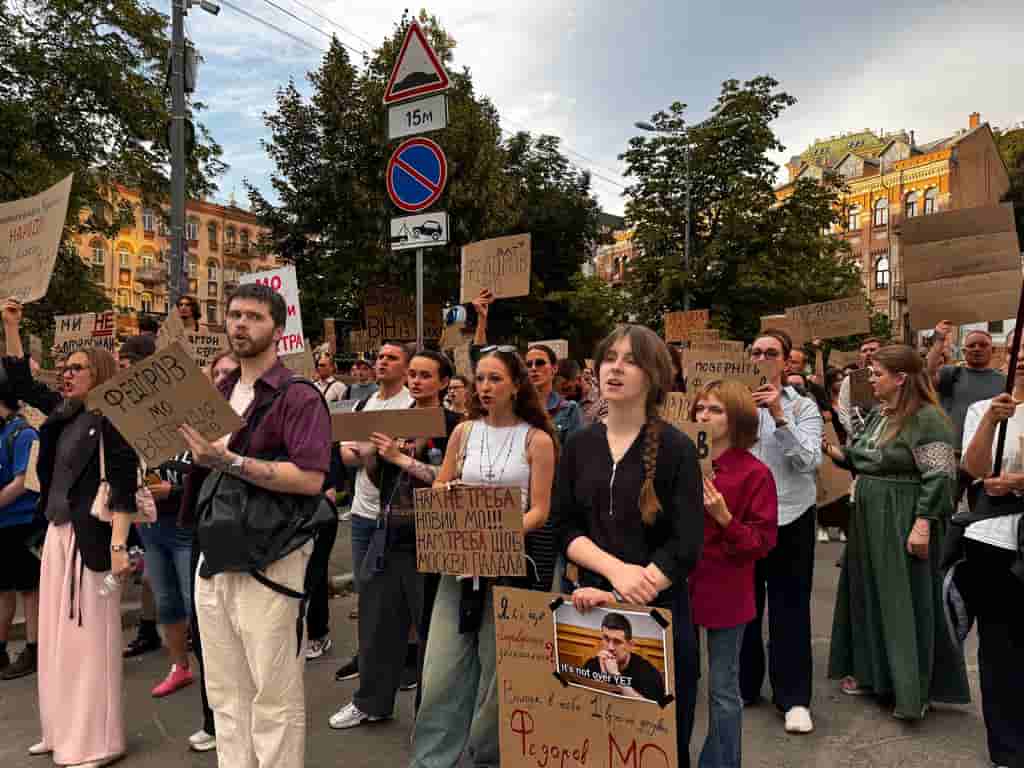
- Ukrainians protested on July 24 in Kyiv and other cities, demanding Mykhailo Fedorov's reinstatement as Defense Minister.
- Fedorov rejected a government offer for a position focused on technology, stating he would only accept his former role.
- President Zelensky dismissed Commander-in-Chief Oleksandr Syrskyi and appointed General Mykhailo Drapatyi.
- The dispute leading to Fedorov's dismissal centered on his relationship with Syrskyi.
Ukrainians gathered in Kyiv and other cities on July 24 to demand President Volodymyr Zelensky reinstate former Defense Minister Mykhailo Fedorov. The demonstrations resumed after a three-day pause and followed Zelensky's dismissal of Commander-in-Chief Oleksandr Syrskyi, appointing General Mykhailo Drapatyi as his successor.
Protesters stated their campaign would continue indefinitely until Fedorov is returned to his post, though turnout on July 24 was lower than the previous week. Zelensky had offered Fedorov a prominent government position focused on strengthening Ukraine's technological sector, with one source suggesting a role as deputy prime minister for military innovation. However, Fedorov rejected the proposal on July 23, asserting he would accept no position other than defense minister.
Fedorov stated, "There are only three positions in the country that, alongside the troops on the battlefield, shape the course of the war: the president, the defense minister, and the commander-in-chief." The dispute preceding Fedorov's dismissal reportedly stemmed from his deteriorating relationship with Syrskyi, reflecting differing approaches to military leadership.
Ukrainians had been protesting since July 16 over Fedorov's dismissal, initially calling for both his reinstatement and Syrskyi's removal. During his tenure, Fedorov oversaw reforms and programs aimed at enhancing Ukraine's military capabilities. Protest organizers had suspended demonstrations until July 24 to allow Zelensky time to reinstate Fedorov, but resumed them when no decision was made.