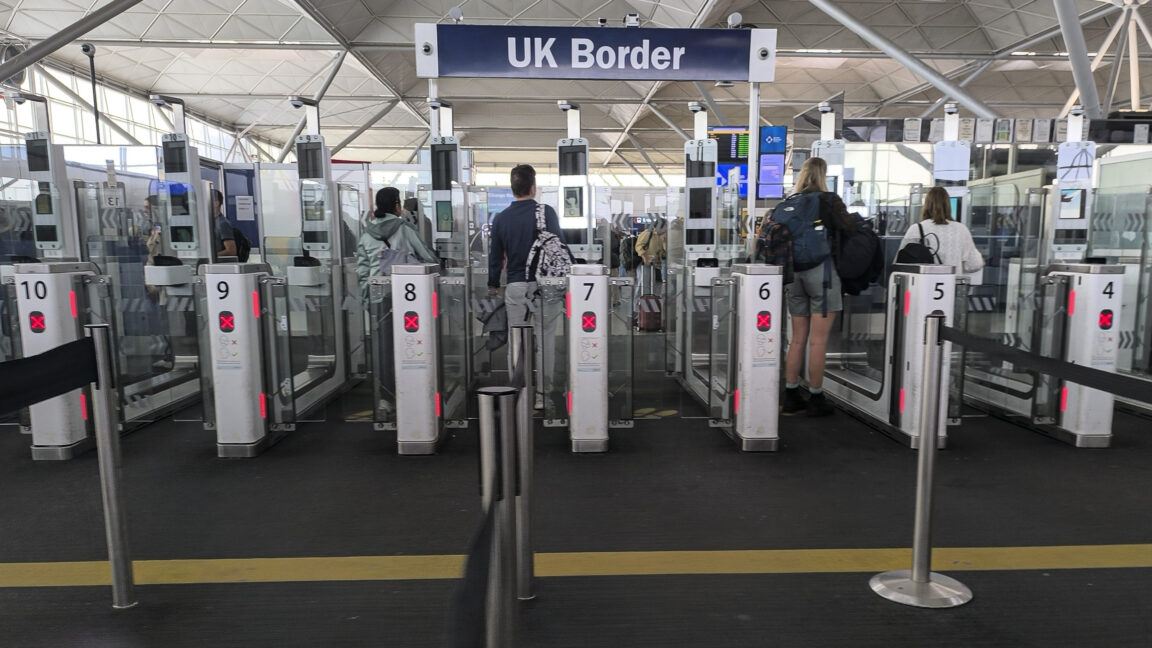
The British government intends to implement facial age estimation technology to help determine the ages of asylum seekers arriving at its borders, a move that marks the first known use of such a system in this context. This technology, which uses AI to predict a person's age by scanning their face, is set to be deployed starting in 2027. Many asylum seekers lack age-proving documents, and misclassifying a child as an adult can lead to the loss of legal protections and placement in adult detention centers.
An investigation by WIRED and Lighthouse Reports, in collaboration with The Independent, has revealed findings from an internal UK government report. This report details tests of facial age estimation (FAE) technologies, showing that these systems frequently misjudge children as adults and exhibit significant bias. The systems performed notably worse when assessing individuals of Sub-Saharan African descent, who constitute a large portion of migrants arriving in the UK. For female Sub-Saharan Africans, the technology's age predictions were off by an average of 4.6 years, meaning a 13.5-year-old could be assessed as an 18-year-old.
Concerns about the technology's accuracy and bias have been raised by former committee members and supported by years of test results from the US National Institute of Standards and Technology. Tim Cole, an emeritus professor and former member of a scientific committee that was disbanded by the Home Office, described the facial scans as "hideously inaccurate." The Home Office stated that rigorous processes are in place and that the technology will serve as an "additional" tool, not replacing human judgment, and that individuals will always be treated as children in cases of uncertainty. However, the department did not elaborate on how the technology would be used in practice. The government announced plans for this technology in July 2025, with the rollout subsequently delayed.