Key facts
- President Donald Trump signed the Secure America Act into law.
- The bill provides $70 billion in funding for immigration enforcement agencies.
- Funding is secured through September 2029, the end of President Trump's term.
- Democrats had sought reforms to immigration enforcement agencies.
- The House passed the bill with a 214-212 vote.
- The legislation allocates $38 billion to ICE and $26 billion to CBP.
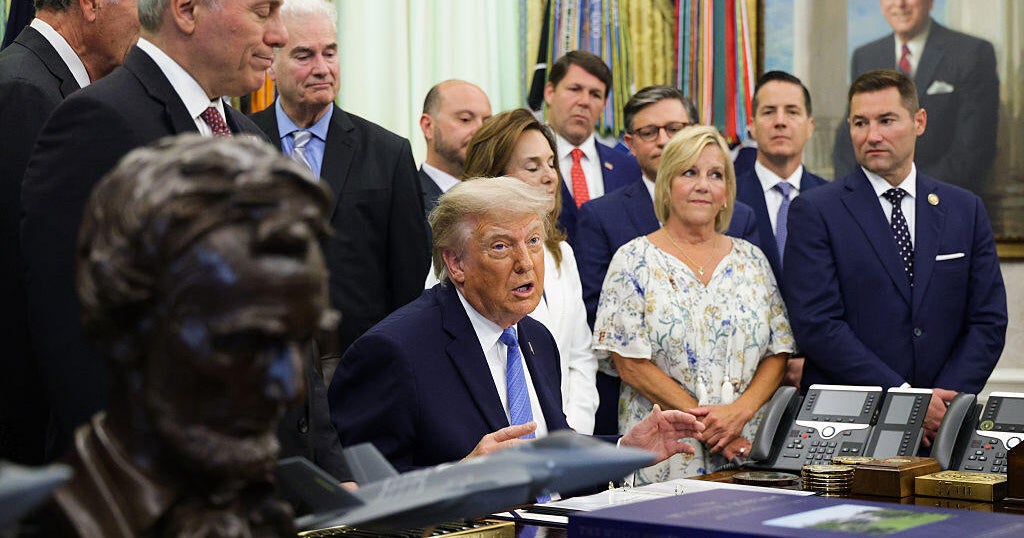
President Donald Trump signed the Secure America Act into law on Wednesday, a nearly $70 billion package that ensures funding for Immigration and Customs Enforcement (ICE) and Customs and Border Protection (CBP) through the end of his term in September 2029. The bill's passage resolves a months-long partisan stalemate over immigration policy and agency funding.
The funding impasse began in January after federal agents killed two US citizens in Minneapolis, prompting Democrats to demand reforms to immigration enforcement practices. Their subsequent boycott prevented the passage of legislation for the entire Department of Homeland Security (DHS), leading to a 75-day partial shutdown, the longest in US history.
After negotiations between the White House, congressional Republicans, and Democrats collapsed, Republicans utilized the budget reconciliation process to pass the measure with a simple majority in the Senate. The House subsequently approved it in a 214-212 vote, largely along party lines, with one independent representative joining all Democrats in voting no.
During the signing ceremony, President Trump expressed his satisfaction, stating he was "thrilled" to sign the bill and provide the "heroes of ICE border patrol" with the necessary support and resources. He criticized Democrats for attempting to "throw open the borders" and "extort on law and order."
The Secure America Act allocates $38 billion to ICE, $26 billion to CBP, and an additional $5 billion to DHS. According to a White House statement, the act aims to secure the border, combat human trafficking, stop drug flows, dismantle cartels, and enforce immigration laws.