Key facts
- Laredo, Texas, a key port for U.S.-Mexico trade, is experiencing economic uncertainty due to President Trump's tariff policies.
- Customs brokers like JD Gonzalez have seen increased activity due to anticipated tariffs, though overall truck traffic has not been significantly impacted.
- Recent tariff announcements included a 25 percent tariff on Mexican and Canadian imports, later modified to a 10 percent baseline tariff with carve-outs for Mexico and Canada.
- Despite policy shifts, industrial developers are continuing their investments, with concerns focused on potential broader economic recession rather than diminished trade.
- New legislation aims to expedite international bridge permitting processes.
Laredo, Texas, a critical hub for U.S.-Mexico trade, faces economic uncertainty stemming from President Trump's evolving tariff policies. The city's economy has seen significant growth, partly attributed to the North American Free Trade Agreement (NAFTA) and the subsequent increase in cross-border commerce facilitated by customs brokers and transportation companies.
Customs broker JD Gonzalez, whose business has grown substantially since 1994, notes that while President Trump's executive order for tariffs on Mexican and Canadian imports initially caused a stir, subsequent modifications, including a 10 percent baseline tariff with carve-outs for North American goods, have not significantly disrupted truck traffic. This stability is attributed to Mexico and Canada being largely spared from higher tariffs imposed on other nations.
Despite the fluctuating trade landscape, industrial developers with long-term investment horizons are reportedly standing by their projects. The primary concern for Laredo is not a reduction in trade volume compared to other ports, but rather managing continued growth and the potential for a broader economic recession if tariffs lead to wider market instability. The city is actively working to manage its expanding trade infrastructure, with recent legislation aimed at expediting the permitting process for international bridges.
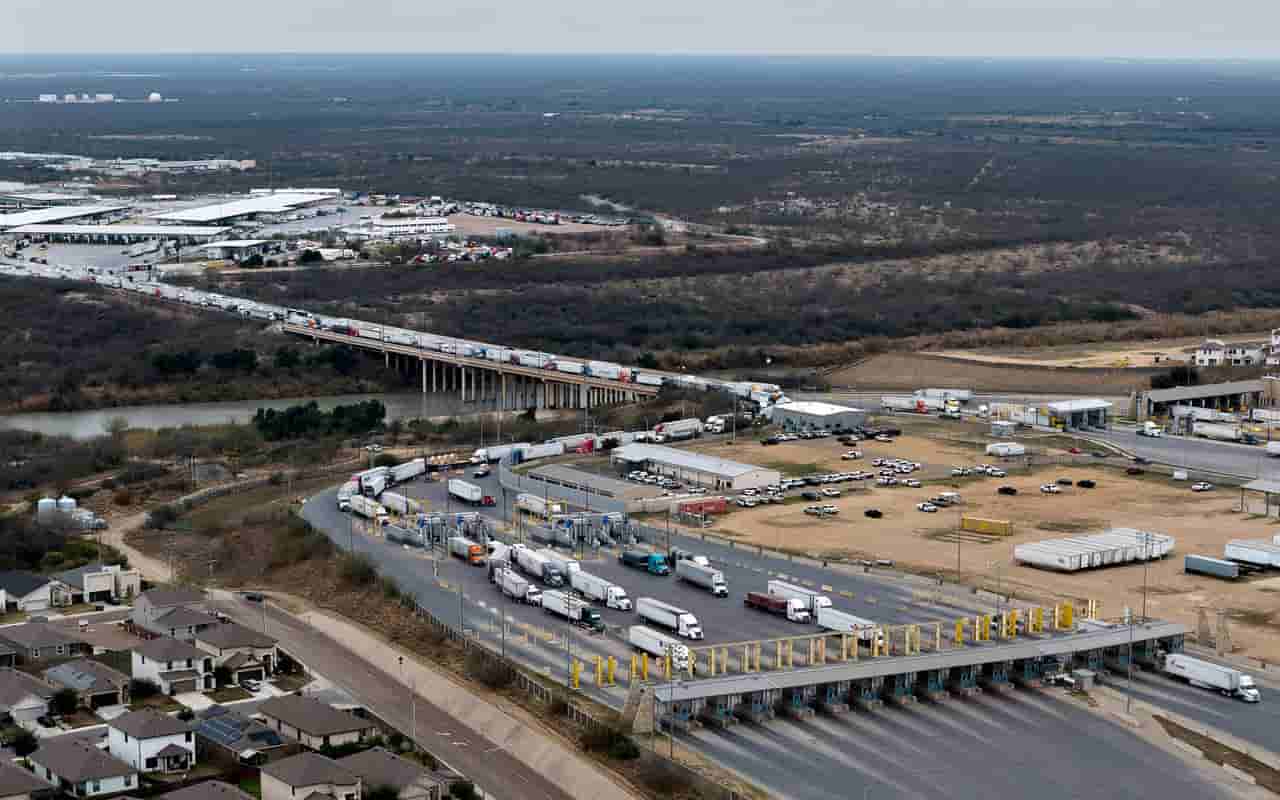
The World Trade Bridge in Laredo sees approximately 15,000 commercial truck crossings daily, with a substantial amount of warehouse space available and under construction to accommodate the flow of goods.