Key facts
- The Supreme Court weakened the Voting Rights Act, making it harder to challenge electoral maps for racial discrimination.
- Justices struck down Donald Trump's tariffs imposed under the International Emergency Economic Powers Act, ruling he exceeded his authority.
- The court heard arguments on Trump's executive order restricting birthright citizenship.
- The court signaled skepticism regarding Trump's attempt to fire Federal Reserve Governor Lisa Cook, potentially impacting the central bank's independence.
- The Supreme Court cleared the way for the Trump administration to terminate Temporary Protected Status (TPS) for hundreds of thousands of immigrants from Haiti and Syria.
- Conservative justices appeared poised to uphold state laws banning transgender athletes from participating in female sports.
- The court struck down a Hawaii law restricting handgun carrying on private property open to the public.
- The court limited the scope of a law barring firearms possession by drug users.
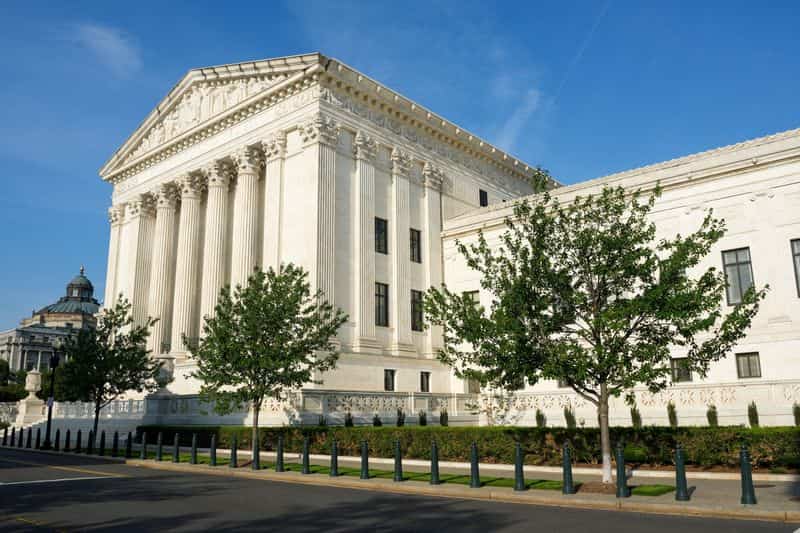
The U.S. Supreme Court is concluding its term with decisions on a range of significant cases that touch upon presidential authority, civil rights, and constitutional interpretations. These rulings could have far-reaching implications for American law and society.
In a major blow to voting rights, the court on April 29 weakened a key provision of the Voting Rights Act, making it more difficult for minority groups to challenge electoral maps deemed racially discriminatory. This decision could impact redistricting efforts ahead of the November midterm elections.
The court also addressed issues of presidential power. On February 20, justices struck down sweeping tariffs imposed by Donald Trump under the International Emergency Economic Powers Act, ruling that he had exceeded his authority. Arguments were also heard regarding Trump's directive to restrict birthright citizenship and his attempt to fire Federal Reserve Governor Lisa Cook, with justices signaling skepticism toward the latter.
Further decisions could reshape immigration policy and the rights of protected groups. On June 25, the court allowed the Trump administration to move forward with terminating Temporary Protected Status (TPS) for hundreds of thousands of immigrants from Haiti and Syria. Meanwhile, conservative justices appeared ready to uphold state laws banning transgender athletes from female sports and signaled they would likely uphold Trump's firing of an FTC member, potentially expanding presidential power over independent agencies.
In other rulings, the court rejected a Colorado law that banned LGBT 'conversion therapy,' citing free speech rights. It also struck down a Hawaii law restricting handgun carrying on private property and limited the application of a law barring firearms possession by drug users, continuing a trend of expanding gun rights.