Key facts
- A special bill on nuclear-powered submarines will specify South Korea's commitment not to develop nuclear weapons.
A special bill supporting South Korea's nuclear-powered submarine program will include a clause reaffirming its commitment not to develop nuclear weapons, aiming to address U.S. concerns about potential nuclear ambitions.
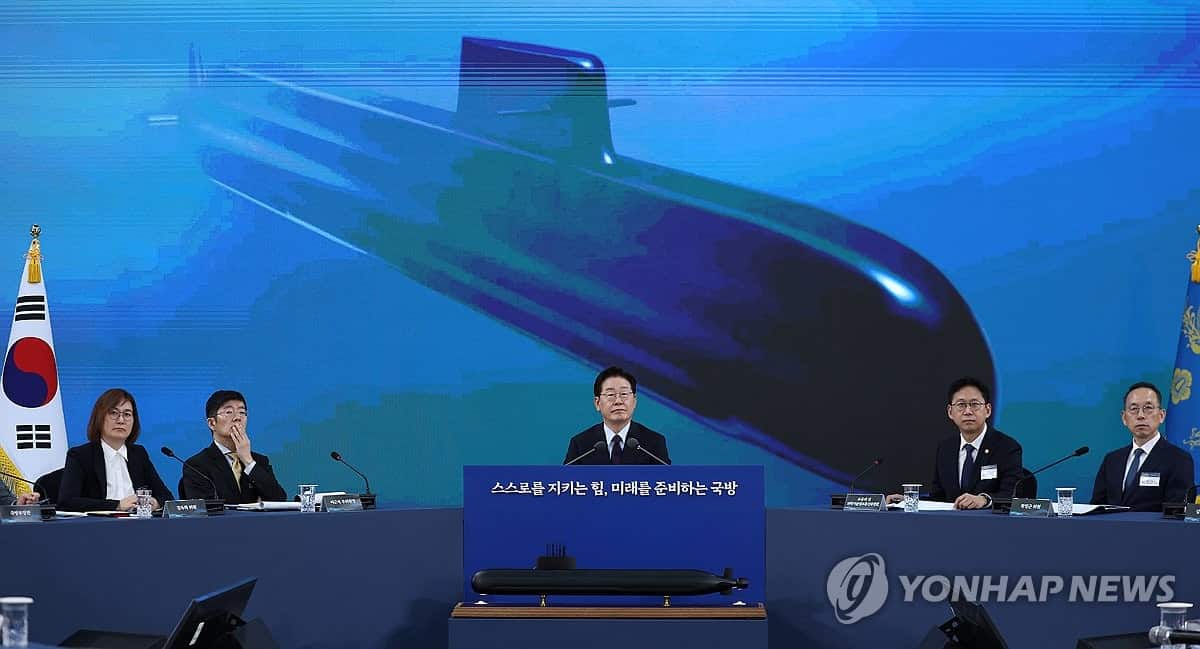
This legislative move is crucial for South Korea's strategic defense ambitions, aiming to secure U.S. backing for its nuclear-powered submarine program while simultaneously reassuring international partners about its non-proliferation commitments.
A special bill intended to support South Korea's development of nuclear-powered submarines will include a provision explicitly stating the nation's commitment not to develop nuclear weapons. This measure is reportedly designed to assuage concerns within the United States regarding Seoul's potential nuclear ambitions.
The defense ministry plans to soon issue a public notice for the proposed bill, which is structured around five core principles for pursuing nuclear-powered submarines. If enacted, this legislation would mark the first time South Korea's pledge against developing or possessing nuclear weapons is codified in domestic law.
According to the draft bill, the government "shall not develop, manufacture, possess or use nuclear weapons, nor engage in any activity involving nuclear material intended exclusively for nuclear weapons purposes or that would undermine the credibility of the nuclear non-proliferation system." The bill also reaffirms South Korea's adherence to the Nuclear Non-Proliferation Treaty, mandates coordination with international organizations throughout the development process, and requires measures for public and environmental protection from radioactive materials.
Provisions aimed at accelerating the project, such as exempting it from a preliminary feasibility study, are also reportedly included. The initiative, known as 'Jang Bogo N,' aims to develop nuclear-powered attack submarines fueled by low-enriched uranium, following U.S. consent obtained during a summit last October. South Korea intends to launch its first such submarine in the mid-2030s, with operational deployment in the latter half of the decade. Military authorities are believed to be planning three 8,000-ton-class nuclear-powered submarines. Defense Minister Ahn Gyu-back has previously emphasized South Korea's commitment to international nonproliferation obligations and cooperation with the International Atomic Energy Agency.