Key facts
- The Navy canceled and rebooted its $2.1 billion Modular Attack Surface Craft (MASC) program for Unmanned Surface Vessels (USVs).
- The new program, Medium Unmanned Surface Vessels (MUSVs) Family of Systems, will use a 'marketplace' approach for off-the-shelf solutions.
- Recent Navy tests of autonomous drone boats experienced significant setbacks, including collisions and software glitches.
- A $20 million contract with L3Harris for autonomous software was indefinitely paused by the Pentagon's defense innovation unit.
- The original contract competition was reportedly influenced by politics, with companies tied to the Trump administration making the cut.
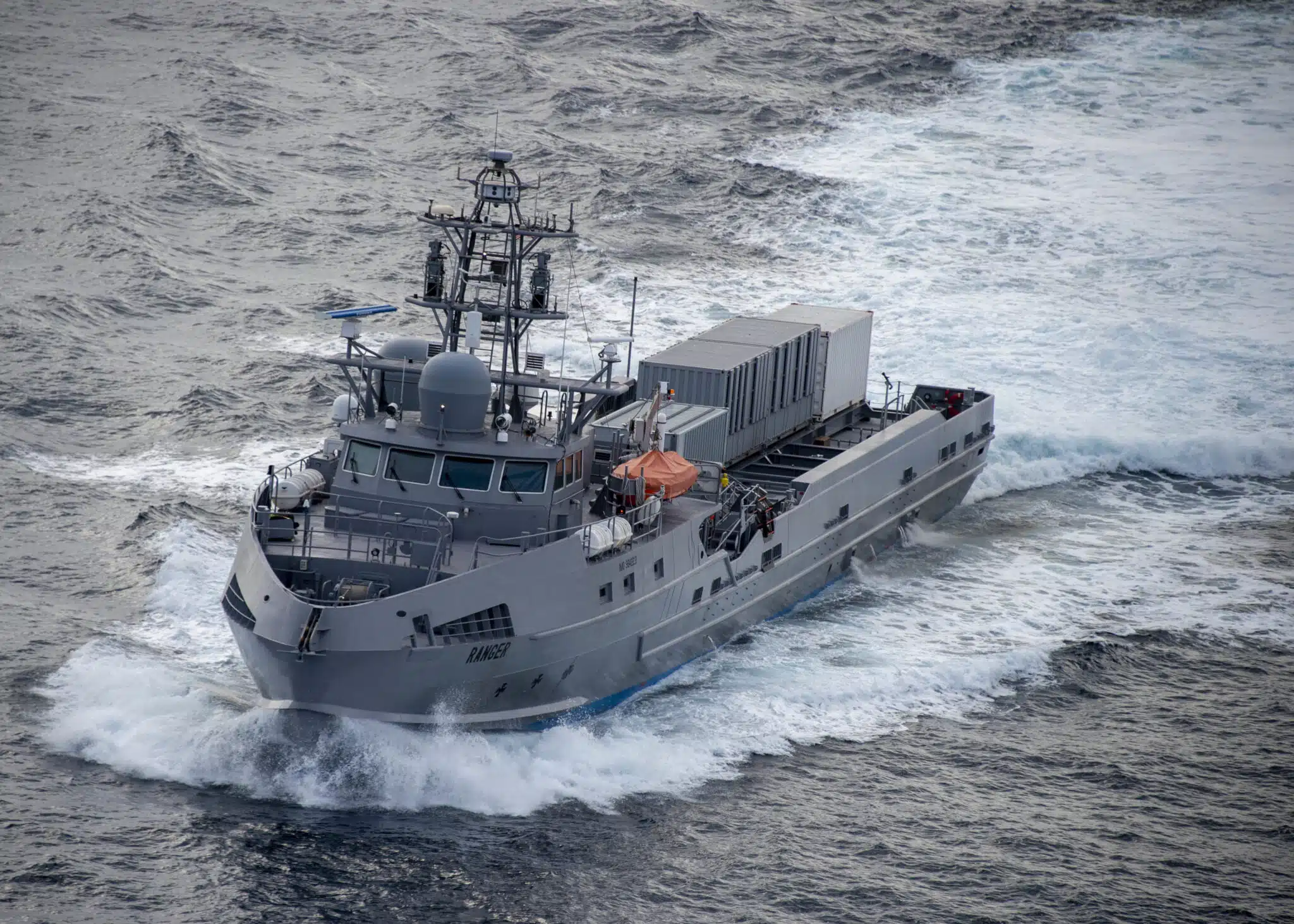
The U.S. Navy has canceled and is rebooting its $2.1 billion Modular Attack Surface Craft (MASC) program, which aimed to rapidly procure low-cost Unmanned Surface Vessels (USVs). The decision comes after a series of setbacks, including software glitches and collisions during testing of prototype drone boats, as well as concerns about the program's procurement strategy.
Acquisition executive Rebecca Gassler described the MASC program as an unnecessarily conservative 'prototyping' effort. The Navy is now shifting to a more open-ended Medium Unmanned Surface Vessels (MUSVs) Family of Systems program. This new approach will utilize a 'marketplace' model, inviting industry proposals for off-the-shelf capabilities that can be evaluated and delivered more quickly.
Under the MUSV program, companies will submit detailed plans covering business models, manufacturing readiness, supply chains, and testing. Selected companies will receive initial contracts for on-water evaluations, with successful participants potentially awarded further contracts for production or leasing. The original MASC program's cancellation has drawn criticism from industry leaders, who cite wasted resources and a negative impact on investor confidence.
Recent tests highlighted the challenges in developing autonomous maritime systems. One incident involved two vessels from rival defense tech companies, Saronic and BlackSea Technologies, where one stalled due to a software glitch and was subsequently struck by the other. Another incident saw a support boat capsize after an autonomous vessel it was towing accelerated unexpectedly. These failures have led the Pentagon's defense innovation unit to indefinitely pause a $20 million contract with L3Harris, a provider of autonomous software.