HomeEverythingEducation
Equities & FundsCrypto & Digital AssetsAI & TechnologyBusiness & CorporateUS Politics & PolicyGeopolitics & Global RiskMacro, Rates & FXCommodities & EnergyEuropean Politics & MarketsAsia-PacificReal Estate & Property
← All Stories

Meta ban on Kyiv Lavra strike posts stemmed from fake photo, glitch

Created at 7 Jul · 1:20 PM1 source↑ Market-relevant
IN SHORT

Meta platforms restricted posts about the Kyiv-Pechersk Lavra attack due to a questionable AI-generated photo and a technical error, Ukrainian media reported. The image was used in Russian propaganda to falsely claim Ukraine staged the strike.

✉Newsletter

PiQ Daily

Pick your topics. Get only what matters, on your cadence.

Key Numbers

June 15, 2026date of Russian missile strike on Kyiv Pechersk Lavra

Who's Involved

Meta
platform operator that restricted posts about the Kyiv Lavra strike
The Kyiv Independent
Ukrainian media outlet that reported on the Meta ban
Metropolitan Yevstratii Zoria
spokesperson for the Orthodox Church of Ukraine who shared the photo
Agence France-Presse (AFP)
fact-checking organization whose assessment was cited by Meta
Olga Yurkova
co-founder of StopFake.org, commenting on Russian information operations
Serhii Shumylo
associate professor who raised concerns about algorithmic suppression
Meta ban on Kyiv Lavra strike posts stemmed from fake photo, glitch

↳ Why This Matters

The incident highlights how AI-generated imagery can be exploited by propaganda efforts to cast doubt on real events and how technical errors on social media platforms can inadvertently amplify disinformation, impacting the visibility of factual reporting on war crimes.

Key facts

  • Meta platforms restricted posts about the Kyiv-Pechersk Lavra attack, citing false information.
  • The restrictions were reportedly due to a questionable AI-generated photo and a technical glitch.
  • Russian propaganda used similar AI-generated images to falsely claim Ukraine staged the strike.
  • The image in question was initially shared by Metropolitan Yevstratii Zoria and widely republished by Ukrainian media.
  • Meta stated the incorrect labeling was a technical error and has since restored affected posts.

Meta platforms, including Facebook and Instagram, restricted and labeled posts about the Russian attack on the historic Kyiv-Pechersk Lavra as containing false information, according to social media users and Ukrainian media. The Kyiv Independent reported that the ban stemmed from two main causes: a questionable AI-generated photo and a technical glitch on Meta's part.

The damage to the Kyiv-Pechersk Lavra occurred during a Russian mass attack on Kyiv on June 15, 2026, when the roof of the Dormition Cathedral was struck by a drone. The fact-checking details provided by Meta indicated the decision was linked to an Agence France-Presse (AFP) fact-check concerning AI-generated images of the monastery circulating online.

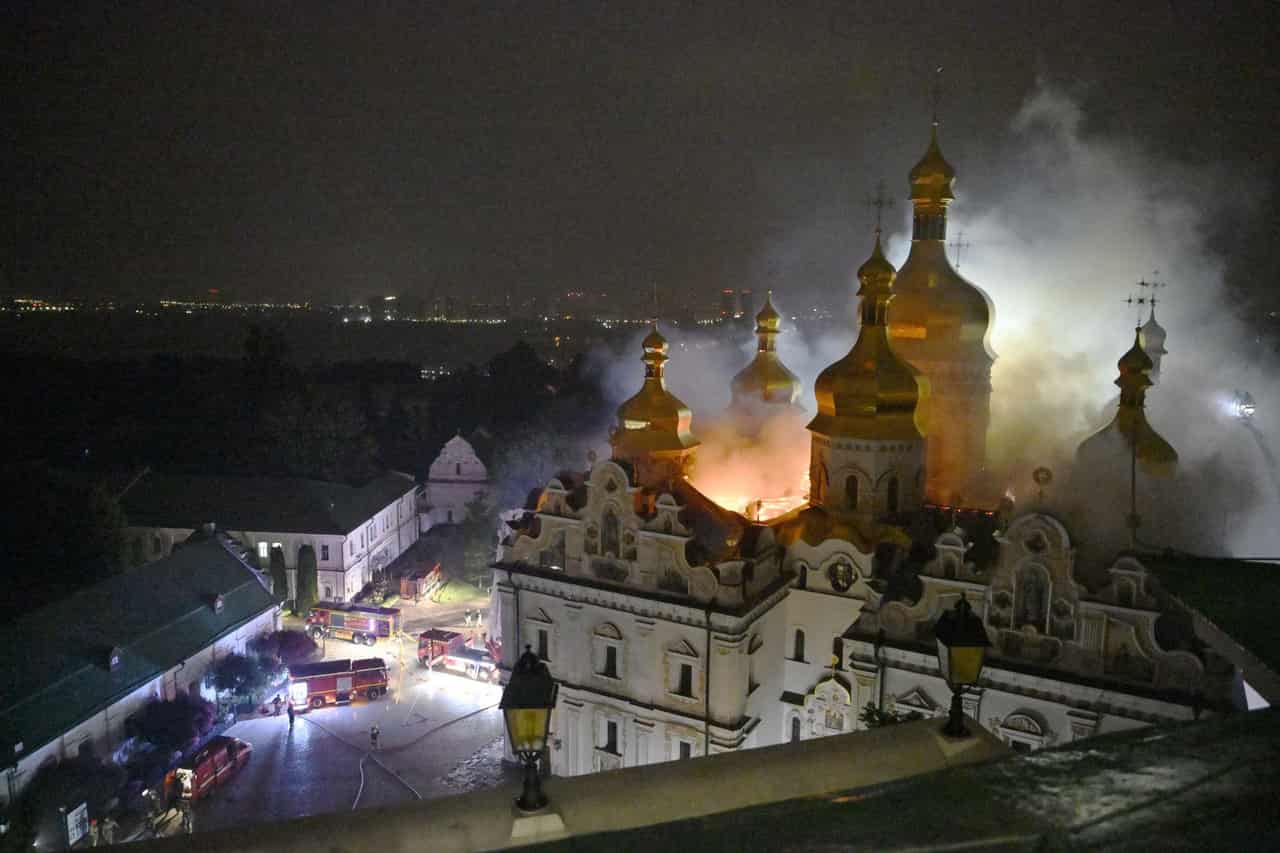
Two of the images examined by AFP, shared by Russian propaganda channels, falsely claimed to show photographers setting up equipment outside the Lavra before the attack, promoting a narrative that Ukraine staged the strike. The third image, which appeared in The Kyiv Independent's post and showed the Lavra engulfed in flames at night, also appeared to contain an AI watermark, according to OpenAI's detection tools.

This image was first publicly shared by Metropolitan Yevstratii Zoria, spokesperson for the autocephalous Orthodox Church of Ukraine (OCU). He stated that someone had sent him the image, and he used it as an illustration during the unfolding attack, without remembering the source. He also confirmed he did not use AI tools to generate or edit the image and has since removed it from his post.

Soon after, moderation expanded beyond this single image, with posts about the attack receiving "false information" labels. These labels cited the AFP fact-check, leading to lower ranking in user feeds and exclusion from recommendations. Some users expressed concern that the platform's algorithms were intentionally suppressing information about the Russian attack.

A Meta spokesperson told The Kyiv Independent that the fact-checking ratings were wrongly applied due to a technical error and have since been removed. Affected posts were restored, and the false-information labels were taken down.

It remains unclear where the widely shared photo of the Kyiv-Pechersk Lavra originated. The image was also circulated on pro-Kremlin platforms on June 15 alongside other alleged "staging" photos, with accompanying text claiming it showed the result of photographers' supposed setup. The Kyiv Independent could not verify the photo's origin or confirm if it was initially created as part of a Russian propaganda operation. Olga Yurkova, co-founder of StopFake.org, noted that AI-generated images are a tool in Russia's information operations, used to quickly create visual 'evidence' for a narrative.

Frequently asked questions

On June 15, 2026, Russia launched a missile strike on the historic Kyiv Pechersk Lavra in Ukraine, damaging the Dormition Cathedral.

Meta platforms restricted posts due to a questionable AI-generated photo and a technical error, which incorrectly labeled factual content as false information.

The AI-generated photo, along with similar images, was used by Russian propaganda to falsely claim that Ukraine staged the attack on the Lavra.

Metropolitan Yevstratii Zoria stated that the photo was sent to him and he used it as an illustration, unaware it might be AI-generated. He did not create it.

What Happens Next

01Meta continues to monitor and refine its content moderation algorithms.
02Efforts to counter AI-generated disinformation in conflict zones are ongoing.

Get the newsletter.

Pick the topics you actually care about. We'll email when there's news worth your time, on the cadence you choose. Cancel any time from your account.

Cadence

How It Developed

Russia launched a missile strike on the Kyiv Pechersk Lavra on June 15, 2026.
Meta platforms began restricting and labeling posts about the attack as false information.
The Kyiv Independent reported the ban stemmed from a questionable AI-generated photo and a technical glitch.
The photo, widely shared, was flagged by third-party fact-checkers and appeared to be AI-generated.
Russian propaganda channels used similar images to falsely claim Ukraine staged the strike.
Metropolitan Yevstratii Zoria, who shared the photo, stated he did not create it and was unaware it was AI-generated.
Meta attributed the incorrect labeling to a technical error and has since removed the false information labels.
Affected posts were restored, and the false-information labels were removed.

Sources

T1
How one fake photo let Russian propaganda cast doubt on Kyiv Lavra strikeThe Kyiv Independent

Related Stories

Ukraine debates decriminalizing adult content to boost war revenue
7 Jul · 12:15 PM
Mondelez CEO admits Russian taxes fund war, faces calls for action
6 Jul · 5:55 PM
Google exec defends YouTube video calling massacre survivor a 'crisis actor'
7 Jul · 10:35 AM
Australia's teen social media ban ineffective due to age check failures, study finds
7 Jul · 6:21 AM
Italy to stop responding to Trump's provocations, foreign minister says
7 Jul · 8:24 AM