All NewsEducationTV
Equities & FundsCrypto & Digital AssetsAI & TechnologyBusiness & CorporateUS Politics & PolicyGeopolitics & Global RiskMacro, Rates & FXCommodities & EnergyEuropean Politics & MarketsAsia-PacificReal Estate & Property
Story archiveAll categories
← All Stories

Israeli elections: How they work and who is in the race

Created at 29 Jul · 8:22 AM1 source↑ Market-relevant
IN SHORT

Israel is set to hold national elections on October 27, following the October 7 Hamas attack. Polls indicate Prime Minister Benjamin Netanyahu may lose, but the fragmented political system means rivals also face challenges in forming a coalition government.

✉Newsletter

PiQ Daily

Pick your topics. Get only what matters, on your cadence.

Key Numbers

120-seatKnesset size
3.25%national vote threshold for parties
20%Arab minority population

Who's Involved

Benjamin Netanyahu
Prime Minister of Israel, facing potential electoral defeat
Gadi Eisenkot
Former military chief and rival to Netanyahu, surging in polls
Naftali Bennett
Former Prime Minister and rival to Netanyahu
Yair Lapid
Former Prime Minister and rival to Netanyahu
Avigdor Lieberman
Former defense minister and Netanyahu critic
Likud
Netanyahu's right-wing party
Religious Zionism
Pro-settler party led by Bezalel Smotrich
Jewish Power
Far-right party led by Itamar Ben-Gvir
United Torah Judaism
Ultra-Orthodox Jewish party
Shas
Ultra-Orthodox Jewish party
Yashar
Party led by Gadi Eisenkot
Together
Alliance of Bennett and Lapid
Israel Our Home
Party led by Avigdor Lieberman
Hadash
Arab minority party
Taal
Arab minority party
Raam
Arab minority party
Balad
Arab minority party
Democrats
Left-wing party led by Yair Golan
Israeli elections: How they work and who is in the race

↳ Why This Matters

The upcoming Israeli elections are significant as they will determine the country's leadership following the October 7 attacks and ongoing conflicts, potentially reshaping regional dynamics and domestic policy.

Key facts

  • Israel will hold national elections on October 27.
  • Polls indicate Prime Minister Benjamin Netanyahu is facing a likely defeat.
  • Key rivals include former military chief Gadi Eisenkot, former Prime Ministers Naftali Bennett and Yair Lapid, and former defense minister Avigdor Lieberman.
  • Israeli elections are parliamentary, relying on proportional representation and coalition governments.
  • No single party has historically won an outright majority in the Knesset.

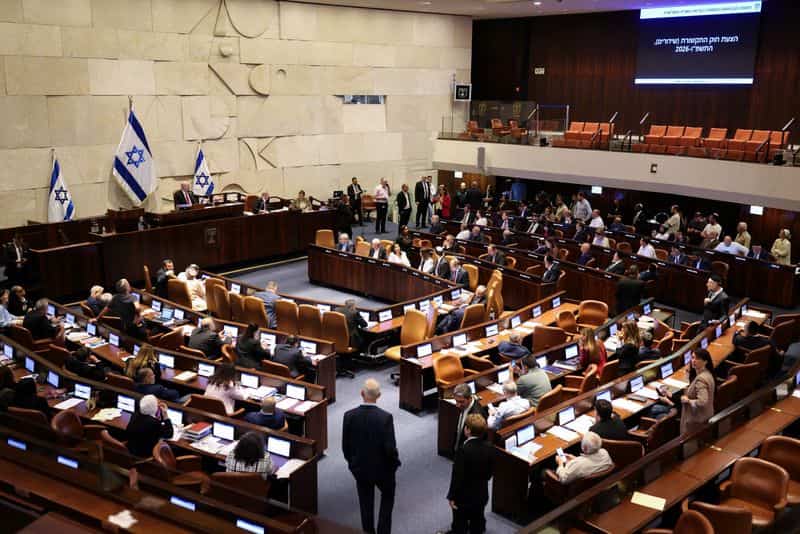
Israel is preparing for national elections on October 27, a vote that follows the significant October 7 Hamas attack and subsequent conflicts in Gaza, Lebanon, and Iran. Despite current polling suggesting a defeat for Prime Minister Benjamin Netanyahu, the country's fragmented parliamentary system, where no single party has ever secured an outright majority, makes the outcome uncertain. Coalition governments are the norm, granting considerable influence to smaller parties.

Recent polls indicate a decline in public trust for Netanyahu's leadership, partly due to his government's policies on religion and state, and the perceived impact of the October 7 attacks on his security credentials. However, Netanyahu is known for his political resilience, and his rivals have not yet demonstrated a clear path to forming a government.

Key contenders challenging Netanyahu include former military chief Gadi Eisenkot, whose image as an outsider with family sacrifices contrasts with Netanyahu's long tenure and ongoing corruption cases. Former Prime Ministers Naftali Bennett and Yair Lapid, who previously ousted Netanyahu, are also in the race, as is former defense minister Avigdor Lieberman, a hawkish critic of Netanyahu.

Israeli elections operate on a proportional representation system for the 120-seat Knesset, with parties needing 3.25% of the national vote to gain seats. The upcoming election marks a rare instance where a Knesset is expected to complete a full term, following a period of frequent elections between 2019 and 2022. Netanyahu's current coalition includes his Likud party, Religious Zionism, and Jewish Power, with support from ultra-Orthodox parties United Torah Judaism and Shas, though these latter two quit the government in 2024. Other parties vying for power include Eisenkot's Yashar, Bennett and Lapid's Together, Lieberman's Israel Our Home, several Arab minority parties, and the left-wing Democrats.

Frequently asked questions

The Israeli elections are scheduled to be held on October 27.

Successive surveys indicate that Prime Minister Benjamin Netanyahu is on course to lose the election, with low trust in his leadership.

Key rivals include former military chief Gadi Eisenkot, former Prime Ministers Naftali Bennett and Yair Lapid, and former defense minister Avigdor Lieberman.

Israel has a parliamentary system with proportional representation, where the 120-seat Knesset allocates seats based on national party lists. Coalition governments are necessary as no single party has ever won an outright majority.

What Happens Next

01Parties must submit candidate lists by September.
02The election is scheduled to take place on October 27.

Get the newsletter.

Pick the topics you actually care about. We'll email when there's news worth your time, on the cadence you choose. Cancel any time from your account.

Cadence

How It Developed

Israel is scheduled to hold national elections on October 27.
Polls suggest Prime Minister Benjamin Netanyahu is likely to lose.
Former military chief Gadi Eisenkot is gaining support in polls.
Former Prime Ministers Naftali Bennett and Yair Lapid are also contenders.
Former defense minister Avigdor Lieberman is another key rival.
Israeli elections are parliamentary, with seats allocated by proportional representation.
Coalition governments are necessary as no single party has won a majority.
Small parties hold significant influence in forming governments.

Sources

T1
Israeli elections: how they work and who is in the raceReuters

Related Stories

Democrats' support for Israel erodes over Gaza conflict, Netanyahu ties
29 Jul · 5:06 AM
Trump, Netanyahu Discuss Iran Nuclear Program Amid War Tensions
28 Jul · 6:21 PM
Iran backs UN rights chief Volker Turk for second term despite US, Israel opposition
28 Jul · 6:36 PM
Keiko Fujimori sworn in as Peru's president
28 Jul · 10:10 AM
Italy's Arab communities fear police violence amid discrimination concerns
28 Jul · 9:46 AM