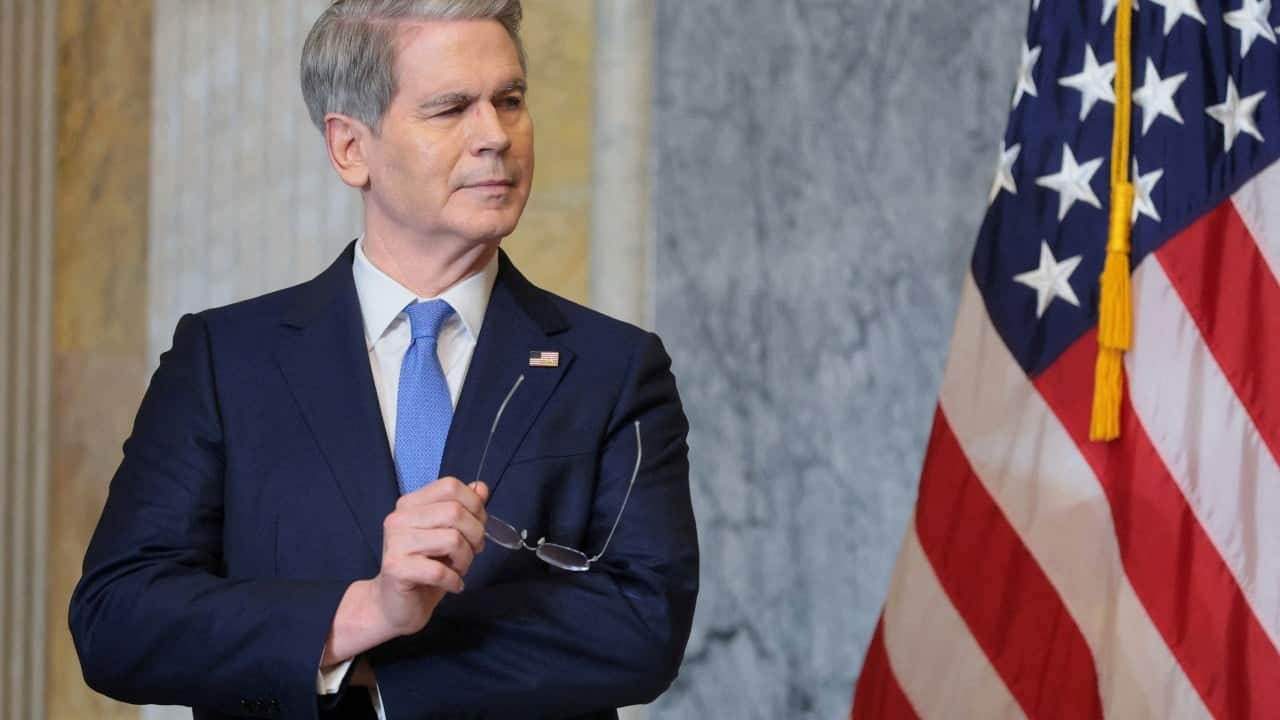
US Treasury Secretary Scott Bessent stated that the Trump administration aims to build sufficient supply chain capacity to enable critical industries to withstand economic shocks, pandemics, wars, coercion from adversaries, and other foreign chokepoints. Bessent clarified that supply chain resilience does not necessitate complete domestic production from start to finish, deeming such a requirement unrealistic and unnecessary. However, he invoked Alexander Hamilton's historical advocacy for manufacturing self-sufficiency in a newly independent United States, asserting that supply chain security demands diversification away from dangerous concentrations and the development of adequate domestic capacity to prevent the American populace from being subject to foreign chokepoints. Bessent also commented that after decades of escalating trade deficits, the U.S. is now more cognizant of its economic interests and better prepared to safeguard them. He indicated that partner nations should anticipate a United States that insists on reciprocity, shields its businesses from discriminatory practices, secures its vital supply chains, enforces sanctions, and combats illicit finance. In essence, Bessent concluded, the U.S. will not permit economic policy to diverge from national strategy. Additionally, Bessent noted that the U.S. should champion financial innovation that bolsters the dollar, enhances efficiency, broadens access, and maintains the integrity of the financial system, though he did not detail specific policies. He also stated that the U.S. will insist on new technologies adhering to American standards for transparency, security, consumer protection, and law enforcement access.
On Tuesday, Bessent also said China surpassing the United States on artificial intelligence was the “biggest risk” of the technology – outweighing concerns over safety or job losses. "The biggest risk to AI is China getting ahead of us," Bessent said at the Economic Club of New York, adding that China’s willingness to discuss AI underscored America’s technological lead. "I could tell you that the reason the Chinese are willing to have a discussion on AI is because we are ahead, so we have to stay ahead," he said. Both countries agreed to hold formal discussions on AI governance following talks between US President Donald Trump and Chinese leader Xi Jinping in Beijing last month. Chinese foreign ministry spokesman Guo Jiakun said in May that China and the United States, as two leading AI powers, need to work together to promote the development and improve the governance of AI to make sure that it will better contribute to the progress of human civilisation and common welfare of the international community.