HomeEverythingEducation
Equities & FundsCrypto & Digital AssetsAI & TechnologyBusiness & CorporateUS Politics & PolicyGeopolitics & Global RiskMacro, Rates & FXCommodities & EnergyEuropean Politics & MarketsAsia-PacificReal Estate & Property
← All Stories

Argentina's Political Parties Look for Ways to Avoid Extremes

Created at 8 Jul · 2:05 PM1 source↑ Market-relevant
IN SHORT

Argentina is navigating a period of political and economic uncertainty following the election of Javier Milei, a self-proclaimed anarcho-capitalist. His presidency presents significant challenges, including high inflation, substantial national debt, and potential clashes with established political institutions.

✉Newsletter

PiQ Daily

Pick your topics. Get only what matters, on your cadence.

Key Numbers

55.7%Javier Milei's vote share
44.3%Sergio Massa's vote share
140%Argentina's inflation rate
$100 billionArgentina's debt to creditors
three monthstime in office for Milei's administration

Who's Involved

Javier Milei
Newly elected President of Argentina, described as far-right and anarcho-capitalist
Sergio Massa
Former Minister of Economy and Milei's opponent in the presidential election
John Twichell
Lecturer and director of Latin American Studies at the University of Miami
Victoria Villarruel
Newly elected Vice President of Argentina
Argentina's Political Parties Look for Ways to Avoid Extremes

↳ Why This Matters

The election of Javier Milei signals a radical departure for Argentina, potentially leading to significant economic reforms and a reshaping of its political and social fabric. His unconventional approach and drastic policy measures present both opportunities for change and risks to democratic institutions and social welfare.

Key facts

  • Javier Milei was elected president of Argentina with 55.7% of the vote, defeating Sergio Massa.
  • Argentina is experiencing a severe economic crisis, with inflation close to 140%.
  • Milei, a self-described anarcho-capitalist, has implemented significant cuts to public services and pensions.
  • His presidency is viewed as a radical departure from the political establishment and a potential threat to democratic institutions.
  • Milei faces major challenges in managing the economy, negotiating with international creditors, and addressing societal fears about his agenda.

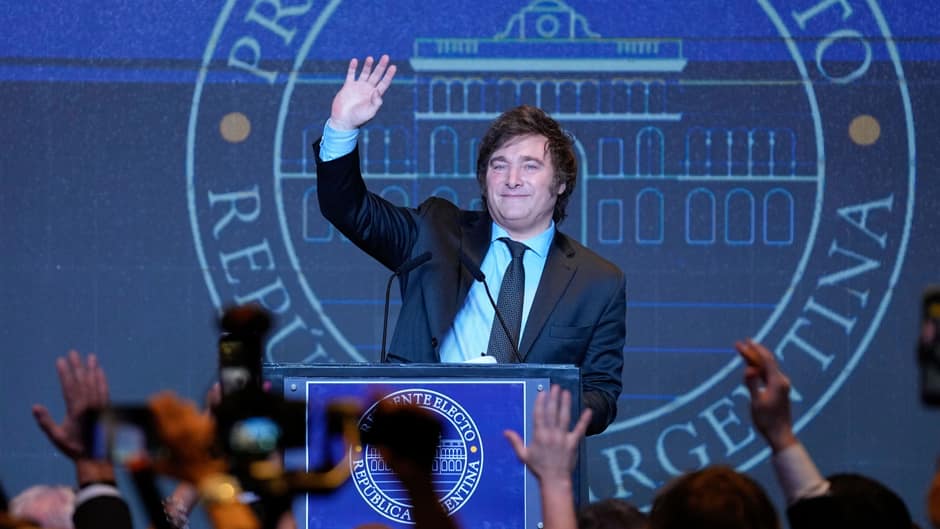
Argentina has elected Javier Milei as its new president, marking a significant shift in the country's political landscape. Milei, a former television pundit with little political experience, secured 55.7 percent of the vote, defeating Sergio Massa, the former Minister of Economy. This election occurs amidst a severe economic crisis, with inflation approaching 140 percent.

Milei's presidency is characterized as an "extremist, unexpected and dangerous political experiment." He defines himself as an anarcho-capitalist and has expressed radical views on the state, describing it as "worse than the mafia" and a "rapist" that must be "destroyed." His administration has already implemented drastic cuts to state expenditures on health, education, social assistance, and the pension system, despite profound economic inequalities and social injustice.

Analysts note that Milei faces substantial challenges, including taming inflation, negotiating with international creditors such as the International Monetary Fund, bondholders, and China, to whom Argentina owes over $100 billion. His political challenge lies in working with the Peronist party, which he has disparaged, and overcoming a lack of trust from the economic and political establishments. Societally, there are fears that Milei, who opposes abortion rights and has questioned the extent of atrocities during the military dictatorship, may reverse social justice gains and threaten democratic norms.

Frequently asked questions

Javier Milei is the newly elected President of Argentina. He is a former television pundit with little political experience, who ran on a far-right, anarcho-capitalist platform.

Milei faces significant economic challenges, particularly high inflation, and financial challenges in negotiating with international creditors. He also faces political hurdles in working with established parties and societal concerns about his agenda potentially reversing social justice and rights.

Milei advocates for drastic cuts in state expenditures, including health, education, social assistance, and pensions, aiming to reduce government subsidies and tame inflation. He has also expressed extreme views on the role of the state.

Concerns include the potential dismantling of democratic institutions due to his outsider status and radical views, the reversal of social justice and rights, and the impact of austerity measures on an already struggling population.

What Happens Next

01Milei will continue to implement his economic program, focusing on reducing state spending.
02Negotiations with international creditors, including the IMF, will be a key focus.
03The political establishment and Peronist party will likely react to Milei's policies.
04Societal reactions to potential reversals of social justice and rights will unfold.

Get the newsletter.

Pick the topics you actually care about. We'll email when there's news worth your time, on the cadence you choose. Cancel any time from your account.

Cadence

How It Developed

Javier Milei was elected president of Argentina with 55.7 percent of the vote.
Milei, a far-right candidate with little political experience, defeated former Minister of Economy Sergio Massa.
Argentina faces a severe economic crisis with inflation nearing 140 percent.
Milei's presidency is described as an extremist and dangerous political experiment.
Milei defines himself as an anarcho-capitalist and has expressed extreme views on the state and democracy.
His administration has implemented drastic cuts to health, education, social assistance, and pensions.
Milei faces challenges in negotiating with creditors, including the IMF, bondholders, and China.
There are concerns that Milei's approach could dismantle democratic institutions.

Sources

T1
Argentina’s Political Parties Look for Ways to Avoid ExtremesBloomberg
T2
Why Did Argentina Just Elect a Radical Right-Wing Political Outsider? | Journal of Democracyjournalofdemocracy.org
T2
Argentina elects far-right president - University of Miami Newsnews.miami.edu
T2
Argentina's Dangerous Experiment - Verfassungsblogverfassungsblog.de

Related Stories

Maine Democrats grapple with candidate allegations ahead of election
8 Jul · 2:45 AM
Latin American countries, steelmakers seek US tariff exemptions
7 Jul · 5:19 PM
Japan's ruling party plans tighter oversight of activist investor disclosures
8 Jul · 4:37 AM
ICE avoids major issues at World Cup amid congressional oversight
7 Jul · 8:25 PM
Zelensky uses sanctions against critics, former allies
7 Jul · 4:50 PM