Key facts
- The World Bank disbursed $200 million to Colombia for earthquake response.
- Recent earthquakes in Venezuela and Colombia have highlighted differing government capacities for disaster relief.
- Venezuela's earthquakes in late June resulted in 6,300 deaths, while Colombia's recent quake killed at least 285 people.
- Civilian efforts were crucial in both countries, but Colombia saw a more coordinated official response.
- Venezuela's government faces challenges including hyperinflation, shortages, and sanctions, impacting its disaster response capabilities.
The World Bank has disbursed $200 million to Colombia to support its response to recent devastating earthquakes. The move comes as the contrasting capacities of Venezuela and Colombia to manage disaster relief have been exposed following separate, yet similarly powerful, seismic events.
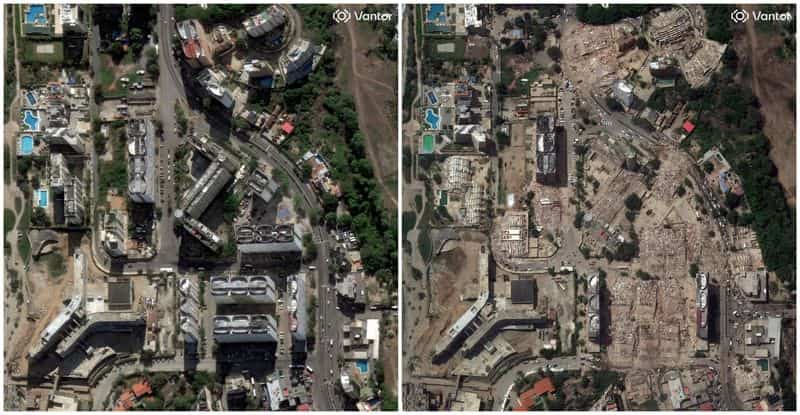
In Venezuela, where twin quakes in late June claimed over 6,300 lives, civilian-led rescue efforts were hampered by confusion, a lack of equipment, and delayed official orders. Families and neighbors toiled for weeks with basic tools to recover victims from collapsed buildings, including a large social housing block known as Los Cocos. While the government denies issues with its response, the country's long-standing economic crisis, marked by shortages and hyperinflation, has been cited as a contributing factor to the difficulties.
Colombia, meanwhile, experienced a significant earthquake that killed at least 285 people, with hundreds still missing. While civilian volunteers were crucial in the initial hours, the response was rapidly coordinated by over a dozen official entities, including firefighters, police, and navy rescuers. Heavy machinery and organized rubble removal were evident at collapsed residential towers like Torres del Limonar in Cali. Humanitarian workers praised the local organization but noted concerns for more isolated regions like the Pacific province of Choco.
Private security firm Global Guardian reported a significantly smoother experience assisting clients in Colombia compared to Venezuela, citing a lack of heavy machinery and inadequate civilian preparedness in the latter. The earthquakes occurred during critical political junctures for both nations. Venezuela's interim government may see the disaster as an opportunity to advance its efforts to recover frozen gold bullion for reconstruction, while Colombia's new president, Abelardo De La Espriella, faces an early test of his administration's capabilities and public support.