Key facts
- Wildfires in southwestern France have forced over 10,000 people to evacuate homes and campsites near the Atlantic coast.
- The blaze has burned 2,000 hectares of land west of Bordeaux.
- Extreme heat and drought conditions are exacerbating the fires across Europe.
- Scientists warn that climate change is worsening water shortages and increasing wildfire frequency and intensity.
- Over 10,000 excess deaths were recorded across Europe and Britain during recent heatwaves.
- In Spain, authorities continue to battle several significant blazes.
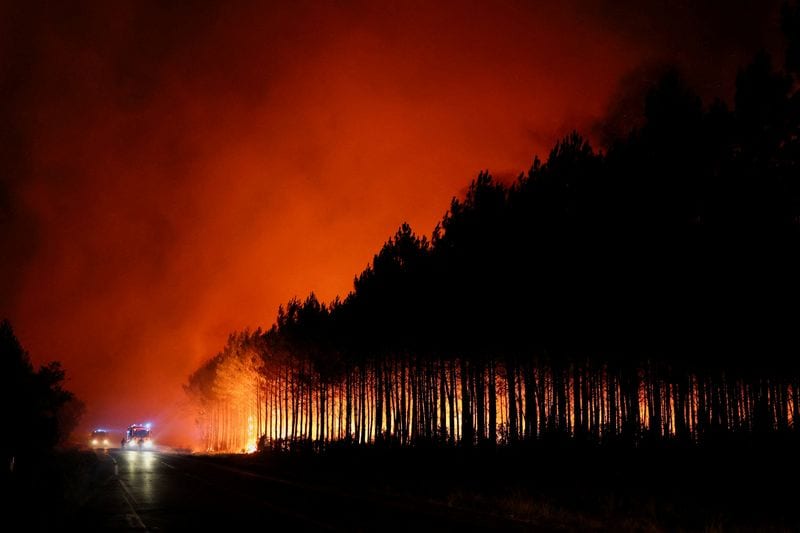
A fast-moving wildfire has forced more than 10,000 people to evacuate homes and campsites near France's Atlantic coast, as extreme heat and deepening drought fuel fires across Europe. Officials stated that the blaze, located near the Arcachon Bay area, had burned 2,000 hectares of land west of Bordeaux.
Five hundred firefighters are battling to control the fire, which began near the town of Saumos. The mayor of Lège-Cap Ferret, Philippe de Gonneville, noted that the fire spread more quickly than anticipated overnight. Contingency plans are in place to evacuate the entire Cap Ferret peninsula by road and sea if necessary.
Across Europe, successive heatwaves have intensified drought, strained water supplies, and left vegetation tinder-dry, contributing to more land being scorched this year than the past two decades' average. Scientists warn that climate change is worsening the continent's water shortages and increasing the frequency and intensity of wildfires. Over 10,000 excess deaths were recorded across Europe and Britain in recent heatwaves.
In neighboring Spain, authorities are still working to extinguish fires that have raged for several days, while in Italy, a firefighter died battling a blaze in Sicily. France is also anticipating its smallest maize crop in 50 years due to drought.