Key facts
- Spain declared a national emergency due to wildfires near Madrid and Avila.
- At least 30,000 people evacuated in Spain.
- Over 110,000 people evacuated in south-west France.
- The Madrid wildfire is described as "beyond the capacity" of firefighters to contain.
- The Gironde blaze in France has burned over 19,000 hectares.
- Southern Europe is experiencing extreme heat and drought, exacerbating wildfire conditions.
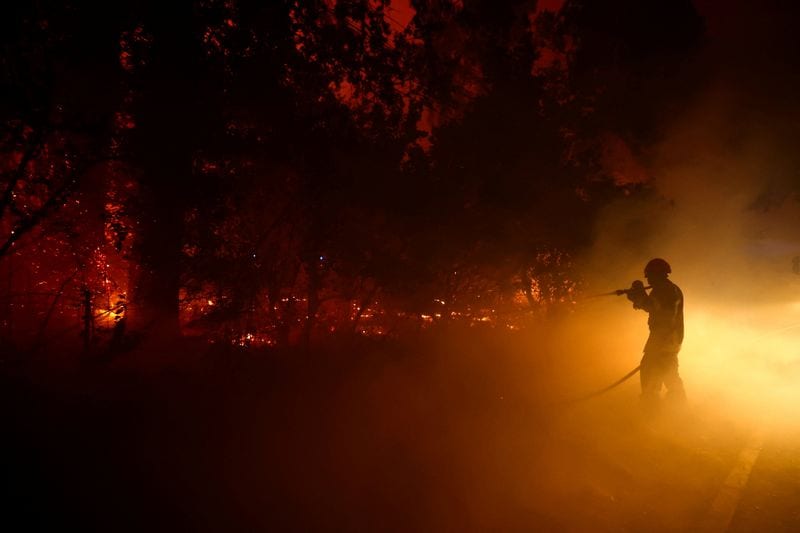
Spain has declared a national emergency due to severe wildfires near Madrid and Ávila, with officials warning that a major blaze west of the capital is beyond the capacity of firefighters to contain. The situation has prompted the evacuation of at least 30,000 people in Spain, with more than 110,000 evacuated in south-west France due to separate, large-scale wildfires.
Madrid's regional president, Isabel Díaz Ayuso, described the situation as the "worst fire in the history of the region," attributing it to a "perfect storm" of high temperatures, strong winds, and merging fire fronts. The Military Emergency Unit (UME) has been deployed in Spain to protect areas near El Escorial, while authorities monitor a separate fire in Ávila province that could merge with the Madrid blaze. Officials reported that at least 6,000 hectares have burned in the Madrid region and nearly 9,000 hectares in Ávila, with eight municipalities evacuated and several others under lockdown.
In France, the Gironde blaze, termed an "XXL fire," has consumed over 19,000 hectares of forest and destroyed approximately 80 homes. The entire Cap Ferret peninsula was evacuated, with hundreds escaping by boat. French Interior Minister Laurent Nuñez stated that around 50 firefighters have been injured and that the blaze is self-sustaining and changing direction, moving towards Bordeaux. France has activated the European Union's civil protection mechanism to receive reinforcements.
Much of southern Europe is grappling with extreme heatwaves and prolonged drought, creating conditions conducive to rapid wildfire spread. Europe is warming at more than twice the global average, increasing the frequency and intensity of such events.