Key facts
- The U.S. is pushing G20 nations to address global trade and fiscal imbalances.
- Treasury Secretary Scott Bessent will advocate for higher trade barriers on Chinese goods.
- China's total exports rose 23.9% in July year-on-year.
- China's goods trade surplus with the EU was €360.6 billion last year.
- Japan's 10-year bond yield hit 3% for the first time since 1996 amid market angst.
- Russia's Finance Minister attended the G20 meeting in person for the first time since invading Ukraine.
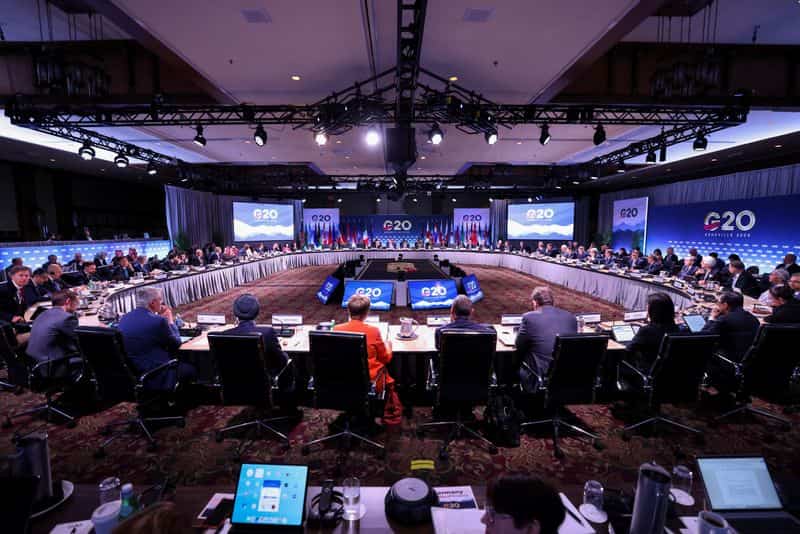
The United States is pressing G20 nations to address global trade and fiscal imbalances, with a particular focus on China's substantial trade surplus and undervalued currency. U.S. Treasury Secretary Scott Bessent plans to advocate for increased trade barriers on Chinese goods to encourage Beijing to shift its economic focus from exports to domestic consumption. This push comes amid a global bond market sell-off driven by inflation concerns and rising debt levels. China's export-driven growth strategy, including a 23.9% rise in July exports, has put pressure on other economies. European officials, while agreeing China contributes to imbalances, also stressed the need for the U.S. to reduce its spending and the EU to invest more. Poland's finance minister supported the U.S. stance, while Japan's finance minister called for an end to arbitrary export restrictions on critical minerals. Discussions on the joint communique are reportedly difficult, with China opposing specific language on 'non-market economies' and export curbs. The presence of Russia's finance minister at the meeting also drew surprise.