Key facts
- The US and Iran have agreed to pause recent fighting and resume talks over the Strait of Hormuz.
- The agreement follows several days of escalating military exchanges, including US strikes on Iranian military sites and Iranian attacks on vessels and sites in Bahrain and Kuwait.
- President Trump had threatened Iran's existence if it did not adhere to an interim peace deal.
- The Strait of Hormuz is a critical global oil and gas transit route.
- The UAE condemned Iran's strikes, calling them a violation of sovereignty.
The United States and Iran have agreed to pause recent fighting in the Gulf and return to talks over the Strait of Hormuz, potentially halting days of attacks and counterattacks that had threatened an interim peace agreement. The move follows escalating military exchanges after an Iranian projectile struck a cargo vessel in the Strait of Hormuz.
President Trump had threatened Iran's complete non-existence if it failed to adhere to the interim deal. The US conducted strikes on Iranian military sites, while Iran launched drone and missile attacks targeting Bahrain and Kuwait. Kuwait reported intercepting two ballistic missiles, and Bahrain confirmed damage to a residential building. Iran's IRGC claimed responsibility for these attacks, asserting they had destroyed eight US military installations and warning of harsher actions against vessels violating the ceasefire.
US Central Command stated its strikes were a direct response to Iran's continued aggression against commercial shipping, targeting surveillance, communications, air defense, drone storage, and mine-laying facilities. This escalation follows recent attacks on commercial vessels, including the Panama-flagged tanker Kiku and a Singapore-flagged container ship.
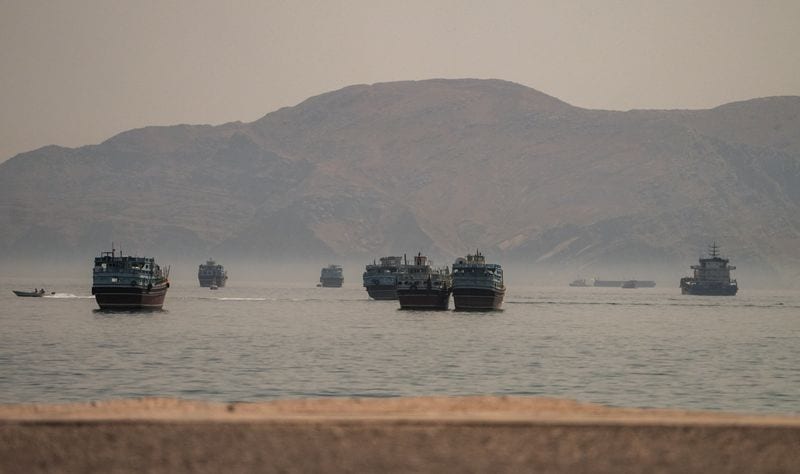
The Strait of Hormuz, a critical global oil and gas transit route, remains a central point of contention. Iran asserts its right to sole control, advocating for ships to use a northern route through its waters, while the US promotes a southern lane along Oman's coast. Iran's foreign minister, Abbas Araghchi, reiterated Tehran's claim to exclusive control and called for a regional security framework excluding the US.
Mediators from Qatar and Pakistan had recently facilitated talks between Washington and Tehran in Switzerland, aiming to finalize an agreement within 60 days of a memorandum of understanding. However, significant gaps remain on issues including sanctions relief and Iran's nuclear program.
Violence has also continued in Lebanon, where Israeli military officials reported a soldier killed in clashes with Hezbollah. This comes shortly after Israel and Lebanon signed a US-backed agreement to end hostilities, which includes an initial Israeli withdrawal from southern Lebanon. These developments further threaten prospects for a durable peace agreement between Iran and the US, which Tehran has linked to a ceasefire in Lebanon.