Key facts
- US non-farm payrolls rose by 178,000 in March 2026, surpassing forecasts.
- The US unemployment rate decreased to 4.3% in March 2026.
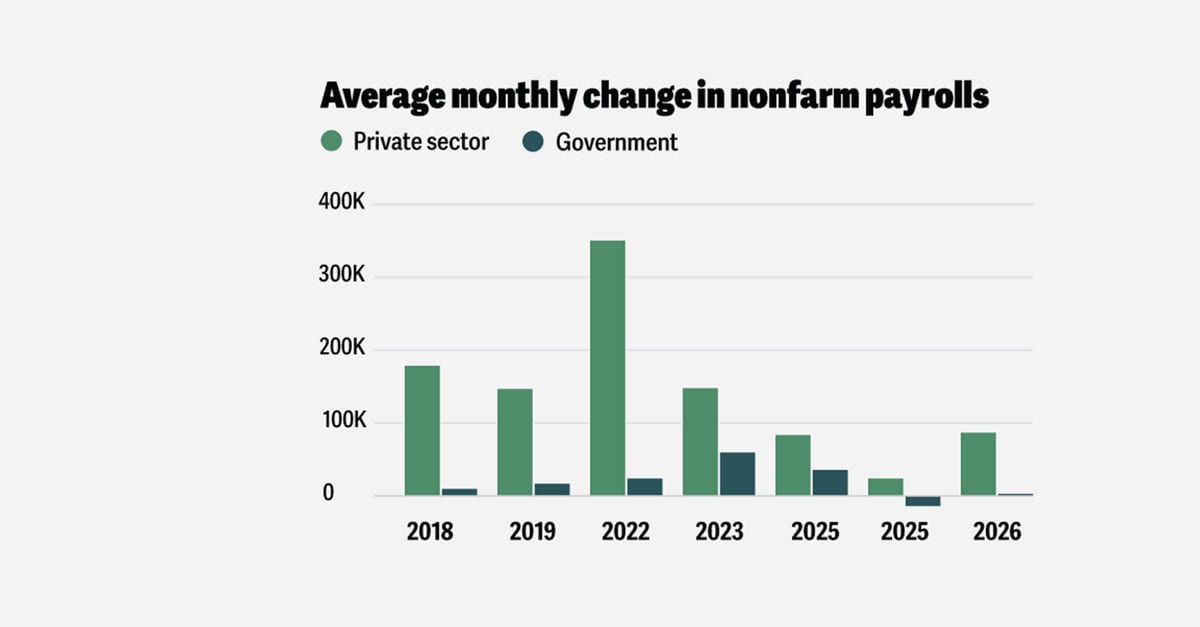
- Private sector job growth averaged 88,000 per month in the first half of 2026.
- Healthcare and social assistance sectors continue to drive a significant portion of job growth.
- Geopolitical tensions and rising cost pressures pose risks to future employment momentum.
The US labor market showed signs of recovery in March 2026, with stronger-than-expected job creation offering short-term optimism. However, underlying structural weaknesses and geopolitical uncertainty continue to weigh on the outlook.
According to ING analysis, non-farm payrolls increased by 178,000 in March, significantly exceeding expectations of 65,000 and rebounding from a February decline caused by winter storms and strike disruptions. The unemployment rate also edged down to 4.3 percent from 4.4 percent, indicating relative resilience in the broader economy.
Despite this positive headline, the data reveals a lack of diversification in job growth. Employment gains remain concentrated in a limited number of sectors, with private education and healthcare accounting for a substantial share. This segment alone has contributed to 70 percent of all job creation since the end of 2022, supported in part by the return of previously striking workers. Leisure and hospitality also contributed, while most other sectors have either stagnated or declined over the same period. The analysis highlights that recent gains in retail, construction and manufacturing may reflect a temporary rebound following February's disruptions rather than a sustained hiring trend. As a result, the broader labor market remains relatively flat, with only modest net job growth over the past year.
According to the establishment survey by the US Bureau of Labor Statistics, private sector payrolls growth averaged 88,000 in the first six months of 2026, more than three times the pace seen last year. However, this pace is lower than in 2023 and the two years prior to the pandemic. Government payrolls growth remains subdued, following job losses in 2025, largely reflecting reductions in the federal government workforce. Payrolls in professional and business services are up by an average of 23,000 per month in 2026, and wholesale and retail trade payrolls are also up after declining in the previous two years. Without healthcare and social assistance, leisure and hospitality, and construction, total payrolls growth would have been negative in 2024 and 2025.
Looking ahead, geopolitical tensions, particularly the ongoing Middle East conflict, pose a growing risk to employment momentum. ING warns that "heightened geopolitical, economic and market angst is not going to incentivise business to suddenly start hiring now," suggesting that employers may adopt a more cautious stance in the coming months. Rising cost pressures, including higher fuel prices, are expected to further strain corporate profitability and consumer spending, potentially leading to weaker payroll growth. For the furniture and interiors industry, these dynamics carry indirect but notable implications, potentially dampening demand for discretionary purchases and limiting household investment in renovation.