Key facts
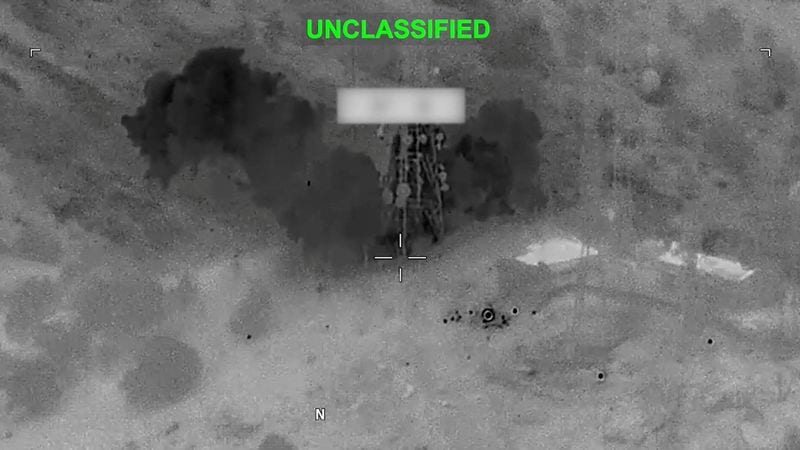
- The US and Iran exchanged strikes on Saturday, targeting infrastructure and military sites.
- Kuwait intercepted Iranian missiles and drones, with a desalination plant struck.
- Iran has effectively closed the Strait of Hormuz to shipping, impacting oil prices.
- Iranian authorities reported at least 46 killed and over 400 wounded in recent U.S. strikes.
- U.S. officials acknowledged 13 additional service members were injured since Monday.
The United States and Iran engaged in reciprocal strikes on Saturday, intensifying their conflict over the strategic Strait of Hormuz. This escalation follows days of back-and-forth attacks and the collapse of an interim ceasefire, leaving no clear resolution in sight.
U.S. Central Command reported that its seventh consecutive night of strikes targeted surveillance sites, military logistics infrastructure, underground weapons storage, and maritime capabilities. Kuwait announced it intercepted Iranian missiles and drones, with a water desalination plant being struck, marking the second such attack in two days. The nation briefly closed its airspace, and Kuwait Airways rescheduled flights. Iraq reported shooting down attack drones over Irbil, while Jordan confirmed its air defense systems downed Iranian missiles. Air sirens were heard multiple times in Bahrain.
Iranian officials stated that recent U.S. strikes have resulted in at least 46 deaths and over 400 wounded, including eight killed in a bridge strike. The U.S. military acknowledged that 13 additional service members were injured since Monday, bringing the total since the war began to 14 killed and 427 wounded. The Islamic Revolutionary Guard Corps warned countries hosting U.S. forces to prepare for retaliation.
Iran has asserted sole control over the Strait of Hormuz and proposed charging fees for vessels, despite its status as an international waterway. President Trump has reiterated threats to target Iranian power stations and bridges to pressure Iran to ease its control over the strait, through which a significant portion of global oil and natural gas trade passes. The U.S. has also reinstated a naval blockade on Iranian ports to halt crude oil shipments. Consequently, crossings through the strait have fallen to an eight-vessel, three-week low, contributing to a rise in oil prices.