Key facts
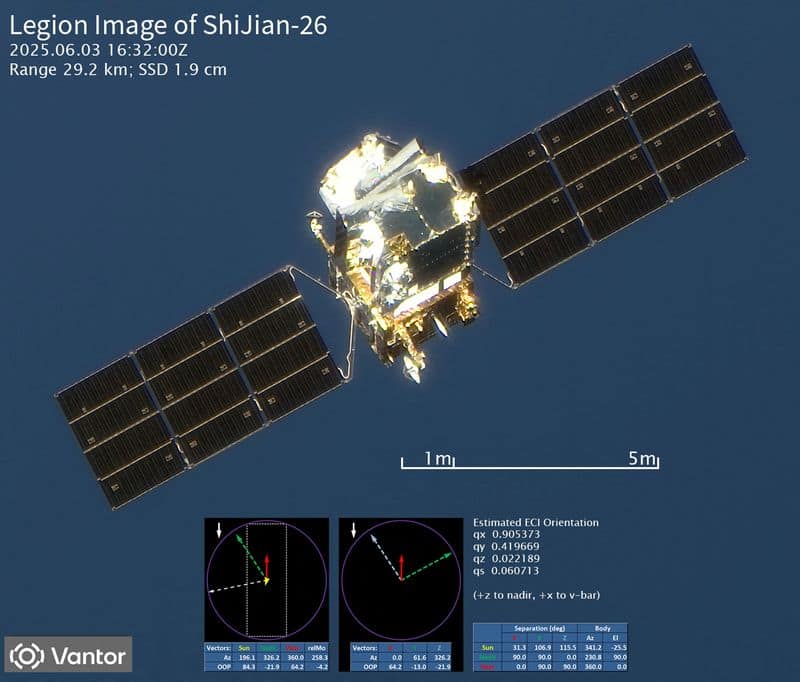
- A secretive Chinese spaceplane released a satellite that maneuvered around another Chinese satellite.
- Both the U.S. and China operate secretive spaceplanes and are developing advanced military space technologies.
- Chinese researchers are developing satellites designed to pursue and capture other spacecraft.
- The U.S. and Britain conducted a joint military operation in space near a Chinese spy satellite, signaling allied capabilities.
- U.S. military officials warn that China is rapidly developing ground- and space-based weapons designed to interfere with or destroy targets.
- Satellites are increasingly viewed as active weapons platforms, capable of jamming, laser dazzling, or capturing enemy spacecraft.
The United States and China are actively developing capabilities for potential conflict in space, including maneuverable satellites and orbital weapons. A recent incident involved a secretive Chinese spaceplane releasing a small satellite that looped around another Chinese spacecraft, observed by U.S. space-tracking firms. This reflects a broader trend where both nations are investing in technologies that could be used offensively in orbit, such as satellites designed to pursue, capture, or disrupt enemy assets.
Chinese military-linked researchers are reportedly developing technologies for satellites to extend fuel supplies for extended operations. The U.S. military operates a similar secretive spaceplane, and U.S. Space Force officials have expressed concern about China's rapidly advancing capabilities, including ground- and space-based weapons. Satellites, crucial for modern warfare as demonstrated in recent conflicts, are increasingly seen not just as support platforms but as active weapons systems.
In a joint operation, U.S. and British space forces maneuvered a satellite close to a Chinese spy satellite, which experts believe was a strategic signal to Beijing demonstrating allied unity and capability. While the U.S. and Britain publicly announced the operation, they did not disclose its proximity to the Chinese spacecraft. Both nations' defense ministries emphasized the growing importance of space for military operations and protecting national interests.
China's foreign ministry stated that Beijing opposes the weaponization of space but accused the U.S. of instigating an arms race. U.S. military leaders, like General Stephen Whiting, have stressed the need to prepare for conflict in space and are advocating for orbital interceptors and other weapons to counter potential threats to U.S. space assets. Western officials also warn of various threats, including ground-based lasers, electronic jammers, cyberattacks, and anti-satellite missiles, with accusations also leveled against Russia regarding nuclear-capable anti-satellite weapons.