Key facts
- US battery startup EnerVenue opened a manufacturing facility in Changzhou, China.
- The company abandoned plans for a factory in Kentucky, citing supply chain depth and expertise in China.
- EnerVenue's CEO, Henning Rath, stated that building in China was a precondition for him taking the job.
- The Changzhou plant is around 95% automated and will employ about 400 workers by year-end.
- EnerVenue aims for an annual capacity of 250 megawatt hours this year, rising to 1 gigawatt hour by Q3 2027.
- The company plans to open similar factories in North America, the Middle East, and Europe from 2028.
EnerVenue, a US-based battery startup, has commenced mass production at its new manufacturing facility in Changzhou, China, opting for the Asian nation over a previously planned site in Kentucky. The decision highlights the persistent advantages of China's industrial ecosystem, including its deep supply chains and skilled labor, in attracting advanced manufacturing, even as the US seeks to reshore critical industries.
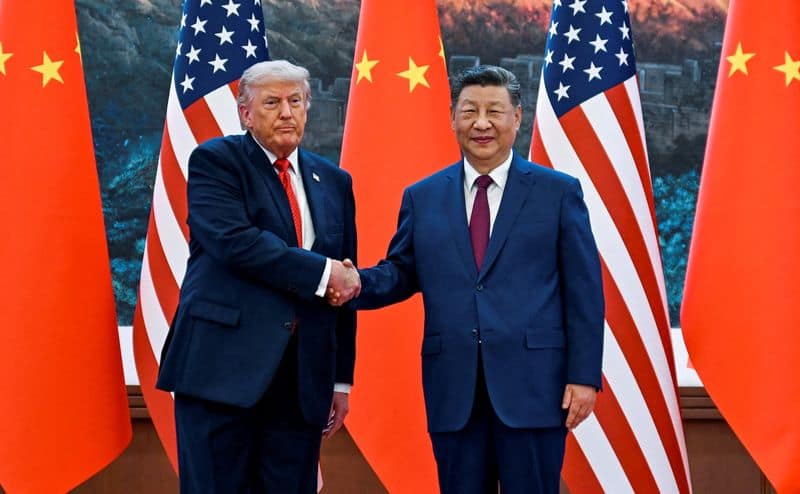
Chief Executive Henning Rath stated that the timing of the factory's opening, coinciding with a meeting between US President Donald Trump and Chinese President Xi Jinping, was a coincidence. However, he emphasized that the decision to build in China was driven by the "secret sauce" of Changzhou's industrial cluster, which offers a density of specialized suppliers and engineers capable of rapidly iterating on novel production lines. Rath indicated that establishing the manufacturing process at a commercial scale would have been "very difficult with the capital available" without leveraging China's infrastructure.
The company's choice underscores the challenges faced by US efforts to lure manufacturing back, as incentives like lower taxes and easier permitting may not fully offset the benefits of established Chinese supply chains and lower operational costs. A floor manager at the Changzhou plant noted that local suppliers often develop equipment without upfront payment and that graduate engineers earn significantly less than their US counterparts.
EnerVenue, which has its research and development operations in Fremont, California, utilizes nickel-hydrogen battery technology derived from NASA's space programs. The company had initially announced plans for a $264 million Kentucky factory in 2023, projected to create 450 jobs, but abandoned the project a year later. Rath described the attempted US project as a "valuable learning experience" that led to redesigns of both the battery and the factory.
While Rath declined to disclose the exact cost of the Changzhou facility, he estimated it to be between $20 million and $50 million, with government support limited to permitting and site selection. The plant is approximately 95% automated and is expected to employ around 400 workers by the end of the year. EnerVenue has raised over $300 million in funding, with investors including Full Vision Capital, Saudi Aramco, and SLB.
The company aims to achieve an annual capacity of 250 megawatt hours this year, producing about 300 battery cells daily, and plans to scale up to 1 gigawatt hour by the third quarter of 2027. Future expansion plans include similar factories in North America, the Middle East, and Europe starting in 2028. Rath described China as the "factory of factories" and an "important stepping stone" for global production, adding that future US plant decisions would depend on legislation and regulation.