Key facts
- Army Secretary Dan Driscoll has resigned.
- Friction with Defense Secretary Pete Hegseth is cited as a reason for the resignation.
- The White House confirmed Driscoll's departure, stating he was effective in advancing President Trump's agenda.
- Driscoll's resignation follows reports of Pentagon unease regarding the war on Iran and military leadership changes.
- The US faces critical shortages of advanced missile interceptors and long-range missiles due to the war.
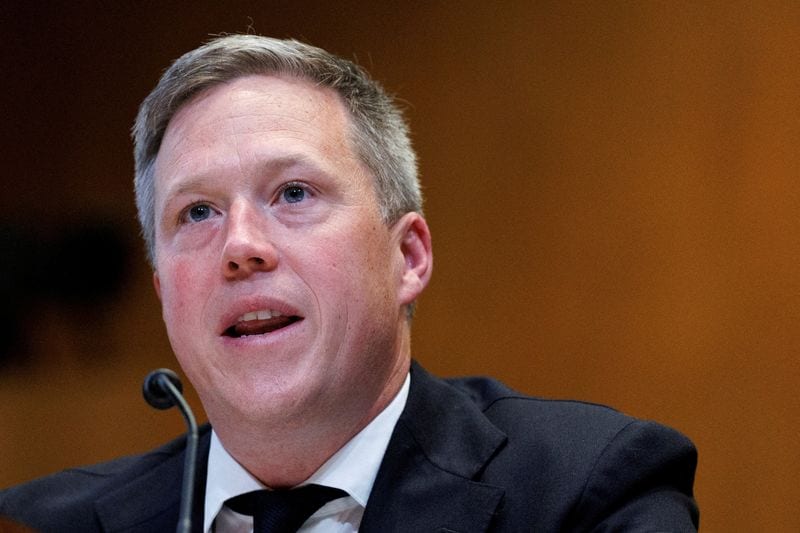
US Army Secretary Dan Driscoll has submitted his resignation, confirmed by the White House, following reports of significant friction with Secretary of War Pete Hegseth. White House deputy press secretary Anna Kelly stated Driscoll was "highly effective in advancing President Trump's agenda to Make America Strong Again at the Department of the Army" and that "the United States Army is more powerful than ever thanks to his work alongside the Commander-in-Chief and Secretary of War." Driscoll's departure occurs amidst concerns within the Pentagon regarding the Trump administration's handling of the war on Iran. Reports indicate that the heads of the army, navy, and air force, along with four-star commanders, warned Hegseth that extending major operations could compromise the US's capacity to address other adversaries. The conflict has led to critical shortages of advanced missile interceptors, such as Patriots, and has depleted the US stockpile of sophisticated long-range missiles and surface-to-surface weapons. Driscoll, an Iraq war veteran and former tech investor, was nominated by President Trump in 2024 and was considered a "disruptor and change agent." He was also noted as an ally of General Randy George, the army chief of staff who was fired by Hegseth in April, and benefited from ties to Vice President JD Vance. Vance, who is seen as part of the Republican Party's isolationist wing, has publicly criticized Israel's role in prolonging the war. In contrast, Hegseth has been a prominent advocate for the conflict. Reports from March indicated significant disagreements between Hegseth and Secretary of State Marco Rubio regarding the potential deployment of US troops to Iran. Driscoll's resignation leaves the Army without permanent civilian or uniformed leadership as the war in Iran enters its seventh month.