Key facts
- At least 56 people executed in Iran on national security charges since March 19.
- Twenty-seven of these executions were linked to protests earlier this year.
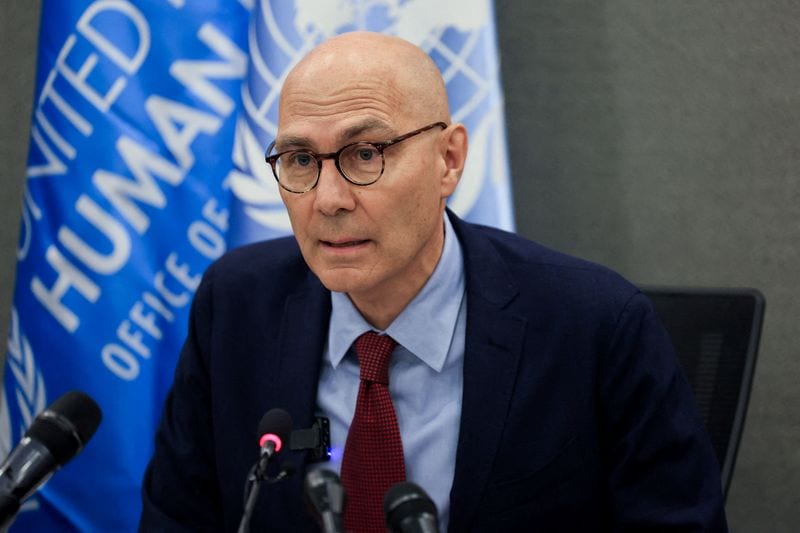
- UN human rights chief Volker Türk expressed concern over a surge in executions.
- Concerns were raised about the lack of fair trial and due process.
- Two men convicted of spying for Israel were executed.
- Two men arrested during protests were executed in public in Isfahan.
The UN human rights chief, Volker Türk, has expressed alarm over a significant increase in executions in Iran, stating that capital punishment is being used to suppress dissent. Since March 19, at least 56 people have been executed on national security-related charges, with 27 of these cases linked to the nationwide anti-government protests earlier this year. Türk noted that over 100 additional individuals are at risk of execution on similar charges, and executions for drug-related offenses are also continuing at a high rate. Iran is considered the world's second-most prolific executioner after China, with Amnesty International reporting at least 2,159 executions last year, the highest figure since 1981. Activists had warned that authorities might increase executions against opponents following the January protests. Türk urged Iranian authorities to halt all executions and work towards abolishing the death penalty, emphasizing that such punishment has no place in the world. He also highlighted concerns about the persistent lack of fair trial and due process, with allegations of confessions obtained under torture and ill-treatment. Several executions have reportedly been carried out in public, sometimes only weeks after arrest, and some defendants were sentenced to death after brief, closed-door hearings. The Iranian judiciary previously stated that the death penalty is reserved for the most severe crimes. In separate incidents, Iran's judiciary announced the execution of two men convicted of spying for Israel, and a 19-year-old was executed for an alleged role in the January unrest. Two other men arrested during the protests were publicly executed in Isfahan after being convicted of charges including 'enmity against God' and 'corruption on Earth' in connection with the killing of four law enforcement officers.