Key facts
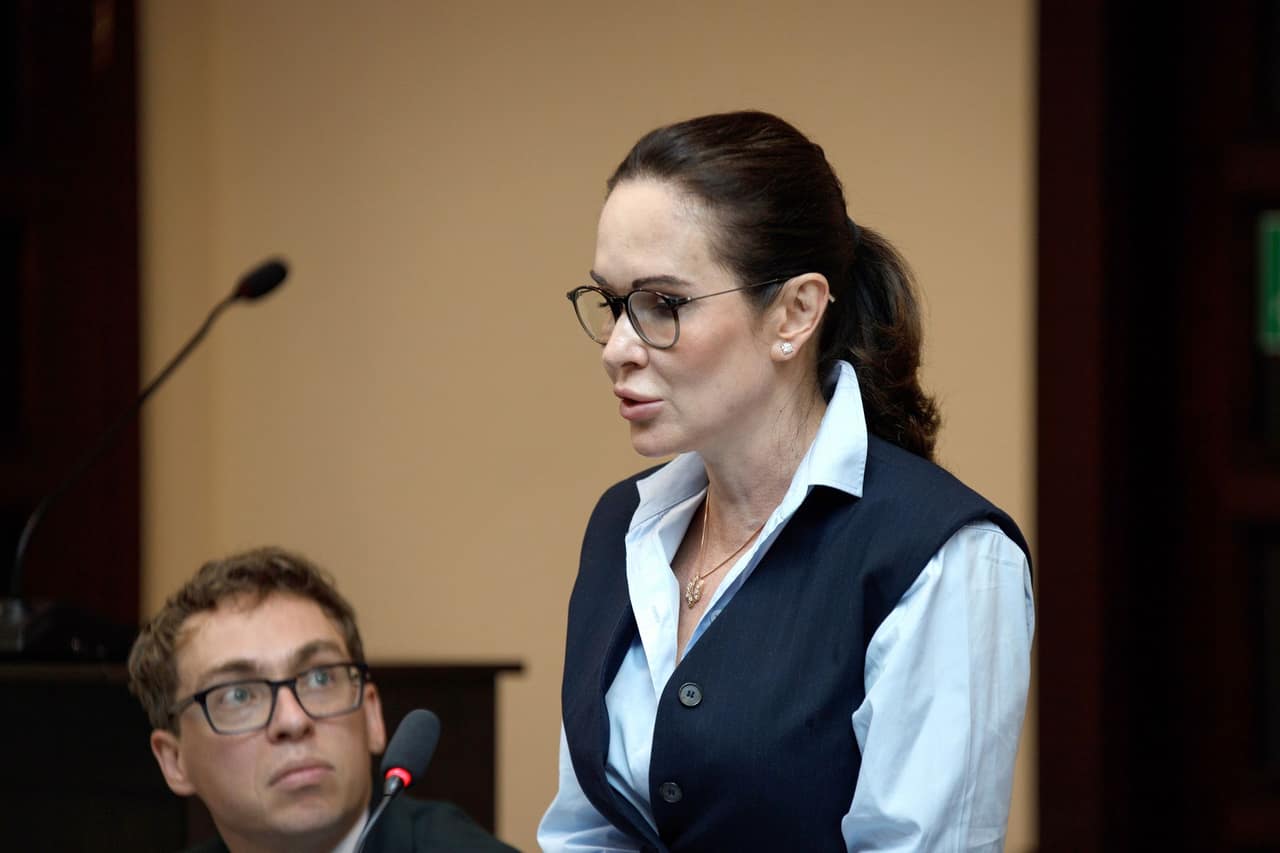
- Iryna Mudra, a former head of Ukraine's President's Office, was released from custody on Oct. 8.
- Mudra was charged with laundering Hr 150 million ($3.4 million) and illegally seizing real estate.
- Banks initially refused to process Mudra's bail payments due to money laundering concerns.
- Leaked charges suggest a person identified as Mudra's boss at the President's Office, potentially Kyrylo Budanov, was involved in the alleged scheme.
- Ex-Energy and Justice Minister Herman Halushchenko was also charged in a probe into state nuclear energy monopoly Energoatom.
The release of Iryna Mudra, a former head of Ukraine's President's Office, from custody last week followed a complex bail process that highlighted evolving anti-corruption efforts and increased caution among financial institutions. Mudra, along with lawmaker Maksym Mykytas and Viktor Dubovyk, head of the legal policy department at the President's Office, were charged in August with laundering Hr 150 million ($3.4 million) and transferring the funds through Sense Bank to post bail for ex-Energy and Justice Minister Herman Halushchenko. Halushchenko himself was charged in February as part of an investigation into state nuclear energy monopoly Energoatom.
Mudra, Mykytas, and lawmaker Vadym Stolar also face charges related to illegally seizing real estate through corporate register hacking, document forgery, influencing the Justice Ministry, and bribing judges and prosecutors. The High Anti-Corruption Court initially placed Mudra in custody for two months with bail set at Hr 20 million ($448,000).
However, banks initially refused to process the bail payments, citing fears of being accused of money laundering. Lawyers for Mudra accused the banks of unjustified blocking, while experts noted the high-profile nature of the case and the potential for investigations by the National Bank of Ukraine (NBU) to make banks overly cautious. The High Anti-Corruption Court eventually ordered the NBU to investigate these decisions, leading to the bail being paid and Mudra's release on October 8.
An investigation by RFE/RL's Schemes project revealed that the source of the bail funds was not entirely transparent, with payments coming from Mudra herself, her common-law husband, a singer, a private company, a convicted thief, and individuals with unclear connections to Mudra. This lack of transparency may have justified the banks' initial hesitation, according to some observers.
The difficulties faced by Mudra mirrored those of Halushchenko, who also struggled to post his Hr 150 million bail. Experts suggest that keeping individuals like Halushchenko and Mudra out of pretrial detention is crucial for their alleged accomplices, as they might otherwise cooperate with investigators or seek revenge. Leaked documents and transcripts suggest that Mudra may have been asked to launder cash for Halushchenko's bail by an official identified as her boss at the President's Office, with multiple references pointing to Kyrylo Budanov, the current head of the President's Office.