Key facts
- Iran launched missile attacks on U.S. forces and Iran-backed militias in Iraq.
- U.S. and Saudi Arabia conducted joint strikes against Iran-backed militias in Iraq.
- At least 20 fighters and six Iranian advisers were killed in the U.S.-Saudi strikes.
- Iran confirmed at least four IRGC members were killed in the U.S.-Saudi attack.
- Iraq condemned the U.S.-Saudi strikes as a violation of its sovereignty and demanded evidence of attacks originating from its territory.
- President Donald Trump stated the U.S. will retaliate forcefully against Iranian attacks.
- Donald Trump met with Saudi Arabia's Defense Minister Prince Khalid bin Salman following the strikes.
Iran launched a barrage of missiles at American forces in the Middle East, while the U.S. partnered with Saudi Arabia to strike Tehran-backed militias in neighboring Iraq, killing at least 20 fighters and six Iranian advisers. The U.S. military announced that American and Saudi fighter aircraft had struck multiple logistics and weapons sites in eastern Iraq in response to alleged drone attacks on Saudi Arabia. The Popular Mobilization Forces, a coalition of primarily Shiite, Iran-backed armed groups, reported the casualties. Iranian sources confirmed that at least four people affiliated with the Islamic Revolutionary Guard Corps (IRGC) have been killed in the joint attack.
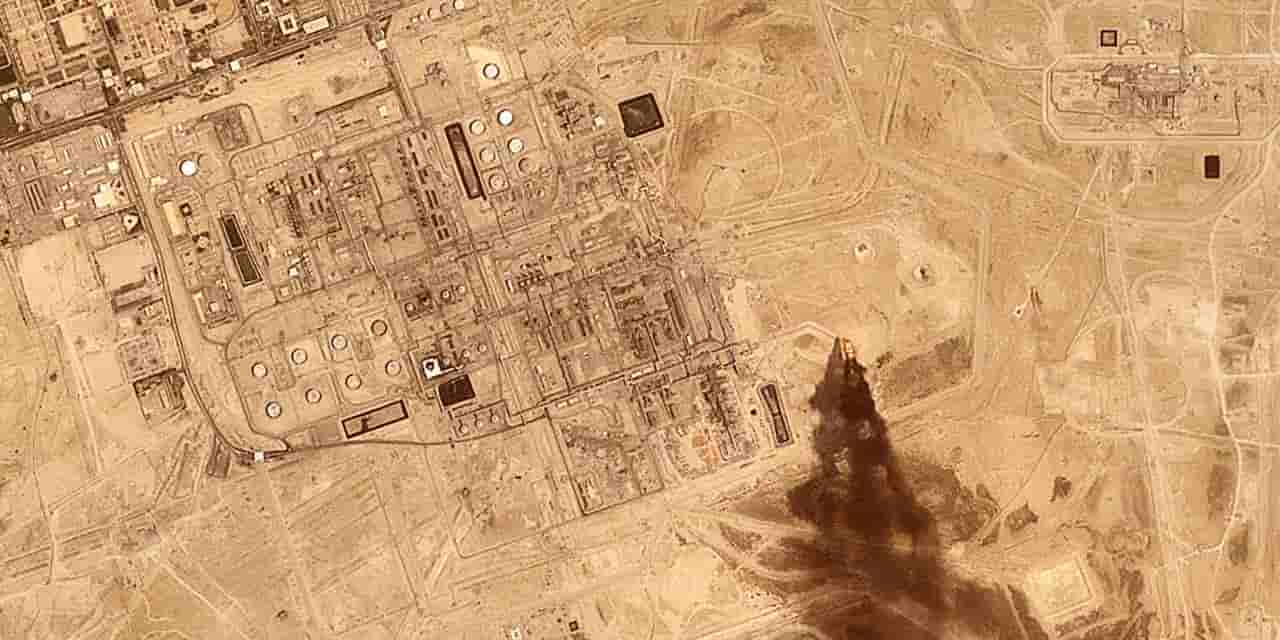
Elsewhere, drone strikes ignited fires on two natural gas vessels at an Egyptian port, though responsibility was not immediately clear. The flare-up on multiple fronts, after several days of relative calm, raised the risk of a return to all-out war and underscored the difficulty of winding down the five-month conflict. President Donald Trump told Fox News that the U.S. will retaliate forcefully against the Iranian attacks. Saudi Arabia had accused Iraqi militias of firing drones against its oil facilities over the past two days.
Before the latest eruption, mediators had expressed optimism about bringing the U.S. and Iran back to the negotiating table. An interim agreement collapsed recently over renewed fighting in the Strait of Hormuz. Iran's paramilitary Revolutionary Guard claimed it fired ballistic missiles at Jordan's Muwaffaq Salti Air Base, a key U.S. military hub, which Jordan's military said it intercepted. The office of Iraqi President Nizar Amidi condemned the U.S.-Saudi airstrikes as an "unacceptable attack and a blatant violation of Iraq's sovereignty."
Saudi Arabia is also engaged in a conflict with the Houthis, who have declared a blockade of Saudi shipping that could impact the Bab el-Mandeb strait. Iran rejected a proposal by Oman to jointly manage ship traffic in the Strait of Hormuz.
Following the strikes, U.S. President Donald Trump met with Saudi Arabia's Defense Minister, Prince Khalid bin Salman, for urgent discussions. The meeting aimed to convey that the strikes in Iraq did not signify Saudi Arabia's pro-escalation stance but readiness to defend itself if needed. Prince Khalid reportedly told Vance that Crown Prince Mohammed bin Salman believes de-escalation with Iran is a more fruitful path than escalation, contrasting with Israeli Prime Minister Netanyahu's push for escalation.