All NewsEducationTVBrokers
Equities & FundsCrypto & Digital AssetsAI & TechnologyBusiness & CorporateUS Politics & PolicyGeopolitics & Global RiskMacro, Rates & FXCommodities & EnergyEuropean Politics & MarketsAsia-PacificReal Estate & Property
All NewsHome
← Back to AI & Technology

Top chipmakers adopt ASML's advanced EUV machines, agree to photomask standard change

Created at 8 Sep · 7:16 PM1 source↑ Market-relevant
IN SHORT

Samsung Electronics and TSMC will adopt ASML's high NA EUV lithography machines in the coming years. They also agreed with Intel to shift to 12-inch photomasks, a change expected to boost chip production efficiency by 40 percent.

Key Numbers

$400 millioncost per ASML machine
40 percentpotential chip production boost
12-inchnew photomask standard size
2028Samsung's target year for high NA EUV memory chip production
2030TSMC's target year for advanced chip manufacturing
July 2026Intel's start date for Panther Lake processor manufacturing
15 yearspredicted time for China to develop EUV machines

Who's Involved

Samsung Electronics
chipmaker adopting ASML's high NA EUV machines
Taiwan Semiconductor Manufacturing Co. (TSMC)
chipmaker adopting ASML's high NA EUV machines
ASML
Dutch technology company providing EUV lithography machines
Intel
chipmaker already adopting high-NA EUV machines
Marco Pieters
ASML chief technology officer
SK Hynix
memory chipmaker considering new photomask standard
Zeiss Group
exclusive supplier of mirrors and optical systems for ASML machines
Top chipmakers adopt ASML's advanced EUV machines, agree to photomask standard change

↳ Why This Matters

The adoption of ASML's high NA EUV machines and the standardization of 12-inch photomasks by major chipmakers are critical steps toward enabling the production of more powerful and efficient chips essential for AI advancements and next-generation consumer electronics. This development also highlights the intensifying global competition in semiconductor technology.

Key facts

  • Samsung Electronics and TSMC will adopt ASML's high NA EUV lithography machines.
  • The adoption of 12-inch photomasks by Samsung, TSMC, and Intel could increase chip production efficiency by 40 percent.
  • ASML's high NA EUV machines are priced at up to $400 million each.
  • Samsung plans to use the new machines for memory chip production by 2028.
  • TSMC aims to use the technology for advanced chip manufacturing starting in 2030.
  • Intel is already implementing high-NA EUV machines in its manufacturing processes.

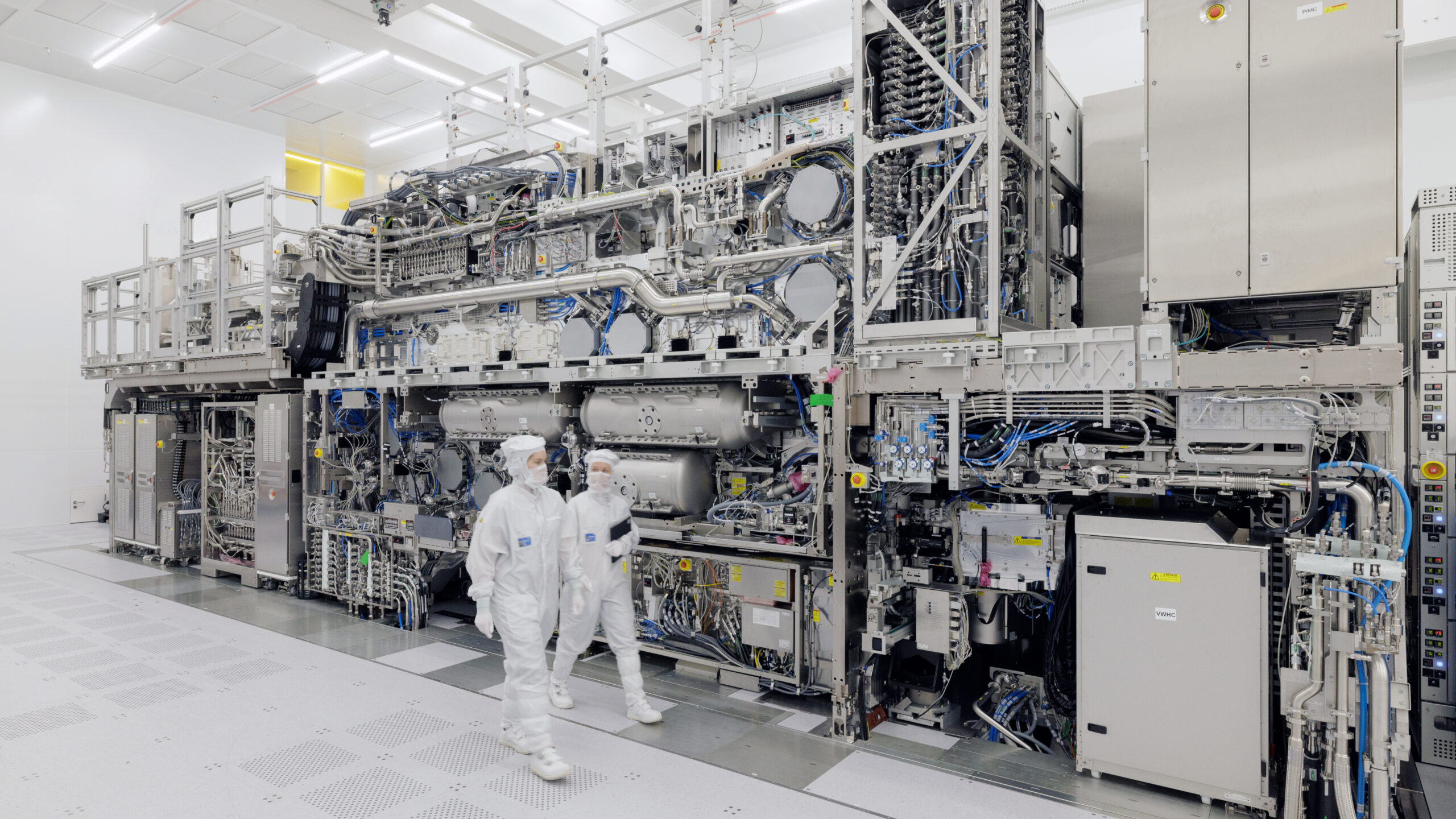
Leading chipmakers Samsung Electronics and Taiwan Semiconductor Manufacturing Co. (TSMC) are set to adopt ASML's advanced high-numerical-aperture extreme ultraviolet (high NA EUV) lithography machines in the coming years. This move signifies the industry's broader embrace of the costly technology, which can cost up to $400 million per machine and is exclusively supplied by ASML.

These new machines, featuring larger mirrors and an improved optical system, will enable chip designers to create smaller features for potentially more powerful and efficient next-generation chips, crucial for AI data centers and consumer electronics. Samsung plans to integrate these machines into its memory chip production by 2028, while TSMC aims to use the technology for manufacturing its most advanced chips for clients like AMD, Apple, NVIDIA, and Qualcomm starting in 2030. Intel has already begun incorporating high-NA EUV machines into its manufacturing, using them for Panther Lake processors since July 2026.

In conjunction with the adoption of ASML's new machines, Samsung, TSMC, and Intel have agreed to a significant change in chipmaking standards: a transition from 6-inch to 12-inch photomasks. This shift, according to ASML's CTO Marco Pieters, could enhance the productivity of high NA EUV machines by as much as 40 percent. SK Hynix, a major memory chipmaker, is also considering joining this industry consortium and aims to utilize high NA EUV technology for memory chip production by 2028.

The advancements in chip production are becoming increasingly critical amid the ongoing demand driven by the AI boom and a global shortage of memory chips. Meanwhile, ASML's technology plays a pivotal role in the technological competition between the United States and China. While ASML continues to supply older machines to Chinese firms like SMIC, its export of advanced chipmaking equipment to China is restricted due to Dutch government regulations and U.S. political pressure. Experts suggest China faces a substantial challenge in developing its own EUV lithography technology, with one executive predicting it could take up to 15 years.

Frequently asked questions

ASML's high NA EUV lithography machines use extreme ultraviolet light and advanced optics to imprint incredibly small circuitry patterns onto silicon wafers, enabling the creation of more powerful and efficient computer chips.

The transition from 6-inch to 12-inch photomasks is expected to improve the chipmaking productivity of high NA EUV machines by up to 40 percent, allowing for more efficient chip manufacturing.

Samsung Electronics, Taiwan Semiconductor Manufacturing Co. (TSMC), and Intel are adopting ASML's high NA EUV machines and the new photomask standard. SK Hynix is also considering it.

ASML's advanced chipmaking machines are a key factor in the tech competition between the U.S. and China, with export restrictions limiting China's access to this cutting-edge technology.

What Happens Next

01Samsung plans to begin producing memory chips using high NA EUV machines by 2028.
02TSMC aims to start manufacturing advanced chips with high NA EUV technology in 2030.
03SK Hynix is expected to decide on joining the 12-inch photomask consortium.
CME Headlines
  • Risk Management and Monitoring Notice: Multi-Factor Authentication Updates - September 12
    3 Sep · 5:00 AM

How It Developed

Samsung and TSMC announced plans to adopt ASML's latest chipmaking machines.
Samsung and TSMC joined Intel in agreeing to a technology change for photomasks.
The shift to 12-inch photomasks could boost chip production efficiency by 40 percent.
ASML's high NA EUV machines use larger mirrors and an improved optical system.
Samsung plans to use high NA EUV machines for memory chip production by 2028.
TSMC aims to use the technology for advanced chip manufacturing starting in 2030.
Intel is already using high-NA EUV machines in high-volume manufacturing.
SK Hynix is considering joining the consortium for the 12-inch photomask switch.

Sources

T1
Top chipmakers embrace ASML’s $400M machines, agree to crucial chipmaking changevar abtest_2170896 = new ABTest(2170896, 'impression');Ars Technica

Related Stories

ASML to Supply Advanced EUV Tools to TSMC, Samsung, Intel by 2030
8 Sep · 9:36 AM
Google's AI weather model integrates more satellite data
8 Sep · 6:06 PM
Samsung opens Japan AI chip R&D hub for advanced packaging collaboration
8 Sep · 4:16 PM
Mistral AI Secures $3.58 Billion in Series D Funding, Valued at $24.39 Billion
8 Sep · 5:15 AM
Qualcomm, Amazon Forge Multi-Generational AI Chip Pact
8 Sep · 1:19 PM