All NewsEducationTV
Equities & FundsCrypto & Digital AssetsAI & TechnologyBusiness & CorporateUS Politics & PolicyGeopolitics & Global RiskMacro, Rates & FXCommodities & EnergyEuropean Politics & MarketsAsia-PacificReal Estate & Property
All NewsHome
← Back to US Politics & Policy

Three Palestinian parties in Israel form joint list ahead of elections

Created at 20 Aug · 10:36 AM1 source↑ Market-relevant
IN SHORT

Three Palestinian-led parties in Israel—Hadash, Balad, and Ta’al—announced they will run on a joint slate in the upcoming parliamentary elections, aiming to counter rising political pressure and violence against Palestinian citizens of Israel.

Key Numbers

3.25 percentelectoral threshold for Knesset entry
2015year Joint List was first formed
2019year alliance fractured
2022year alliance fractured again
27 Octoberscheduled date for Israeli parliamentary elections
15Knesset seats won by Joint List in 2020
2020year of Joint List's strongest showing
eightKnesset seats projected for three-party alliance
sixKnesset seats projected for Ra'am
120total seats in the Knesset

Who's Involved

Hadash
Palestinian-led party in Israel forming joint list
Balad
Palestinian-led party in Israel forming joint list
Ta’al
Palestinian-led party in Israel forming joint list
Ra’am
Palestinian party running independently in elections
Mansour Abbas
Leader of Ra'am party
Yoav Segalovich
Jewish former police commander in talks with Ra'am
Benjamin Netanyahu
Prime Minister of Israel
Gadi Eisenkot
Opposition leader in Israel
Three Palestinian parties in Israel form joint list ahead of elections

↳ Why This Matters

The formation of a joint list by Palestinian parties in Israel ahead of elections could significantly impact the political landscape, potentially increasing their representation and influence in the Knesset, especially in a fragmented political environment where they might play a kingmaker role.

Key facts

  • Hadash, Balad, and Ta’al will run together in upcoming Israeli parliamentary elections.
  • The alliance aims to counter threats and defend the interests of Palestinian citizens of Israel.
  • The Joint List historically aimed to increase Palestinian representation in the Knesset.
  • Ra’am will run independently, not joining the revived Joint List.
  • Polls suggest the three-party alliance could secure eight seats in the Knesset.

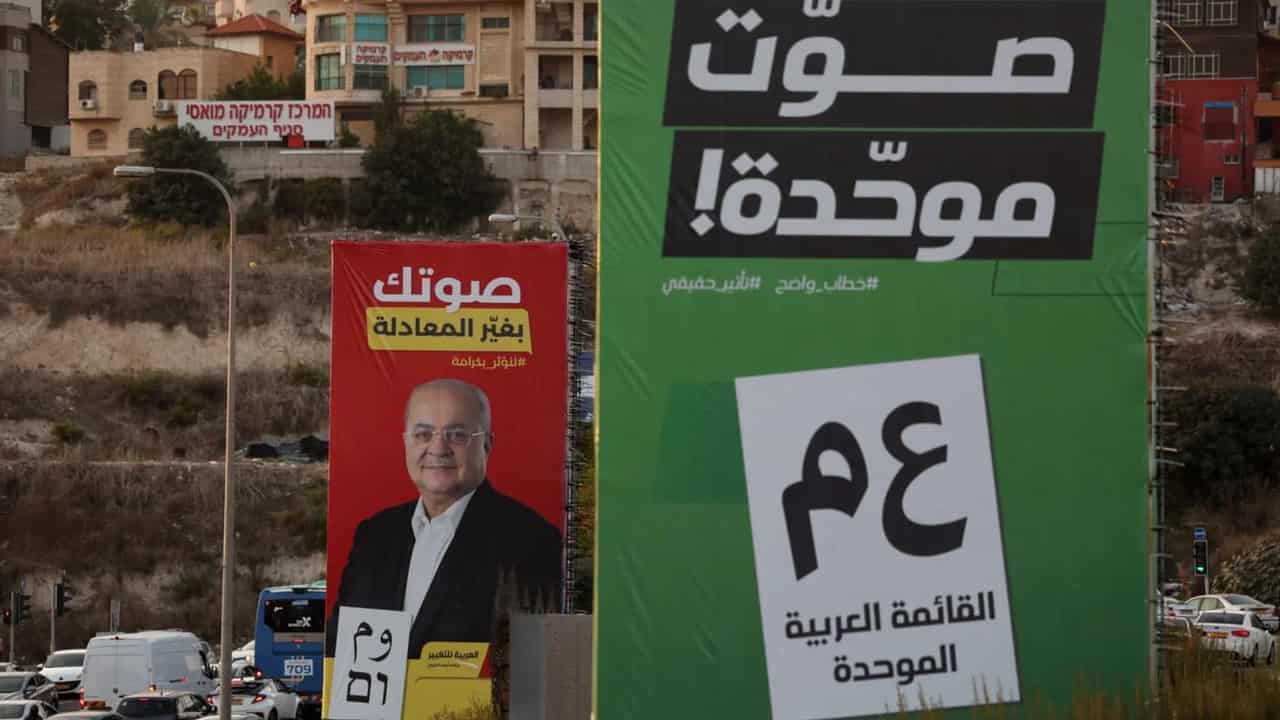
Three Palestinian-led parties in Israel—Hadash, Balad, and Ta’al—announced on Wednesday they will run on a joint slate in the upcoming parliamentary elections. The alliance, a revival of the historical Joint List, is intended to counter what the parties describe as "fascist and racist" threats and rising violence facing Palestinian citizens of Israel. The parties stated their goal is to "defend our dignity, place the interests of our people and our national principles at the centre, and turn the will of our constituencies into a political force capable of bringing down the fascist right-wing government."

The Joint List was initially formed in 2015 following a legislative change that increased the electoral threshold to 3.25 percent, a move seen as an attempt to marginalize Palestinian parties. The original list included Hadash, Balad, Ta’al, and the United Arab List (Ra’am). Internal disputes led to the alliance fracturing in 2019 and again in 2022.

Recent months have seen increased pressure on these parties to reunite, particularly in light of the conflict in Gaza and a surge in violent crime within Palestinian communities in Israel. A significant strike and protests against gun violence in January reportedly pushed leaders of the four parties to pledge to revive the Joint List. However, Ra’am, led by Mansour Abbas, announced in June that it would not join the alliance and plans to run independently, with talks underway to include Yoav Segalovich, a former police commander, on its list.

With Israeli parliamentary elections scheduled for October 27, the role of Palestinian parties in the Knesset has become increasingly significant. The Joint List achieved its strongest showing in 2020, securing 15 seats and becoming the third-largest bloc. Current polls indicate that the three-party alliance could win eight seats, while Ra’am might secure an additional six. The fragmented nature of competing political blocs means Palestinian parties could potentially hold a kingmaker position, although both Prime Minister Benjamin Netanyahu and opposition leader Gadi Eisenkot have stated they do not intend to partner with them post-election.

Frequently asked questions

The parties forming the joint list are Hadash, Balad, and Ta’al. These are Palestinian-led parties operating within Israel.

The parties stated their aim is to counter "fascist and racist" threats and rising violence against Palestinian citizens of Israel, and to increase their political representation in the Knesset.

The Joint List is an electoral alliance that has historically brought Palestinian parties in Israel together under one umbrella to increase their chances of crossing the electoral threshold and gaining seats in the Knesset.

The electoral threshold for entering the Knesset is 3.25 percent of the total vote cast nationwide.

Latest polls suggest the three-party alliance could win eight seats, while Ra’am, running independently, could secure an additional six seats.

What Happens Next

01Israeli parliamentary elections are scheduled for October 27.
02The parties will campaign on a joint slate to maximize their electoral impact.

How It Developed

Three Palestinian-led parties in Israel announced they will run on a joint slate.
The parties aim to counter "fascist and racist" threats facing Palestinian citizens of Israel.
The alliance seeks to translate collective political weight into stronger representation in the Knesset.
The Joint List was first formed in 2015 to overcome a raised electoral threshold.
Internal disagreements led to the alliance fracturing in 2019 and again in 2022.
Pressure mounted on parties to unite amid the Gaza conflict and rising violent crime.
Ra’am, a fourth party, will run independently.
The Joint List won 15 seats in 2020, becoming the third-largest bloc.

Sources

T1
Three Palestinian parties in Israel form joint list ahead of electionsMiddle East Eye

Related Stories

US to provide $206 million for Gaza peacekeeping force
19 Aug · 7:02 PM
UK jury fails to convict activists over direct action at Israeli arms factory
19 Aug · 2:16 PM
Mirza Fakhrul Islam Alamgir elected Bangladesh's new president
20 Aug · 11:51 AM
UK foreign interference scrutiny too narrow, report warns
19 Aug · 2:10 PM
France: Mosque closure fuels fear of state overreach on Muslim worship
20 Aug · 8:16 AM