Key facts
- Thai schools held active shooter drills on Wednesday.
- The drills were prompted by a school attack two weeks prior that killed at least eight people.
- Students practiced 'run, hide, fight' scenarios, including confronting a mock attacker.
Thai schools conducted active shooter drills following a deadly attack where a 14-year-old killed at least eight people. The exercises, including 'run, hide, fight' scenarios, aim to enhance student and staff preparedness for potential threats.
The drills highlight a heightened security response in Thai schools following a tragic attack, aiming to prepare students and staff for active shooter situations and mitigate potential casualties.
Thai schools across the country held active shooter drills on Wednesday, two weeks after a 14-year-old student killed at least eight people in a school attack. The exercises are part of strengthened security measures mandated by the Education Minister.
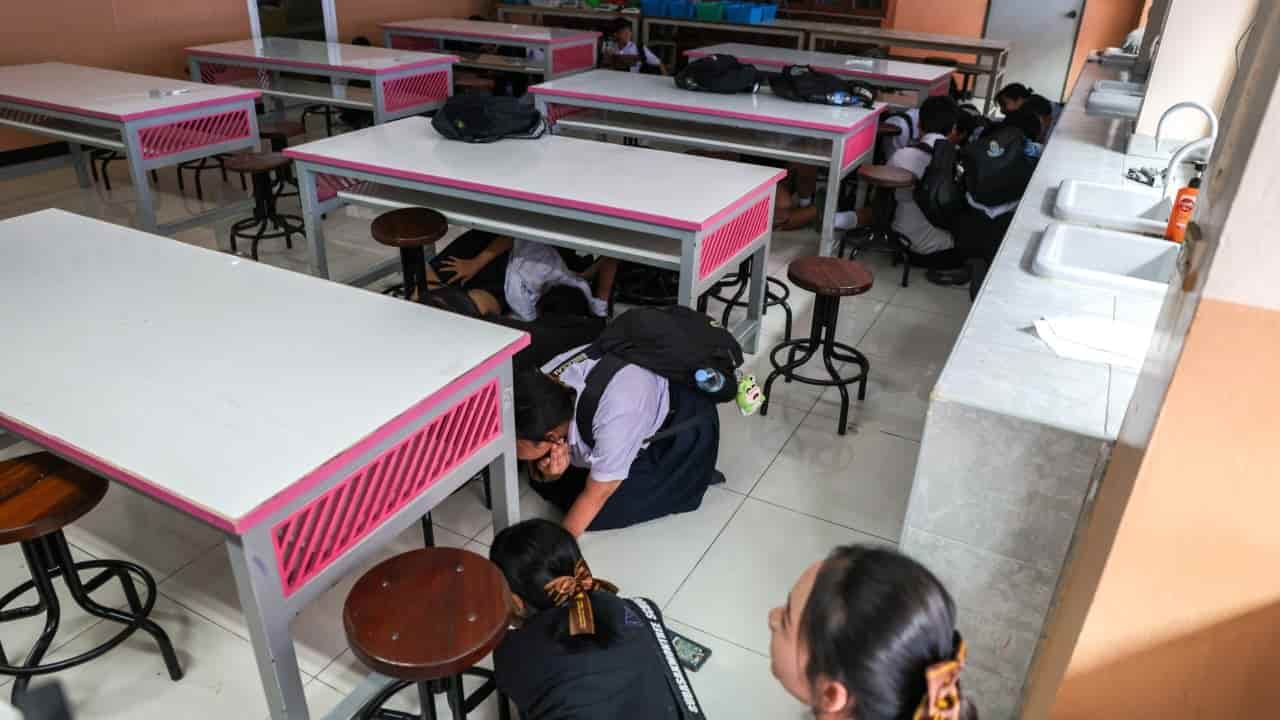
At Surasamontree School in Bangkok, students participated in a 'run, hide, fight' drill. A police officer, acting as a mock attacker with a handgun and assault rifle firing blanks, simulated an assault. Students practiced fleeing, hiding under tables, and barricading doors. In some scenarios, students tackled and restrained the mock assailant.
Education Minister Prasert Jantararuangtong signed a directive on August 10 requiring all schools to develop security plans and rehearse emergency response procedures. Visitsak Vipattanamongkol, superintendent of the Explosive Ordnance Disposal unit at the Patrol and Special Operations Division of the police, stated that schools are responding to this new-age threat and are on alert to prepare students for various incidents.
Surasamontree School has also increased daily security checks, utilizing metal detectors and bag searches. Teachers demonstrated confiscated items, including sharp objects found on students. School director Onitcha Kochana expressed satisfaction with the training, believing it equips students with the knowledge and awareness to handle emergencies and potentially mitigate severe outcomes.