Key facts
- Oil prices have fallen, nearing four-month lows, due to conflicting signals about the Strait of Hormuz.
- Iran declared the Strait of Hormuz closed due to Israeli strikes, despite US claims of continued safe passage.
- Tanker traffic through the strait has decreased, with neutral and European commercial vessels absent.
- A US-Iran deal and a 60-day sanctions waiver were announced, but normalization of oil flows is not expected soon.
- Shippers and insurers view the situation as a high-risk, 'hour to hour' assessment in a war zone environment.
Oil prices have continued to decline, nearing four-month lows, as markets react to contradictory information regarding the navigability of the Strait of Hormuz. While a US-Iran deal and a 60-day sanctions waiver were announced, Iran declared the chokepoint closed on Saturday due to continued Israeli strikes in Lebanon.
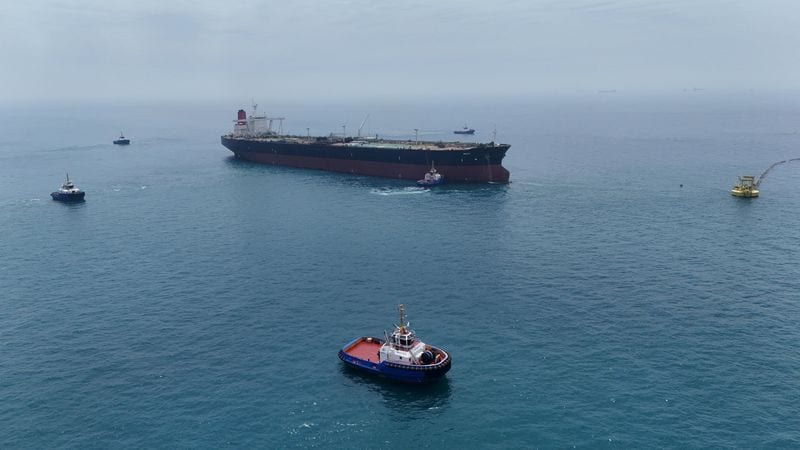
The US, however, maintains that safe passage through the Strait remains intact. US Central Command reported that 55 merchant ships transited the waterway on Saturday, moving significant volumes of oil. However, maritime intelligence firm Windward indicated a sharp drop in transits to 12 vessels on Sunday, noting the absence of neutral and European commercial tonnage and that traffic resembled a 'late-blockade baseline.'
Shipping firms are reportedly receiving preliminary rules for passage, requiring submission of vessel information to Iran for a transit code. Shippers and insurers have described the operating environment as highly risky, with 'hour to hour' risk assessments in a war zone. BIMCO has raised questions about the safety and procedural details of transiting the Strait, emphasizing the need for shipowners to be reassured of safety.
Any normalization of oil trade through the Strait of Hormuz is now anticipated to be weeks away, at best, with the precarious security situation and conflicting messages keeping oil markets on edge.