Key facts
- Foreign investors added $18.8 billion to emerging market debt and equities in July.
- Equity outflows from emerging markets slowed significantly in July.
- Asia saw a net inflow of $9.3 billion in July, a reversal from June.
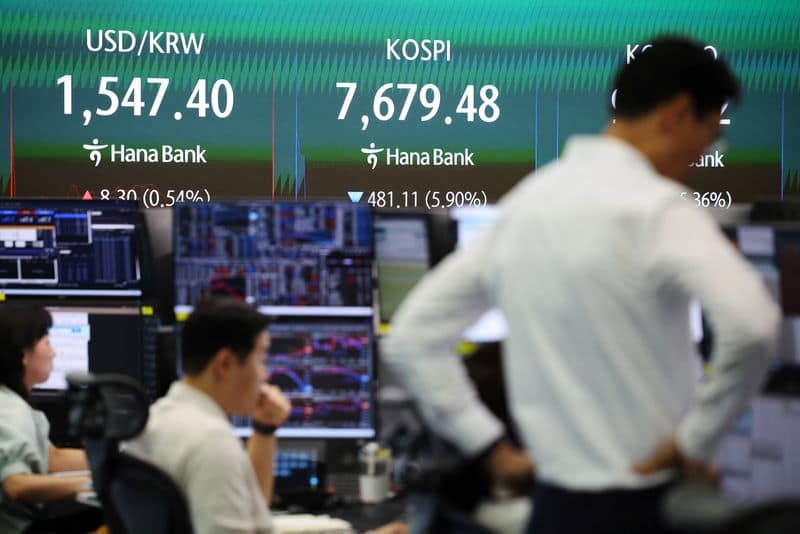
- Taiwan and South Korea experienced significant equity outflows due to AI spending concerns.
- China continued to see equity and debt outflows in July, though selling slowed.
Foreign investors added a net $18.8 billion to emerging-market portfolios in July, reversing two months of outflows as the pace of equity selling slowed sharply. Debt continued to be the primary driver of inflows, attracting $26.7 billion, while equities saw a smaller outflow of $7.8 billion compared to previous months.
Asia experienced a significant turnaround, swinging to a $9.3 billion net inflow in July from a $27 billion outflow in June. This regional improvement was partly due to reduced outflows from Taiwan and South Korea, which have been heavily impacted by concerns over AI spending and chip demand. However, China continued to see outflows from both equities and debt, although the selling pressure eased.
Globally, emerging market debt has attracted substantial inflows year-to-date, while equities have experienced significant outflows. This divergence is attributed to factors such as relatively high yields, subdued currency volatility, and the narrowing of spreads on EM sovereign bonds. Despite these positive trends, potential threats to carry trades include tighter U.S. monetary policy, intervention in Japan's yen, and geopolitical shocks.