Key facts
- Taiwanese leader William Lai Ching-te welcomed talks between Washington and Beijing aimed at reducing the risk of conflict.
- Lai called for democracies to work together to safeguard regional peace.
- Beijing accused Lai of stirring up confrontation.
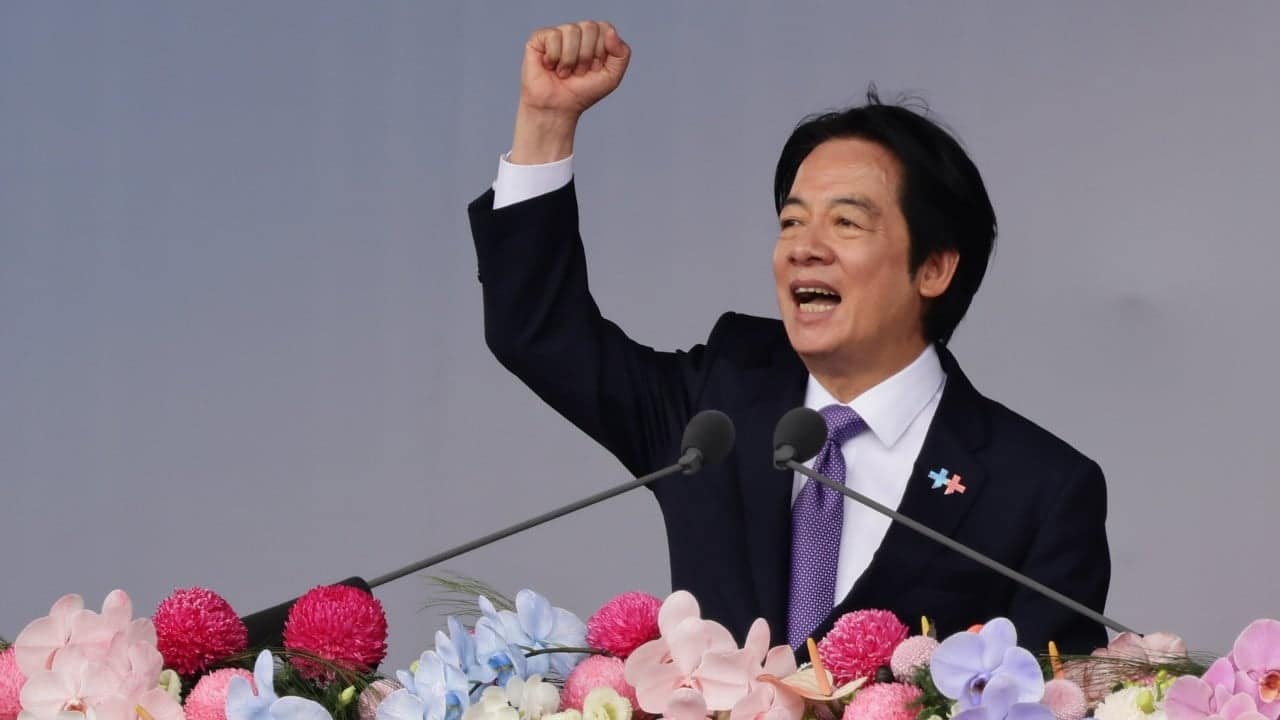
Taiwanese leader William Lai Ching-te has welcomed talks between Washington and Beijing aimed at reducing the risk of conflict. Lai's annual Double Tenth address, marking the anniversary of the foundation of the Republic of China, Taiwan’s official name, also called for democracies to work together to safeguard regional peace and for the Taiwanese people’s right to exist to be respected. Beijing, however, stated that Lai had shown his true colors and accused him of "stirring up confrontation across the...
Separately, Cheng Li-wun, the chairperson of Taiwan’s main opposition party, the Kuomintang (KMT), made a rare visit to the People’s Republic of China (PRC). This visit culminated in a summit between Cheng and Chinese President Xi Jinping. For Beijing, Cheng’s visit is part of its strategy of party-to-party diplomacy between the CCP and KMT, rather than government-to-government diplomacy between Beijing and Taipei. This was the first visit to the PRC by a sitting KMT chair since 2016. Cheng visited Nanjing, Shanghai, and Beijing, highlighting Taiwanese business interests and presenting herself as a peacemaker. Xi proposed that the two sides "harmonize minds, protect shared homeland, promote welfare, and materialize great rejuvenation of the Chinese people," which Beijing interpreted as a demand for Taiwanese recognition of the one China principle. Xi’s public remarks notably omitted the "One China Principle" or "One Country, Two Systems," instead referring to the "1992 Consensus." Cheng called on both sides to "pursue institutional arrangements" as a mechanism for preventing cross-strait war.