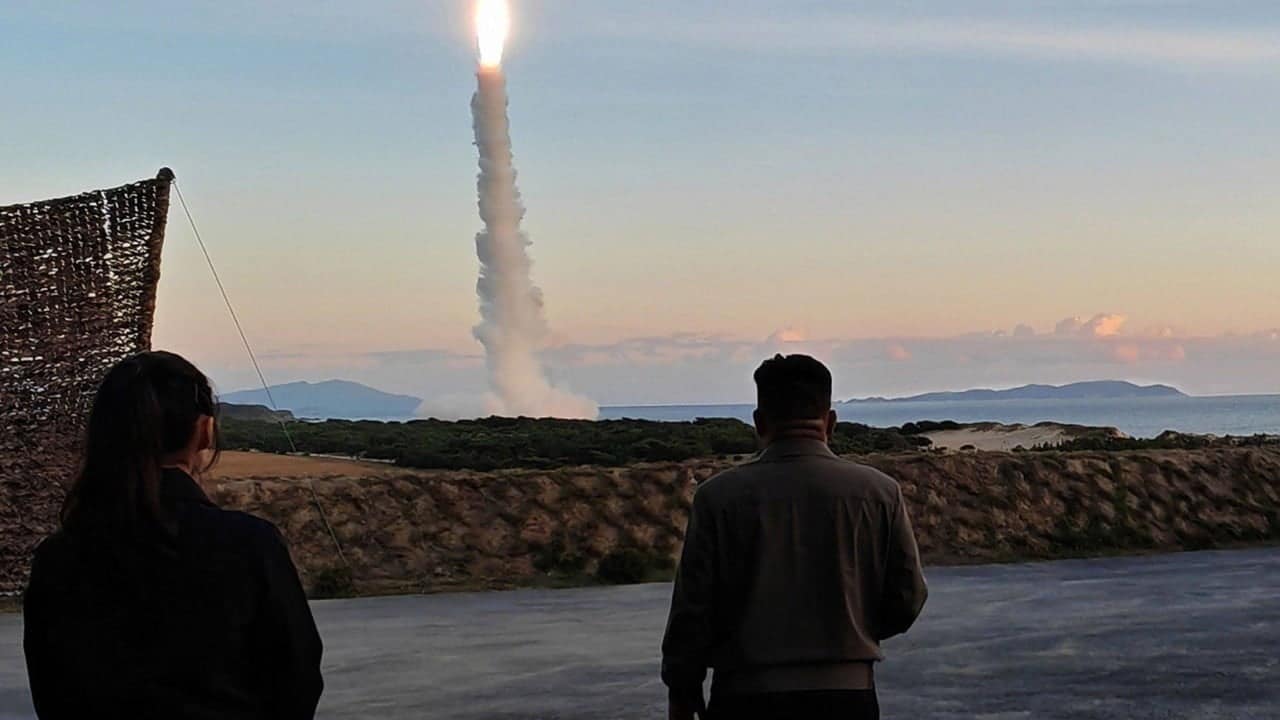
Key facts
- Denuclearizing North Korea is an "increasingly improbable" goal, according to Jenny Town of 38 North.
- Town suggests shifting diplomatic efforts to arms limitations and crisis communication with North Korea.
- Victor Cha, former NSC director for Asian Affairs, declared denuclearization and sanctions on North Korea a "failure."
- Cha advocates for pursuing a "cold peace" with North Korea.
- Negotiations between the U.S. and North Korea have failed to halt the country's nuclear and missile programs since 1985.
The long-standing goal of denuclearizing North Korea has become "increasingly improbable," according to Jenny Town, director of the North Korea analysis website 38 North. She stated in a written interview that the United States and its allies should move beyond this objective and instead focus diplomatic efforts on arms limitations and crisis communication with Pyongyang.
Town's assessment comes two decades after North Korea conducted its first nuclear test on October 9, 2006, marking a "pivotal moment" in the country's weapons development. This perspective echoes sentiments from Victor Cha, a former National Security Council official and a past proponent of the U.S. denuclearization policy. Cha has declared the policy a "failure," citing an "overreliance on sanctions" as a mistake and advocating for a "cold peace" approach that accepts North Korea "as it is."
Negotiations between the U.S. and North Korea have been ongoing in fits and starts for decades, yet they have not halted the advance of North Korea’s nuclear and missile programs. Key historical milestones include North Korea joining the Nuclear Nonproliferation Treaty (NPT) in 1985, the U.S. withdrawing nuclear weapons from South Korea in 1991, and the two Koreas agreeing to denuclearize the peninsula in 1992. A significant agreement, the Agreed Framework, was signed in October 1994, which froze Pyongyang's plutonium weapons program in exchange for U.S. pledges of sanctions relief and aid. However, North Korea later threatened to withdraw from the NPT in 1993 before suspending its withdrawal, and in 1999, it agreed to suspend long-range missile testing in exchange for eased U.S. sanctions.